
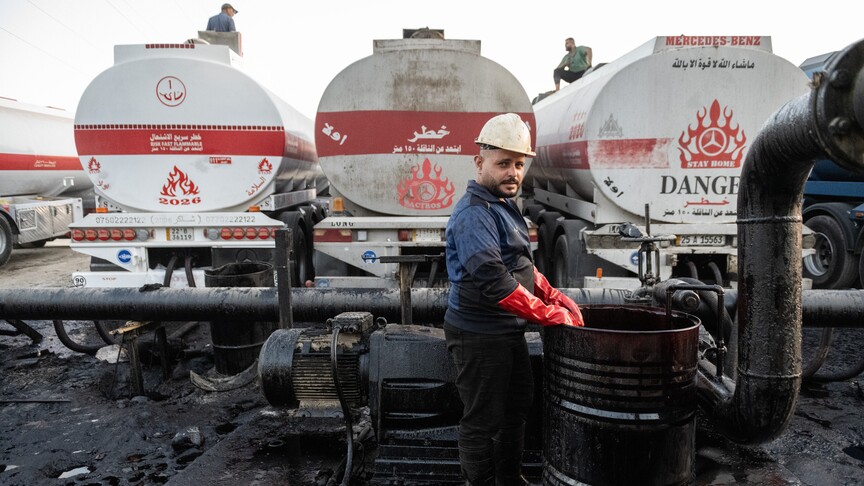
Iraq is on the brink of launching a significant new initiative to transport crude oil via truck through Syria to the Mediterranean Sea, aiming to find a safer alternative to the congested Strait of Hormuz. This move is driven by increasing shipping risks that threaten a vital source of revenue for the Iraqi government.
New Export Routes and Agreements
According to Yousef Qiblawy, CEO of the Syrian Petroleum Company, discussions between the Iraqi and Syrian governments are nearing an agreement that would facilitate the export of crude oil alongside the existing shipments of fuel oil. The first shipments of crude oil could begin arriving as soon as mid-October, with plans to use storage tanks at Baniyas before transferring the oil to vessels for further international delivery. This new route will enhance the existing overland corridor already in use for transporting Iraqi fuel oil to the Syrian Mediterranean coast.
Currently, around 1,000 trucks are actively transporting fuel oil from Iraq to Syria, with each truck carrying 220 barrels. It is anticipated that a similar or possibly larger fleet will be mobilized for crude oil transportation. If 1,000 trucks maintain this capacity, they could potentially transport 220,000 barrels daily, highlighting the logistical efforts required to manage substantial oil volumes by road.
Current Operations and Infrastructure
Supporting this development, a Syrian official has confirmed robust ongoing operations for the transit of Iraqi oil. Ahmed Qubbaji, the Deputy Chief Executive for Transportation and Storage at the Syrian Petroleum Company, recently stated that between 1,000 and 1,200 trucks cross through Syrian territory daily. This figure reinforces the existing dependency and capability of the infrastructure to handle significant oil transportation.
Additionally, this corridor serves a dual purpose: it not only facilitates the export of oil from Iraq to Syria but also enables the import of energy supplies in the reverse direction. As of late September, Syria has begun sending imported gasoline from Baniyas to Iraq. This initiative is part of a renewable agreement that aims to ramp up operations to 200 trucks daily.
Future Prospects and Pipeline Development
In addition to trucking, Iraq and Syria are eyeing opportunities for expanding their export capabilities through the rehabilitation of the Haditha-Baniyas pipeline, historically associated with the Kirkuk-Baniyas route. In July, it was reported that Syria had entered agreements with Iraq and an international consortium to advance this project, with a future capacity target of reaching 2 million barrels daily. However, it’s essential to note that this remains a projected capacity rather than an active export route at this stage.
As Iraq prepares to take these critical steps in oil transportation, the collaboration with Syria highlights a strategic shift toward diversifying its export channels while addressing the challenges posed by existing maritime routes. This initiative not only signifies Iraq’s adaptation to current geopolitical realities but also marks a significant evolution in its energy export strategy.