
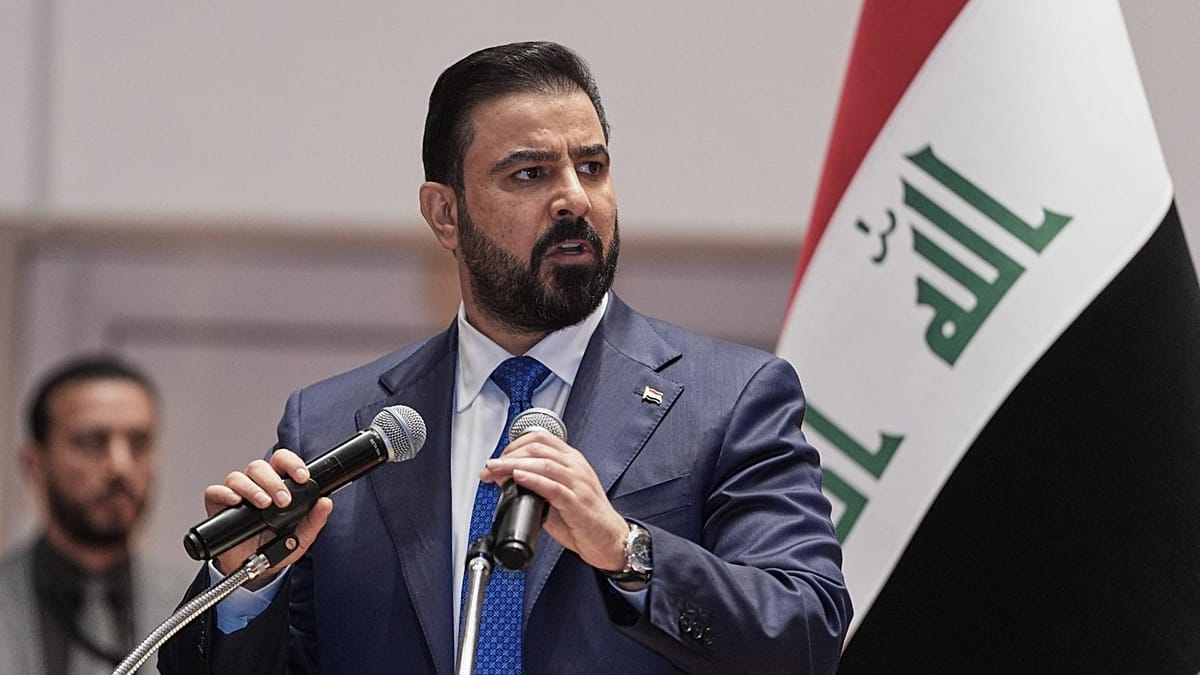
Iraqi lawmakers have recently confirmed Ali al-Zaidi as the new Prime Minister, ushering in a government amid ongoing tensions between the U.S. and Iran. With promises to centralize control over weapons and increase security force capabilities, al-Zaidi aims to navigate the complex political landscape of Iraq, marked by both internal and external pressures.
New Leadership Amid Political Deadlock
On a historic Thursday, Iraq’s parliament voted to approve the government led by Al-Zaidi, who at 40 years old now holds the title of the youngest Prime Minister in the nation’s history. This approval comes shortly after protracted political negotiations that followed the previous administration’s challenges. Al-Zaidi, who now steps into this pivotal role, intends to restrict arms ownership to state control and fortify the security forces, as reported by state news agency INA. He pledged to transform Iraq into a balanced nation on both regional and international fronts, calling for unity among political and social forces to address pressing issues.
Despite the parliament’s backing, only 14 of the proposed 23 ministerial positions received approval, reflecting ongoing negotiations and disagreements among key political factions. His rise to power followed the U.S. rejection of former Prime Minister Nouri al-Maliki, further complicating Iraq’s political dynamics. Al-Zaidi, who previously served as the chairman of Al-Janoob Islamic Bank, comes to the role without prior high-level political experience. With a background in law and finance, he is seen as a compromise candidate, attempting to mend the rifts that have caused months of deadlock.
International Reactions
The international community’s response to Al-Zaidi’s appointment underscores Iraq’s delicate position between competing influences from the U.S. and Iran. Iranian Foreign Minister Abbas Araghchi extended congratulations, highlighting the importance of strong ties between Tehran and Baghdad. In turn, a senior U.S. official expressed readiness to collaborate with the new Prime Minister to tackle shared challenges like economic development and terrorism, which threatens the stability of the Iraqi populace.
Since the 2003 U.S. invasion that led to the fall of Saddam Hussein, American influence in Iraq has significantly shaped its political landscape. However, this shift allowed Iran to bolster its own sway, solidifying relationships with various Shia political factions in Baghdad. As the U.S. escalates pressure on Iraq to disarm Iranian-affiliated groups, tensions rise, complicating efforts for a cohesive national policy.
Navigating Internal Divisions
Facing a fragmented political environment, Al-Zaidi’s administration is tasked with addressing differing perspectives on a state monopoly on weapons. Some politicians advocate for stringent measures regarding arms control, while others resist these initiatives under perceived U.S. coercion. Notably, leaders linked to powerful groups like Kataeb Hezbollah have openly criticized what they view as direct American interference in Iraqi affairs, emphasizing that genuine progress cannot be achieved under external pressure.
In addition to security challenges, al-Zaidi’s government is expected to rejuvenate Iraq’s ties with Gulf nations, particularly after hostilities involving Iran-backed militias that have affected regional stability. His administration is prioritizing economic reforms focused on diversification and investment, aiming to reduce Iraq’s heavy reliance on oil. As oil exports account for about 90% of national revenue, mitigating disruptions in key shipping routes will be crucial for the country’s financial recovery and overall prosperity.
In conclusion, Prime Minister Ali al-Zaidi enters a pivotal chapter in Iraq’s political journey, tasked with reconciling varying interests at home and abroad. As he navigates the delicate balance between regional powers and the pressing needs of his citizens, the eyes of the world remain on Iraq as it seeks stability amidst complex geopolitical realities.