
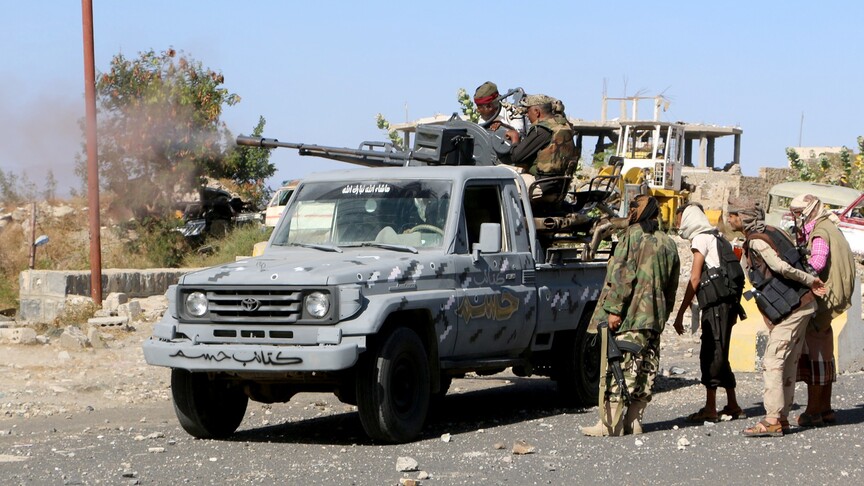
Iraq recently addressed concerns regarding reports of Houthi bases allegedly located within its borders. The Iraqi government firmly denied these claims, emphasizing its commitment to maintaining territorial integrity and stability in the region. This assertion comes amidst a backdrop of heightened tensions between neighboring countries and various armed groups operating across the Middle East.
Iraq’s Stance on Houthi Presence
Government spokesperson Haider al-Aboudi clarified that there are no Houthi installations on Iraqi soil. Speaking to reporters, he reaffirmed that Iraq categorically rejects the idea of hosting any armed factions involved in external conflicts. Baghdad maintained that it would not allow its land to be used as a launching pad for operations that could threaten neighboring nations. This steadfast declaration aims to assure the international community and neighboring countries of Iraq’s neutrality and commitment to peace.
Rejection of Social Media Reports
In a bid to dispel rumors circulating on social media, Aboudi pointed out that reports suggesting the existence of Houthi bases lack any factual basis. He criticized the notion of taking action against non-existent facilities and reiterated that the presence of foreign armed groups would breach Iraq’s constitutional laws. This statement seeks to provide clarity and quell any fears about the potential impacts of these allegations on regional stability.
Closure of al-Sheib Border Crossing
In related news, Iraqi authorities announced the temporary closure of the al-Sheib border crossing with Iran. This decision, prompted by the crossing’s inadequate technological and infrastructural readiness, aims to enhance its operational capabilities. Aboudi emphasized that while this crossing is out of service, trade with Iran will still proceed through alternative routes, ensuring that economic relations remain uninterrupted.
The closure officially went into effect early Wednesday, halting all passenger and cargo traffic until further notice. This proactive measure, ordered by Prime Minister Ali al-Zaidi, not only focuses on improving security at the border but also aims to address concerns related to dollar smuggling, although it is claimed to have no direct connection to U.S. sanctions on Iran.
Coordination with Iranian Authorities
On the Iranian side, Valiollah Hayati, the deputy governor of Khuzestan province for security affairs, acknowledged the closure of the Chazabeh border crossing, known in Iraq as al-Sheib. Hayati suggested that travelers and businesses redirect their activities to the Shalamcheh border crossing while the Iranian government coordinates with Iraqi authorities to arrange the reopening of Chazabeh.
This collaborative effort highlights the importance of effective communication between Iraq and Iran, particularly in matters concerning border controls and trade. As both countries navigate the complexities of regional dynamics, their ability to work together will be crucial for maintaining stability and fostering beneficial economic relationships.
In summary, Iraq has taken a strong stance against the existence of Houthi bases on its territory while simultaneously taking steps to reinforce border security with Iran. This dual approach reflects the Iraqi government’s broader commitment to ensuring its sovereignty and maintaining harmonious relationships with its neighbors.