
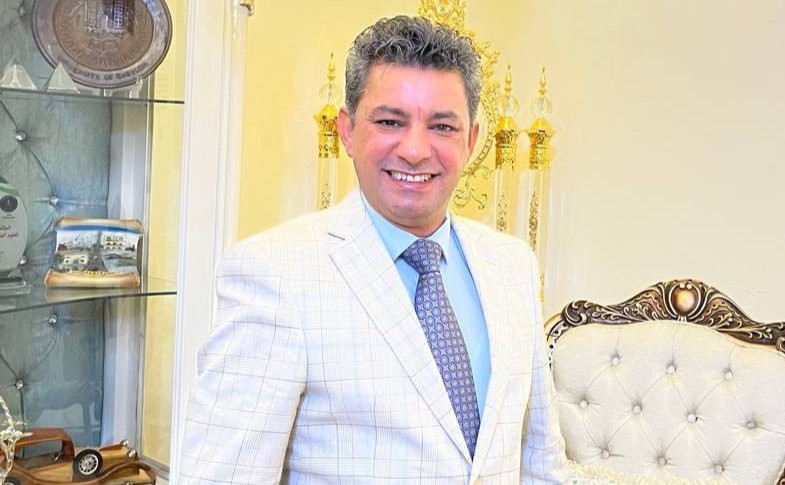
In a troubling saga that highlights the dark side of academic publishing, Oday Al-Owaedi, an Iraqi physicist once affiliated with the University of Babylon, has resurfaced in the academic world five months after being dismissed for involvement in a major publishing fraud scheme. Recently, he submitted a manuscript to a Wiley journal falsely claiming ties to Columbia University in New York City, stirring further controversy.
Details of the Fraudulent Activity
Previously reported incidents indicate that Al-Owaedi misled researchers into paying to publish their work in reputable journals, while in reality, he was fabricating and falsifying publication on counterfeit websites. A ministerial order obtained by our team outlined these deceptive practices, noting that he defrauded multiple researchers, reaping substantial financial gains through this scam. Despite his unceremonious dismissal from the University of Babylon, Al-Owaedi has maintained his claim of affiliation with the institution, asserting that he has not fully cut ties.
In his latest manuscript, Al-Owaedi occupied the role of corresponding author, where he described his connections to Columbia University as an unfortunate “mistake.” He mentioned that Wiley was actively engaged in correcting the error. Interestingly, he argues that he maintains the right to use his affiliation with the University of Babylon based on his ongoing legal proceedings, which he hopes will lead to a favorable outcome and his reinstatement.
Legal Battles and Threats
In an email communication, Al-Owaedi stated that a court ruling due this week would clear his name, asserting he will once again take up his teaching responsibilities. Additionally, he has issued legal threats against Retraction Watch, accusing the platform of damaging his reputation. He claimed that he would pursue legal action in Denmark and the United States to seek justice, firmly stating that he would not rest until he recovers his rights.
Despite the heavy allegations against him, Al-Owaedi is still featured as a faculty member on the University of Babylon’s website, which adds another layer of complexity to the ongoing situation. His claims about the conference fraud he orchestrated reflect a troubling pattern in which he deceived attendees by claiming a partnership with Elsevier to publish numerous academic papers at discounted rates. However, the supposed agreement was found to be with an agency resembling a classic paper mill.
Publishing Challenges and Wiley’s Response
The extensive nature of the fraud has raised significant concerns within the academic community, leading to scrutiny over the submission processes at major publishing houses. Al-Owaedi’s fraudulent maneuvering reportedly facilitated hundreds of thousands of dollars in payments from unsuspecting researchers, but the fate of those funds remains uncertain. While Al-Owaedi alleges that he transmitted the money to the facilitating agency, the situation adds to the mounting evidence of wrongdoing.
A spokesperson for Wiley confirmed that they are investigating the recent submission in compliance with the Committee on Publication Ethics (COPE) guidelines and emphasized that all of their manuscripts undergo rigorous screening. They implemented more than 25 automated integrity checks, which include a verification process for institutional email addresses and author affiliations. Al-Owaedi, however, submitted his work using a personal Gmail address, which raises flags regarding the validity of his claimed affiliations.
As this situation unfolds, it sheds light on the larger issues of accountability and transparency in academic publishing. The claims surrounding Al-Owaedi’s actions spark a critical discussion about the safeguards in place to protect researchers from fraud and the integrity of the publishing industry as a whole. With ongoing investigations and legal proceedings, the academic community eagerly awaits the outcomes, hoping for a resolution that restores trust in an increasingly fraught environment.