
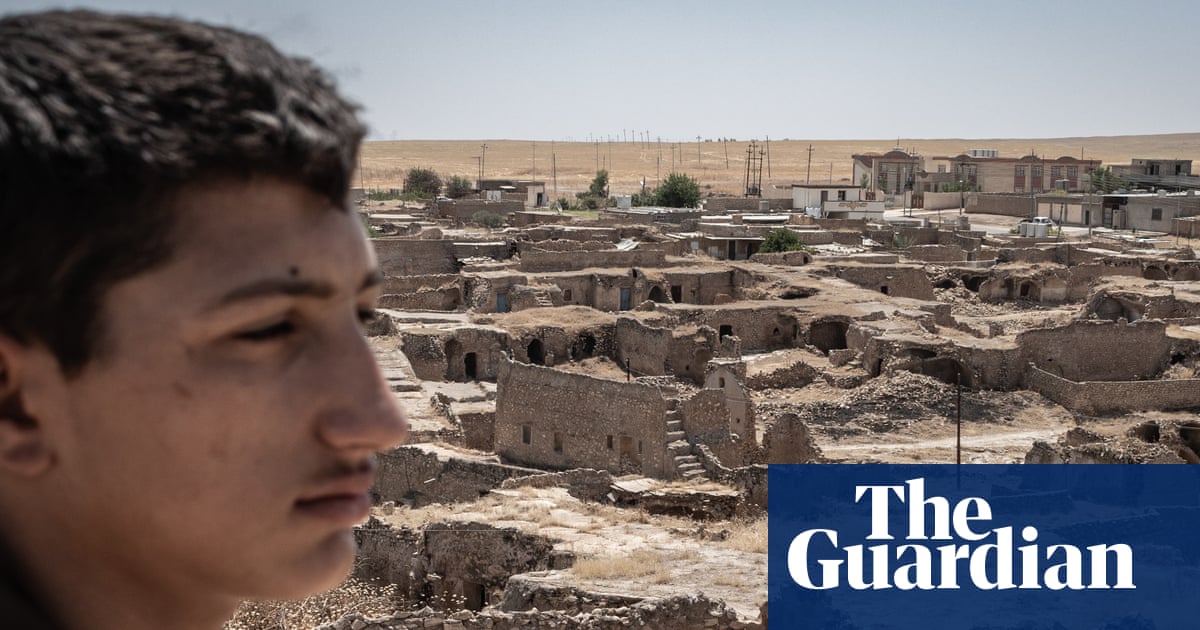
Faka, a small village in northern Iraq’s Sinjar district, presents a haunting stillness to its visitors. Abandoned streets echo with the absence of children’s laughter, while derelict homes bear the scars of war. A decade after the Islamic State swept through the region, the remnants of destruction linger, not just as a testament to past violence but also as an ongoing struggle against new adversities.
The Silent Struggle of Faka
Rajab Mohammed, the village mukhtar, emphasizes a new set of challenges facing Faka: “Today, the issue isn’t just Islamic State. It’s water, employment, and the uncertainty of the future.” The scars left by war are apparent, but the inhabitants now face compounded problems of ecological decline and economic instability. Once teeming with life, Faka’s houses now stand empty; it is estimated that abandoned properties outnumber those that are occupied.
The trauma of August 2014 still weighs heavy on the Yazidi community, as IS orchestrated a campaign of genocide against them. Thousands were killed, with thousands more abducted. Although Faka and its neighboring village Qubq managed to avoid mass killings, they remain ravaged by conflict. Today, only a fraction of the original 150 families still reside in Faka, largely due to the lack of employment opportunities, essential services, and reconstruction efforts.
Climate Crisis Exacerbating Despair
The changing climate poses an additional threat to villages like Faka. The United Nations ranks Iraq among the top five most vulnerable nations affected by dwindling water resources and extreme heat. Projections indicate that by 2050, average temperatures could surge by up to 2.5 degrees Celsius, resulting in potentially unbearable conditions. Faka’s summer temperatures have already approached 50 degrees Celsius, while erratic rainfall patterns complicate agricultural viability.
In rural Iraq, where farming is the primary livelihood, the effects of climate change and forced migration are intertwined. The International Organization for Migration reports over 186,000 people displaced due to climate-related factors. For residents like Bahjat Othman Hasan from Tal Jado’o, the remnants of war are overshadowed by the gradual desiccation of their land. Once capable of accessing groundwater at shallow depths, residents now need to drill much deeper, incurring escalating costs year after year.
The Void Left by Abandonment
As villages grow emptier, the effects of this mass migration reach beyond the physical realm. Schools are witnessing dwindling student populations, as young people seek opportunities elsewhere. Those who complete their education often move to urban centers in Mosul or Erbil, drawn by more stable employment prospects.
Smain, a 19-year-old from Qazal Quyu, reflects on this reality, stating, “Almost all my friends want to leave. Sometimes I want to leave, too. But if I go, who will help my parents?” This sentiment encapsulates the painful dilemma faced by many in these villages: the desire for a brighter future weighed against familial responsibilities and loyalty.
As the future looms uncertain, Faka and neighboring villages find themselves in a complex web of challenges, where the scars of war are only overshadowed by the growing threats of environmental instability and economic hardship. The silence that envelops these once-vibrant communities serves as a poignant reminder of the struggles faced by those who have chosen to come back home, only to find that the fight for survival has just begun.