
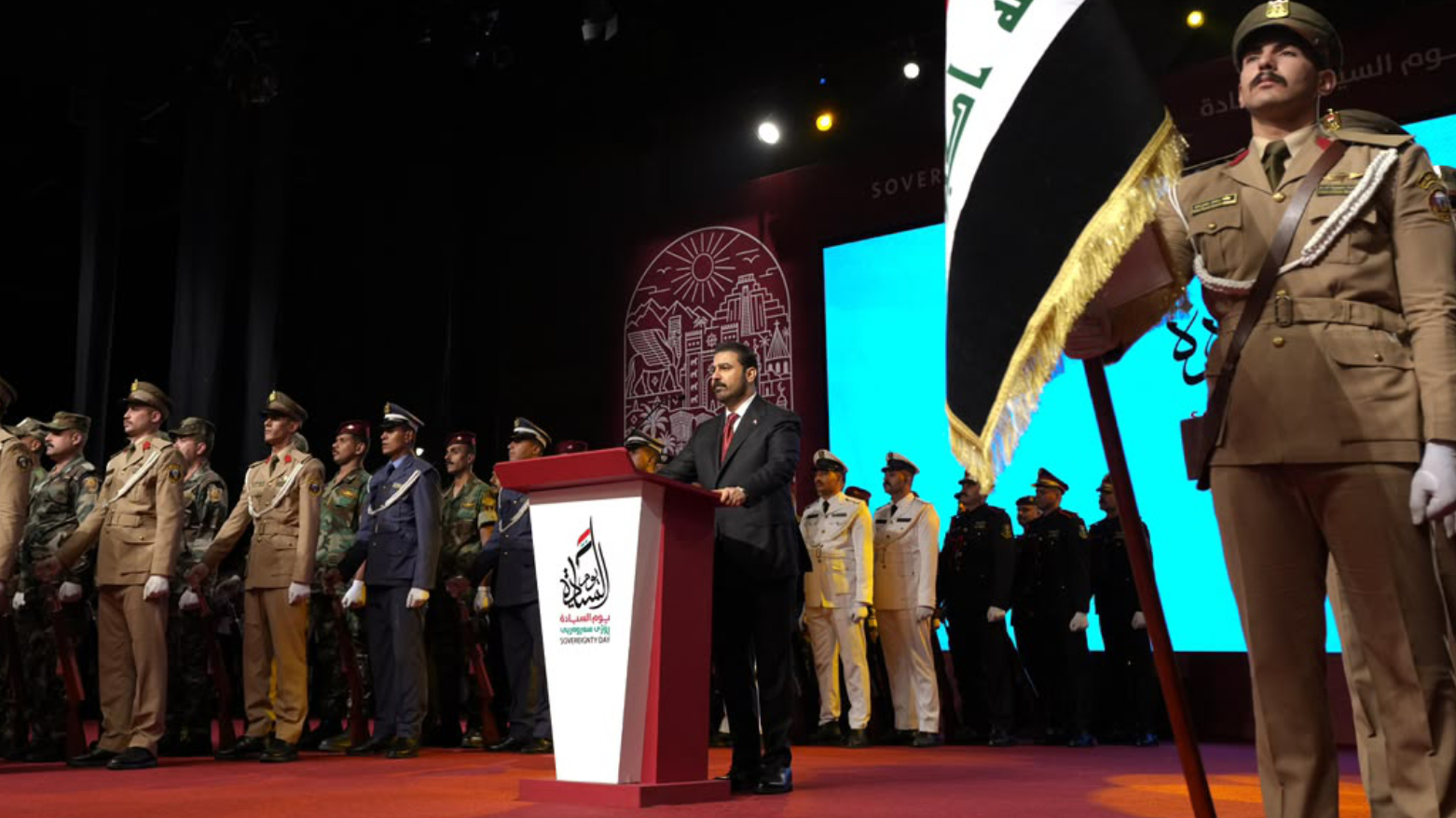
Iraqi Prime Minister Ali Faleh al-Zaidi announced a significant shift in the nation’s approach to sovereignty during a recent conference in Erbil. With the culmination of the international Coalition’s military mission, al-Zaidi underscored the importance of consolidating Iraq’s political and economic independence while emphasizing national identity and security.
Celebrating Sovereignty: The New Chapter for Iraq
The Sovereignty Day conference was attended by key figures, including Iraqi Parliament Speaker Haybat al-Halbousi and Kurdistan Region President Nechirvan Barzani, along with various political leaders and representatives. Al-Zaidi remarked that Iraq is at a pivotal point where the foundations of sovereignty are being strengthened. He emphasized that sovereignty is a reflection of the people’s decision to uphold the state’s integrity and authority, indicating a crucial step forward in Iraq’s national identity.
In his address, al-Zaidi highlighted the country’s resilience over the last two decades, navigating through challenges such as terrorism and political strife. He assured attendees that Iraq is now ready to renew its commitment to preserving national security and institutional integrity.
The Six Pillars of Sovereignty
Al-Zaidi identified six essential pillars marking Iraq’s renewed sovereignty. The first is the withdrawal of foreign military forces, culminating in the conclusion of the Coalition’s mission on September 30. This withdrawal symbolizes Iraq’s regained control over its territory and a new era free from foreign intervention.
Secondly, al-Zaidi announced an agreement on the withdrawal of Turkish forces and elements of the Kurdistan Workers’ Party (PKK), as well as the commitment to removing foreign armed groups from Iraqi soil. This step aims to fortify the nation’s security and autonomy.
The third pillar revolves around the unification of the Peshmerga forces, which is necessary for cohesive security and military decisions. In addition, al-Zaidi stated that Iraq would prevent foreign armed opposition from using its territory as a staging ground for assaults against neighboring nations.
The fifth pillar underscores the necessity of regulating arms in compliance with the Constitution, aimed at ensuring that all armed factions are integrated into state institutions. Lastly, al-Zaidi announced efforts to establish a comprehensive national air-defense system, bolstering Iraq’s capabilities to protect its airspace and maintain sovereignty.
Commitment to Constitutional Governance
During his remarks, al-Zaidi commended the factions that have pledged to address weapon control according to constitutional guidelines. He urged other armed groups to follow suit, warning that the absence of legal frameworks could compromise Iraq’s security. The effectiveness of governance hinges on the collaborative efforts of both the state and armed factions, ensuring no weapons operate outside of legal boundaries.
Moreover, al-Zaidi linked the concept of sovereignty to economic resilience, stressing that Iraq must adapt to global changes while engaging in equitable international partnerships. His administration is focused on diversifying the economy, fostering international relations, and investing in future generations rather than relying solely on outdated economic structures.
The Prime Minister concluded by acknowledging the role of Iraq’s armed forces and security institutions in embodying sovereignty and safeguarding the nation. As Iraq celebrates its inaugural Sovereignty Day since the Coalition’s military exit, the government has encouraged state institutions to organize events to commemorate this milestone.