
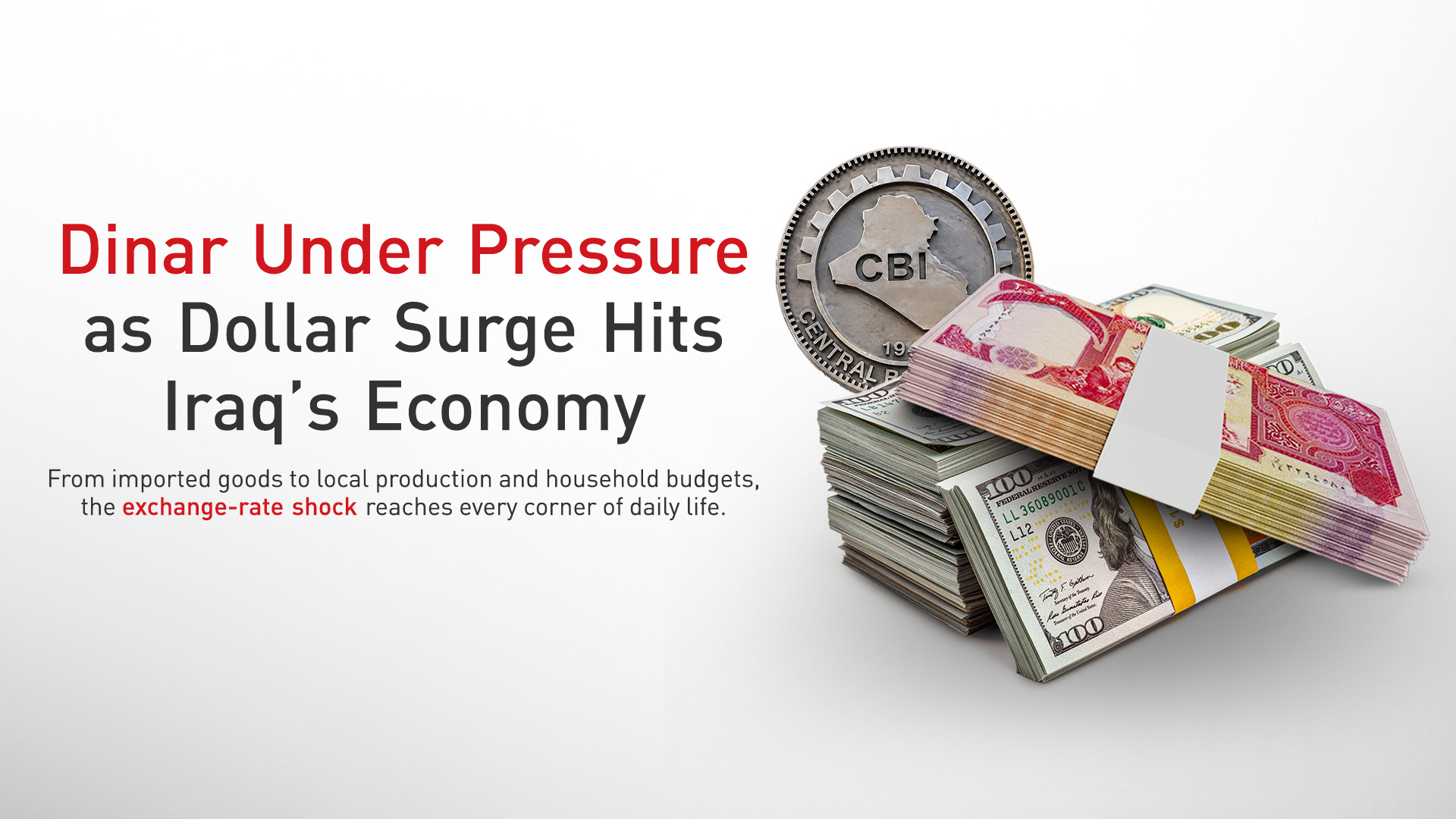
Iraq’s recent alteration of its official exchange rate is set to create significant ripples across various sectors, impacting imports, businesses, local production, and household budgets. As the dollar reaches approximately 170,000 dinars for $100 in markets throughout the Kurdistan Region, this shift poses challenges for both consumers and enterprises.
Implications of the New Exchange Rate
On Wednesday, the Central Bank of Iraq (CBI) announced a new exchange rate structure following a decision from the Council of Ministers. Under this revised system, the government will procure dollars from the Finance Ministry at 1,500 dinars, subsequently selling them to banks at 1,510 dinars, with financial institutions selling to end users at a final rate of 1,520 dinars. This move marks a significant departure from the previous official rate, especially as Iraq grapples with acute financial and economic pressures.
This decision is designed to enable the government to gain more dinars for each dollar of oil revenue; however, it also comes with warnings about increased import costs and diminished purchasing power for households. In the Kurdistan Region, the disparity between the official and parallel market rates complicates the situation further, as businesses contend with costs based on the much higher market rates.
Challenges for Importers and Local Producers
Businesses engaged in importing goods from countries like Türkiye, China, Iran, and the Gulf region are acutely aware of how exchange rates influence their costs. A higher market rate necessitates larger amounts of dinars to settle foreign currency invoices, inevitably raising wholesale prices. This escalation can cascade through the supply chain, with wholesalers passing costs onto retailers and, ultimately, consumers facing inflated prices.
This price increase isn’t limited to finished goods. Local manufacturers often rely on imported machinery, raw materials, and other components. As costs rise, domestic firms face the dilemma of either absorbing these expenses or transferring them to consumers, leading to an overarching strain on household budgets and aggravating inflation.
Business Uncertainty and Household Strain
For business owners, unpredictability regarding dollar prices adds an additional layer of complexity. Decisions about pricing strategies become fraught with uncertainty. The prolonged discrepancy between official and parallel rates could compel companies to price goods based on the higher market rate, further entrenching inflationary pressures. Small and medium-sized enterprises are particularly vulnerable, often operating with limited financial reserves.
For everyday Iraqis, this altered exchange rate translates directly into rising costs of living. Families with incomes fixed in Iraqi dinars may find that their salaries buy less, as prices for essential goods such as food, clothing, and medicines increase. Studies have shown that inflation in Iraq and the Kurdistan Region is significantly correlated with exchange-rate fluctuations, further complicating the economic landscape.
Potential Beneficiaries and Economic Outlook
Not every sector will bear the brunt of this exchange rate change. Individuals and businesses earning in dollars may experience a financial advantage as they convert their earnings into a greater number of dinars. Export-oriented enterprises could also benefit from this situation, while the government stands to gain more dinars from dollar-denominated revenues.
However, these fiscal advantages pose a trade-off. Households and businesses are likely to face rising costs for imported goods and services, threatening domestic stability. The question arises: will the gap between official and parallel market rates narrow or persist in the coming weeks?
The outcomes of this monetary policy shift will be far-reaching, impacting everything from import costs to final consumer prices. The ability of the CBI and the government to manage this transition effectively will be crucial. Should the gap remain unbridged, the risk of escalating inflation affecting both imports and local production will only grow, intensifying the hardships faced by consumers in Iraq and the Kurdistan Region.