
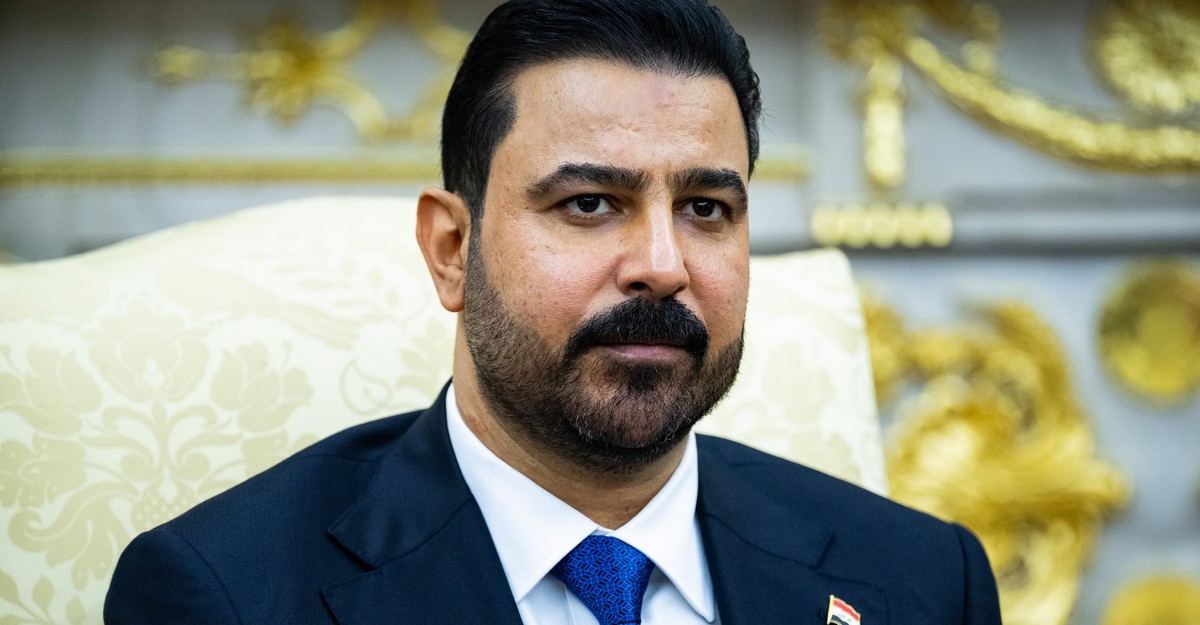
Iraq’s precarious position between two global powers, the United States and Iran, poses an enormous challenge for its leadership. Each prime minister since the fall of Saddam Hussein has grappled with the daunting task of demonstrating to Washington that Iraq is not succumbing to Iranian influence while simultaneously reassuring Tehran that Iraq does not merely serve as a U.S. military outpost.
### The Current Landscape
Iraq’s new Prime Minister, Ali al-Zaidi, faces this delicate balancing act amidst a backdrop of heightened tensions, as the United States and Iran find themselves at odds. During a recent meeting in Washington, during which al-Zaidi spoke with President Trump, he reiterated a familiar refrain: a reduction in military presence in favor of increased economic engagement. He stated, “Military presence does not create ties between societies. Economic engagement does.” This statement speaks to Iraq’s potential for economic growth, yet it also conflicts with the reality on the ground, where approximately 2,000 American troops are still stationed in the country.
Despite these military presences, Iraq remains plagued by the influence of Iran-backed militias that continue to operate outside the bounds of governmental control. With U.S. troops preparing to withdraw by the end of September, the symbolic conclusion of 23 years of military conflict looms. However, experts caution that escalating tensions between Washington and Tehran could quickly repurpose these troops into a strategic asset, despite the risk of becoming targets themselves in the ongoing struggle.
### Rising Tensions
The precarious situation was underscored during al-Zaidi’s visit, as recent reports indicated that three U.S. service members lost their lives in conflicts in Iraq and Jordan. Al-Zaidi mentioned that President Trump had expressed a desire to strike back at Iran after a series of confrontations, though he advised delay. This diplomatic hesitation demonstrates the fine line al-Zaidi must walk as he confronts various layers of conflict—tensions among militias, pressure from external powers, and domestic instability.
Over the past two decades, Iran has steadily amplified its influence in Iraq through political, economic, and military means. The U.S. maintains its position by contributing military training, intelligence support, and financial access, particularly critical in battling the remnants of ISIS. A notable moment in U.S.-Iraq relations occurred with the assassination of Iranian General Qassem Soleimani in Baghdad in January 2020, an event that generated backlash throughout Iraq and intensified calls for the expulsion of American forces.
### The Path Forward
Amid these complications, al-Zaidi argues for a different approach. He envisions Iraq as a “meeting point, not a battleground” between American and Iranian interests. His strategy hinges on fostering economic opportunities to alleviate the social conditions that breed conflict, insisting that nihilism is not an option. Yet, he acknowledges that resistance is inevitable and the political landscape remains fraught with potential for violence.
At just 41, al-Zaidi represents a generation molded by war. His vision extends beyond the traditional power structures of Iraqi politics; his earlier business ventures showcase a focus on economic development. He recently promised to avoid a government salary and forgo forming a political party, committing himself to anti-corruption efforts. This pledge, coupled with high-profile arrests of corrupt officials, illustrates a tangible change in leadership tactics.
Al-Zaidi’s emphasis on investment rather than military intervention could transform U.S.-Iraq relations into a model of partnership grounded in mutual interests. He is advocating for an investment partnership that could last three decades, highlighting the need for stability in a region where unpredictable conflicts frequently arise. The outcome of his leadership in the coming months will be critical in determining whether Iraq can escape the cycle of violence and chaos that has long defined its recent history.