
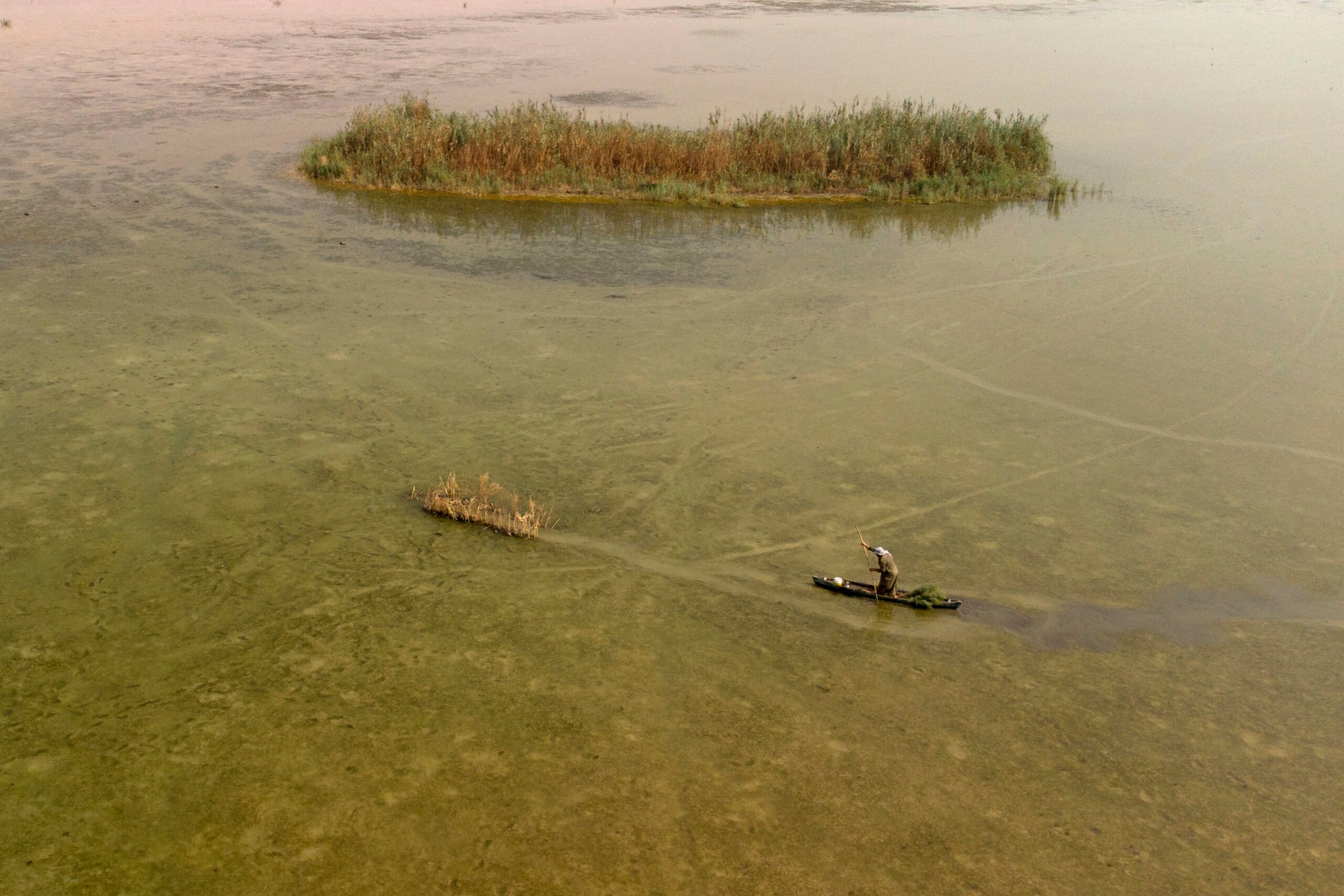
Iraq’s marshes, once teetering on the brink of ecological collapse, are finally beginning to show signs of life. After enduring prolonged droughts that left vast areas cracked and barren, recent rainfall and improved water management have revitalized these vital ecosystems. The resurgence of these wetlands is crucial not only for the wildlife and flora that depend on them but also for the local communities that rely on the resources these marshes provide.
Water’s Return to the Marshlands
In recent months, Iraq’s historic marshes have witnessed a gradual resurgence. The relentless drought that plagued the region has given way to increased water levels, spurred by heavy winter rains and enhanced river inflows. This transformation is allowing buffalo herders, fishermen, and families to return to marsh areas that had been abandoned for years. The revival, albeit delicate, is evident—the once-dry waterways are now navigable again, and buffalo are returning to their former pastures, while reeds start to reappear in places where they had vanished.
The Challenges Facing the Marshes
The Mesopotamian Marshes hold more than just environmental significance; they are a UNESCO World Heritage site and one of the largest inland delta systems globally. These wetlands have deep cultural ties, particularly for the Marsh Arab communities who depend on them for fishing, livestock grazing, and traditional crafts. However, long-standing water scarcity has severely impacted these ecosystems. Factors such as climate change, upstream management of water resources, and insufficient supply conditions have repeatedly diminished inflows from the Tigris and Euphrates rivers, putting the marshlands at risk. Between 2021 and 2025, some regions experienced such extreme drought that they completely dried out.
Factors Behind the Recent Change
The recent positive developments can be attributed to the wetter climatic conditions and improved reservoir management. Iraqi officials have indicated that increased storage levels have allowed for more water to flow into the marshes, coupled with above-average rainfall that has bolstered river flows. Reports suggest that Iraq’s strategic water reserves rose by roughly 6 billion cubic meters this year, thereby giving authorities more flexibility in meeting summer water demands. However, the marshlands remain vulnerable to the harsh summer climate, and without ongoing replenishment, they could swiftly return to a desolate state.
Importance of the Marshes’ Revival
The revitalization of Iraq’s marshes is essential for both the environment and human livelihoods. Elevated water levels contribute to greater biodiversity, bolster migratory bird habitats, and create favorable conditions for fishing and buffalo herding. The return of reeds is particularly significant, as they play a crucial role in the traditional constructions and livelihoods of the communities that inhabit these wetlands. Nevertheless, experts caution that this recovery does not equate to a complete resolution of the challenges facing the marshes. A sustainable future will require more effective water governance, improved management practices, and robust measures to adapt to climate change.
The Fragile Future Ahead
While the recent rebound is encouraging, the future of Iraq’s marshes remains tenuous. This narrative serves as a beacon of hope in a region faced with water scarcity. It illustrates the potential for ecosystems to respond favorably when adequate water resources are restored, yet it also highlights how precarious this recovery can be. For the local communities who rely on these wetlands, the pressing concern is whether the marshes can endure the next drought. The outcome will hinge on various factors, including rainfall, river inflows, and policy decisions made far beyond the marshes themselves. For now, the sight of boats traversing these waters and buffalo grazing on lush pastures offers a poignant reminder that these wetlands are far from lifeless and still hold promise for the future.