
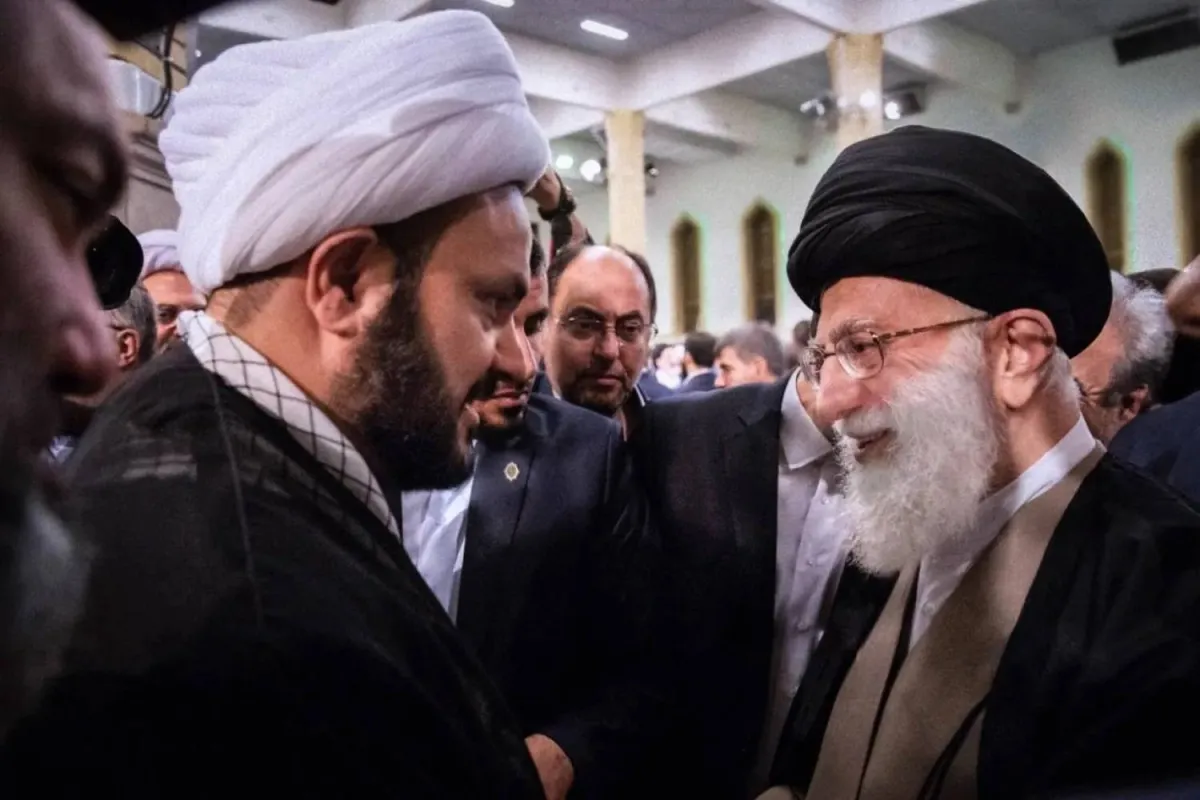
The Nujaba Movement in Iraq, closely aligned with Iran, has recently raised alarms about an alleged “American plot” aimed at integrating the Popular Mobilization Forces (PMF) into new government security frameworks. This warning comes as Prime Minister Ali al-Zaidi faces an initial challenge in his endeavor to centralize control over armed groups within the state.
Concerns Over U.S. Influence
The movement’s concerns arose after David Petraeus, a former commander of U.S. Central Command and past leader of American forces in Iraq, visited the country. His trip has heightened suspicions regarding the influence of the U.S. in Iraq’s internal security matters. The Nujaba Movement perceives any attempts to incorporate PMF into state functions as a direct assault on their operations and ideological stance.
Government’s Stance on Security
The new Iraqi government appears increasingly resolute in addressing armed factions, especially following recent attacks that originated from Iraq against Saudi Arabia and the United Arab Emirates. These incidents have provoked strong reactions from the leadership in Riyadh and Abu Dhabi. Prime Minister Zaidi condemned the attacks as “criminal acts,” and the Iraqi military’s spokesperson, Sabah al-Numan, asserted that a thorough investigation will be carried out with collaboration from neighboring countries to identify those responsible.
Enforcement of Arms Monopolization
Al-Numan emphasized that the government’s commitment to ensuring a monopolization of arms is more than just rhetoric; it is a necessary security strategy. He declared, “The success of the government will be measured by how much it establishes itself as the sole party that holds power over weapons.” This statement highlights the urgency of the situation and underscores the seriousness of the government’s intent to restore order and security.
Resistance from Armed Factions
While government officials are vocal about their commitment to suppressing armed factions, groups like Kataib Hezbollah and Kataib Sayyid al-Shuhada have remained notably silent amid the unfolding developments. In stark contrast, the Nujaba Movement has openly resisted the government’s push for a weapons monopoly. Deputy head Hussein al-Saeedi declared that “the resistance’s weapons are not open to compromise,” warning that disarming militant factions would leave society vulnerable to potential threats.
Moreover, al-Saeedi characterized proposals to merge the PMF with the federal police and other entities as part of a new “federal security ministry” as an “American plot.” He dismissed these efforts as “futile” and “impossible to execute.” This perspective reflects a deep skepticism among certain factions about the motivations behind U.S. involvement in Iraq’s security architecture and raises questions about the future relationship between armed groups and the central government.
As the situation evolves, it remains to be seen how the Iraqi government will navigate the complex landscape of local power dynamics while asserting its authority. The tension between asserting state monopoly over arms and the deeply entrenched presence of Iranian-aligned factions presents a formidable challenge for Prime Minister Zaidi as he strives to establish effective governance in Iraq.