
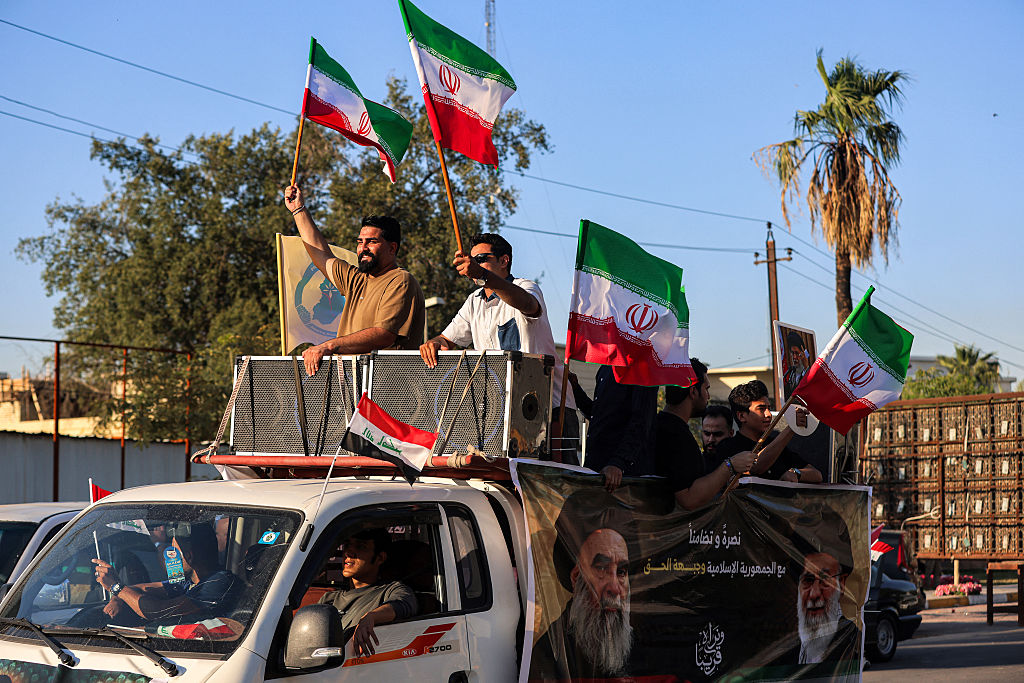
The conflict involving Iran-aligned forces against the United States and Israel has escalated, particularly through groups such as Hezbollah and the Houthis. These militant organizations, part of the so-called “Axis of Resistance,” have initiated numerous retaliatory attacks from Lebanon and Yemen, broadening an already complex regional conflict. Additionally, the “Islamic Resistance in Iraq” (IRI), which consists of Shia militias linked to Iran’s Islamic Revolutionary Guard Corps (IRGC), has increased its involvement by trading strikes with the U.S. and Israeli forces. Presently, a delicate ceasefire is in place, albeit with instances of violations.
### The Role of the Islamic Resistance in Iraq
The involvement of the IRI is particularly significant because many of its components fall under Iraq’s Popular Mobilization Forces (PMF), officially recognized within the country’s military structure. This incorporation includes groups like Kata’ib Hizballah and Asa’ib Ahl al-Haq, which have been designated as terrorist organizations by the U.S. government. The PMF emerged in response to the ISIS threat in 2014 when Iraqi officials rallied various militias to unite against the extremist group. Despite their formal recognition, the PMF’s relationships with Iranian backing create complexities in Iraq’s defense policy and security measures.
In recent months, the violence between the IRI and American-Israeli forces has intensified. Targeted military actions, like the 2019 drone strike that killed a PMF commander, ignited pleas from Iraqi leaders for U.S. withdrawal. This antagonism culminated in a significant escalation in early 2020, when a U.S. drone strike assassinated key IRI figures. While these events illustrate ongoing hostility, they also reveal the inflated autonomy of Iranian-backed militias who often operate independently of the Iraqi government.
### Sovereignty and Self-Defense Claims
As Iraq attempts to navigate its sovereignty amid external pressures, it has engaged in actions designed to hold both U.S. and Iranian leaders accountable for military activities on its soil. In March 2026, the Iraqi Ministerial Council ambiguously sanctioned the PMF’s right to self-defense against U.S.-Israeli attacks, further complicating the legal landscape. This permission allows PMF units to act against perceived aggressors without waiting for central government orders, indicating a shift that might redefine the scope of Iraq’s involvement in this conflict.
However, the implications of this move are contested. Prime Minister Mohammed Shia al-Sudani recently emphasized that the PMF serves as a vital component of Iraq’s national security. This assertion raises important questions about whether Iraq’s status in the ongoing skirmishes with the U.S. and Israel represents a non-international conflict or evolves into an international armed conflict directly involving the Iraqi state.
### Classifying the Evolving Conflict
Determining the nature of the ongoing conflict is crucial for understanding its legal ramifications. The widely accepted definitions of international armed conflicts hinge on engagements between recognized states. Traditionally, the IRI’s actions have been seen as originating from its own agenda rather than acting on behalf of the Iraqi government. The recent decision from the Iraqi Council may blur these lines, as it suggests a formal approval of militant actions as part of state defense.
Despite this, many experts still argue that Iraq does not officially engage in conflict against the U.S. and Israel. The PMF has historically acted independently and shown allegiance to Iranian leadership, often complicating Iraq’s international responsibilities. Consequently, the question arises whether the relationship between the Iraqi government and the IRI represents a shift toward an international legal framework or if it remains within the confines of non-international conflict.
### Conclusion
The present situation reflects a complex interplay between state sovereignty and armed group autonomy in Iraq. Despite recent developments that indicate the PMF’s integration into the Iraqi military, the empowerment given to these groups does not suffice to categorize the ongoing conflict with the U.S. and Israel as international in nature. Iraq continues to grapple with internal control issues following years of conflict, and while it may not currently be a direct party to an international armed conflict, it remains accountable for the militarized actions undertaken by the PMF. Continued monitoring of the situation will be essential as regional dynamics evolve and as Iraq seeks to stabilize its domestic affairs amid external pressures.