
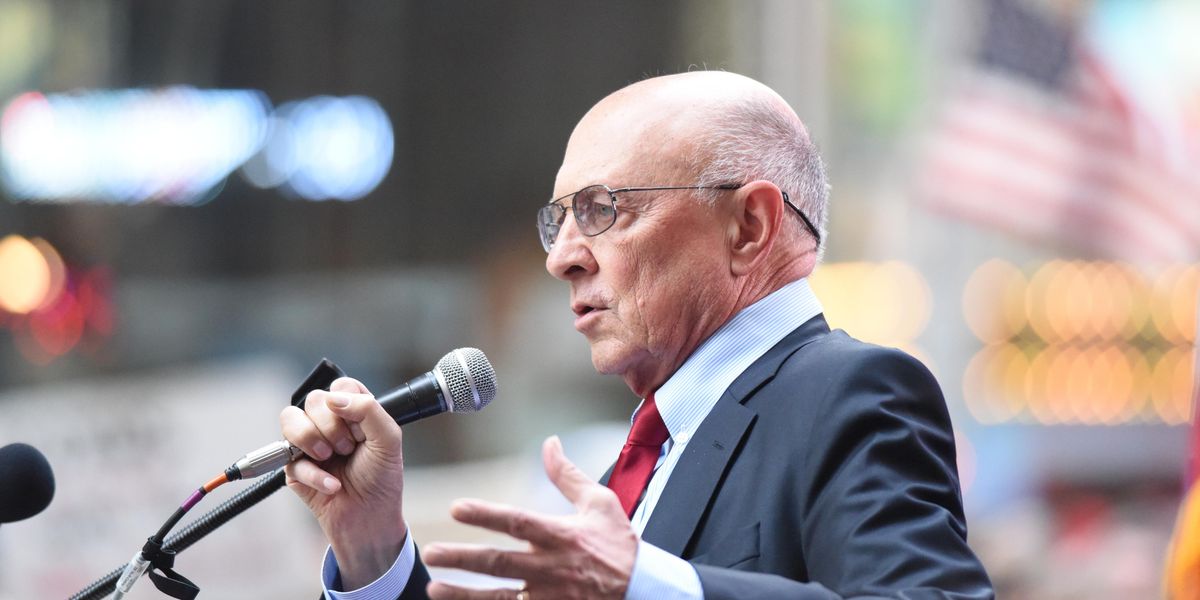
R. James “Jim” Woolsey, a prominent figure in American foreign policy and a key advocate for the Iraq War, has passed away at the age of 84. His contributions to the neoconservative movement and involvement in the Global War on Terror (GWOT) defined much of the political landscape in the early 21st century.
Woolsey’s Role as CIA Director
Woolsey briefly served as the director of the Central Intelligence Agency (CIA) but gained more extensive recognition as a vocal advocate for U.S. military intervention in Iraq. He became a regular commentator on major media outlets, vigorously supporting the invasion during the lead-up to the war. Following the 9/11 attacks, Woolsey was often seen as linking Iraq with al-Qaeda, asserting that Saddam Hussein may have orchestrated or approved the attacks in some way. His statements played a significant role in shaping public perception and policy discussions surrounding Iraq at that time.
After his tenure at the CIA ended in 1994, Woolsey became increasingly aligned with neoconservative ideologies. His shift to the right was highlighted in a respectful obituary published by the New York Times. He became associated with influential neoconservative figures like Richard Perle and joined the American Enterprise Institute (AEI), which was pivotal in shaping U.S. foreign policy.
The “Neocon Core” and Its Influence
Woolsey was a vital component of what anthropologist Janine Wedel termed the “Neocon Core.” This group consisted of key advisors in the Bush administration, including prominent figures like Paul Wolfowitz, Douglas Feith, and I. Lewis “Scooter” Libby. Together, they formed a network that contributed to the narrative justifying military action in the Middle East and advocated for aggressive stances against countries viewed as threats to Israel and, by extension, U.S. interests.
This network leveraged their collective influence to sustain a powerful echo chamber, disseminating information aimed at justifying the Iraq invasion. As a result, they were instrumental in spreading exaggerated claims about Iraq’s weapons of mass destruction and in constructing a narrative that connected Saddam Hussein to global terrorism, despite a lack of conclusive evidence.
Connection to Various Think Tanks and Initiatives
Woolsey’s involvement extended to various influential organizations and initiatives that supported interventionist policies. He played advisory roles in think tanks like the Center for Security Policy and was heavily engaged with the Foundation for Defense of Democracies, which emerged as a prominent pro-Israel think tank advocating for military action against Iran.
In 2008, he co-founded United Against a Nuclear Iran, an organization closely tied to Israeli intelligence and dedicated to promoting economic sanctions against Iran. Furthermore, although he wasn’t a signatory of the Project for the New American Century’s foundational charter, he engaged with its initiatives, further solidifying his role in the neoconservative movement.
Legacy and Impact on American Foreign Policy
Woolsey’s career exemplifies the interconnections within the neoconservative establishment that influenced U.S. foreign policy during a critical period. His efforts were crucial in popularizing the narrative that led to military action in Iraq, fostering a culture of mistrust against adversarial states, and endorsing aggressive strategies framed as necessary for national security.
His legacy will likely remain contentious, marked by the complexities of U.S. foreign policy decisions influenced by ideological commitments. As discussions around the implications of these interventions continue, Woolsey’s life and work will serve as key points of analysis in understanding the dynamics of international relations in the 21st century.