
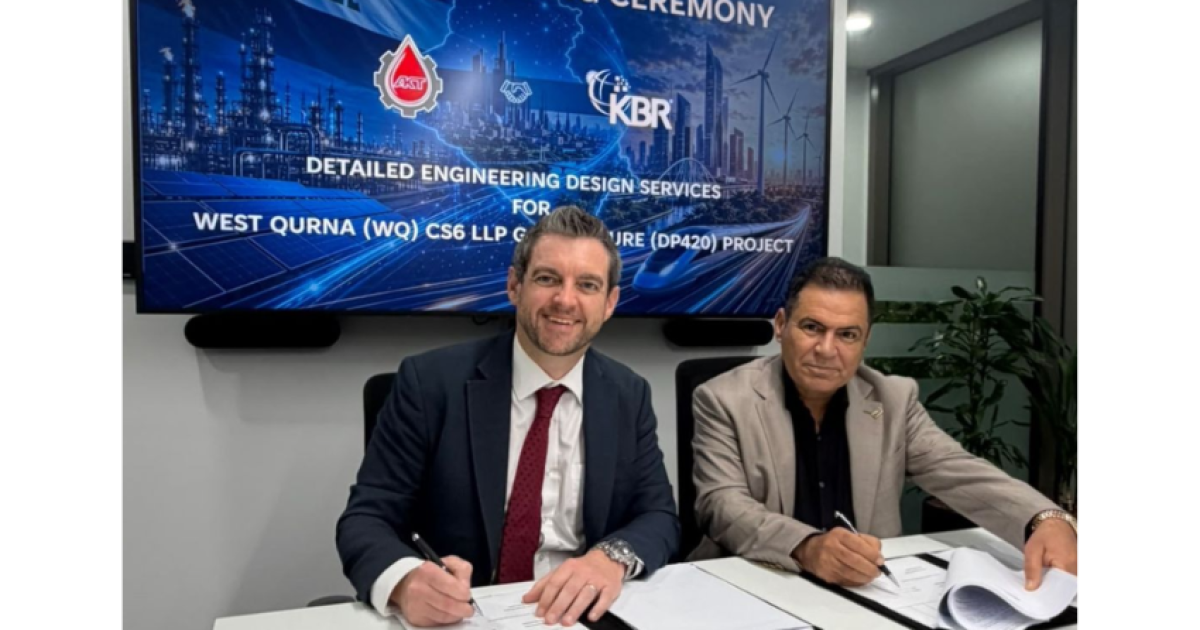
KBR has secured a contract with Iraq’s AKT Oil Services Co. to execute comprehensive engineering design for the Basrah Gas Company’s (BGC) West Qurna Gas Capture Project. This initiative aims to gather low-pressure associated gas that is currently being flared in the southern oil fields of Iraq.
Project Overview and Significance
The focus of the contract is on Gas Compressor Station 6, located within the West Qurna-1 oil field. This field, renowned for its vast recoverable reserves exceeding 20 billion barrels, ranks among the largest oil fields globally. In July, BGC awarded the engineering, procurement, and construction (EPC) contract to AKT, confirming its role as the main contractor while subcontracting the detailed engineering design work to KBR, a recognized international partner, as reported by Iraqi state media.
BGC is a significant joint venture formed for 25 years, combining the expertise of the state-owned South Gas Company (which holds 51%), Shell (44%), and Mitsubishi Corp. (5%). The company is tasked with the critical role of collecting and processing associated gas from major oil fields, including West Qurna-1, Rumaila, and Zubair.
Reducing Flare Gas and Enhancing Sustainability
Euan McCulloch, Vice President for KBR’s Sustainable Technology Solutions business unit in the Middle East, highlighted the project’s importance in maximizing value from Iraq’s energy resources. He stated that this initiative is integral to decreasing gas flaring, which is vital for promoting long-term energy sustainability. The company views its collaboration with AKT as a pivotal step toward achieving BGC’s vision for a cleaner and more efficient energy landscape.
Currently, Iraq ranks third in the world for gas flaring, following Russia and Iran, according to the World Bank’s 2026 Global Gas Flaring Tracker Report. Each year, approximately 17 to 18 billion cubic meters of associated natural gas are flared, representing around 13% of the global total. However, since 2013, BGC has increased its gas recovery from 250 million standard cubic feet per day (MMscf/D) to nearly 1,000 MMscf/D, successfully capturing over 60% of the associated gas produced from the Rumaila, Zubair, and West Qurna-1 fields.
Despite these advancements, Iraq’s push to escalate oil production has led to a simultaneous rise in associated gas output, resulting in increased flaring. While efforts to capture and utilize gas are progressing, the output continues to create challenges.
The Future of Iraq’s Energy Landscape
KBR expresses pride in contributing its international engineering expertise to this significant project and looks forward to working with AKT in support of BGC’s overarching goals. McCulloch emphasized KBR’s commitment to fostering strategic projects aimed at gas monetization and the development of energy infrastructure across Iraq and the broader Middle East.
As for the specifics of the contract, including its financial details and timeline for completion, the companies have opted not to disclose this information. Nonetheless, the focus remains on creating a more sustainable and efficient approach to utilizing Iraq’s vast energy resources, indicating a brighter energy future for the nation.