
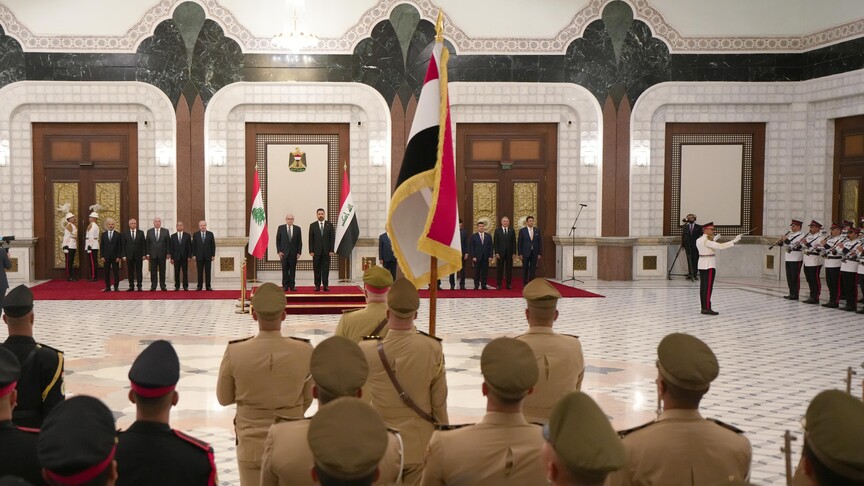
Lebanese Prime Minister Nawaf Salam expressed his vision for a strengthened partnership with Iraq, emphasizing the potential for regional projects that can spur investments and foster sustainable growth. This initiative aims to enhance cooperation between the two nations, setting a foundation for mutual economic benefits.
Strengthening Regional Partnerships
During a recent visit to Iraq, Prime Minister Salam, accompanied by a government delegation, engaged in discussions with Iraqi President Nizar Amidi and Prime Minister Ali al-Zaidi. The meetings were centered on collaborative strategies that can lead to significant advancements in diverse sectors such as energy, telecommunications, and transportation. Salam’s commitment to forming strategic connections with Iraq highlights the importance of regional unity in achieving economic resilience.
Opportunities for Sustainable Growth
Salam indicated that joint initiatives would allow Lebanon and Iraq to capitalize on emerging opportunities brought about by profound transformations within the region. By establishing shared projects, both countries can enhance their sectors and improve their overall economic landscapes. The Lebanese Prime Minister stated, “Economic cooperation among the countries of the region constitutes a fundamental pillar of strength, stability, and shared prosperity.” This sentiment underscores the belief that integrated efforts yield mutual advantages, laying the groundwork for long-term success.
Previous Agreements and Future Prospects
The discussions represent a continuation of previous agreements made between Iraq and Lebanon. Notably, on July 11, 2023, both governments signed a pivotal agreement enabling Iraq to supply Lebanon with the necessary fuel for its power plants. This agreement is a part of the ongoing bilateral endeavors aimed at fostering economic stability and promoting development in both nations, demonstrating a commitment to a collaborative future.
By reinforcing their partnership, Lebanon and Iraq are positioning themselves to navigate the complexities of today’s economic environment. The focus on connectivity and investments not only aims to benefit the respective nations but also encourages a wider regional framework that proliferates mutual growth and collaboration.
As the nations move forward, Salam’s vision of a vibrant Lebanon working alongside Iraq could serve as a model for other countries in the region. This collaboration may pave the way for increased prosperity and stability across borders, providing a blueprint for how strategic partnerships can yield tangible results in today’s interconnected world. The commitment to working closely together suggests an exciting future for both Lebanon and Iraq, as they seek to strengthen their economies and create lasting impacts.