
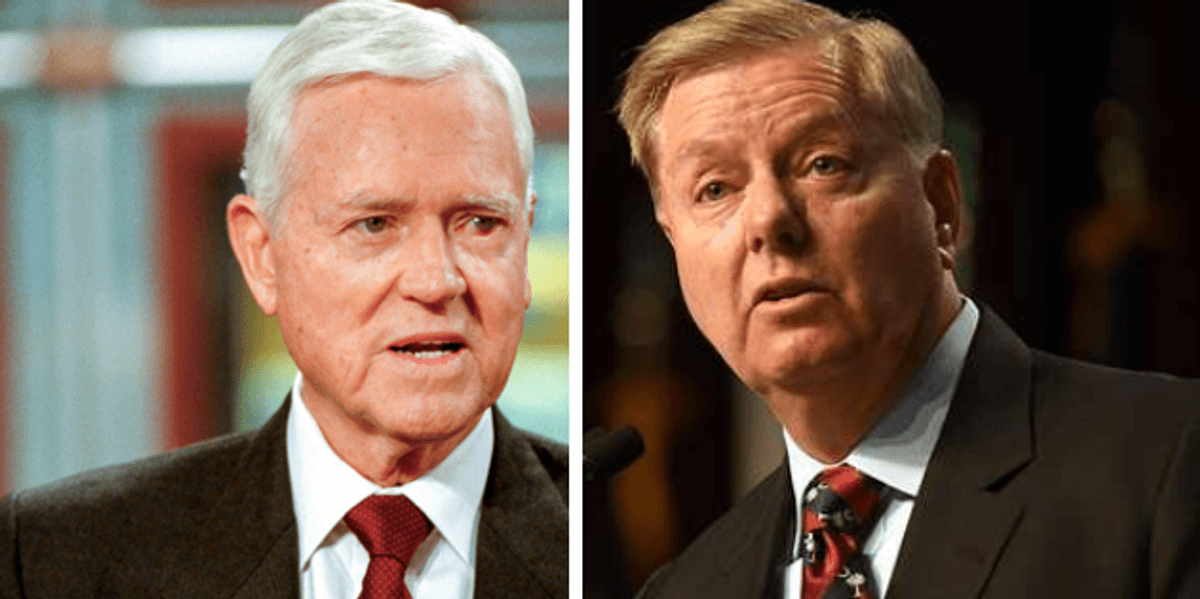
Senator Lindsey Graham passed away unexpectedly on July 11 at the age of 71, prompting his upcoming funeral services in Washington and his home state of South Carolina. Known for his strong conservative stance, particularly as a military advocate and supporter of Israel, Graham became a divisive figure in American politics.
Legacy of Graham and Political Differences
Graham’s political career was marked by unwavering support for military intervention, distinguishing him from his predecessor, Democratic Senator Fritz Hollings. Hollings served alongside Graham for two years before retiring in 2005. Unlike Graham, Hollings had a more critical perspective regarding war strategies, particularly concerning Iraq. While Graham promoted military action, Hollings initially supported the Iraq War but later voiced profound skepticism, ultimately becoming a vocal opponent.
In contrast to Graham’s consistent defense of Israel, Hollings questioned the U.S.’s dedication to Israeli agendas, remarking on the influence of neoconservative figures in pushing America into conflicts that had devastating consequences. He suggested that the actions taken in Iraq were partially to secure Israel’s future, a sentiment that sparked considerable controversy and ultimately labeled him as anti-Semitic by some critics.
The Debate Over U.S. Intervention
Hollings expressed in a 2004 column that the motivations for the Iraq invasion were not purely American interests but were also influenced by Geopolitical loyalties, specifically to Israel. He has been quoted asserting that the invasion aimed to “secure Israel,” holding the Bush administration accountable for decisions that led to widespread turmoil. This perspective ignited fierce backlash, especially from Jewish organizations who felt this narrative unfairly scapegoated the Jewish community and distorted the rationale for military involvement.
Despite facing accusations, Hollings remained steadfast in his views, emphasizing the need for transparent discussion regarding military actions and their real motivations. He argued that invading Iraq went against the lessons learned from past military conflicts and that the subsequent chaos only exacerbated the Middle Eastern crisis. He also voiced concerns about the financial burden placed on American troops, suggesting that the country should not demand soldiers to fight for a war that the government was simultaneously failing to adequately fund.
Reflections on U.S.-Israel Relations
Hollings’ insights into U.S.-Israel relations highlight an ongoing debate about America’s role in global conflicts and its alliance with Israel. As the geopolitical landscape evolves, some Democrats share sentiments similar to Hollings, questioning the extent to which American interests align with those of Israel. Recent trends indicate a growing desire among certain factions of the Democratic Party to reassess military assistance offered to Israel and to foster a more rigorous debate about foreign policy in the Middle East.
Interestingly, as Graham’s legacy is mourned, the echoes of Hollings’ critiques serve as a stark reminder of the complex and often contentious relationship between American foreign policy and its implications for both the U.S. and its allies. As the nation faces shifting opinions on military engagements, both Graham’s strong allegiance to Israel and Hollings’ critical perspective illustrate the diverse viewpoints that characterize American politics today.
In summary, as South Carolinians pay their respects to Graham, it is equally crucial to consider the undeniable impact of figures like Hollings, who questioned the motivations behind wars and the broader implications for U.S. policy. This ongoing dialogue reflects the evolving landscape of American politics and the perception of military commitments in an increasingly complex world.