
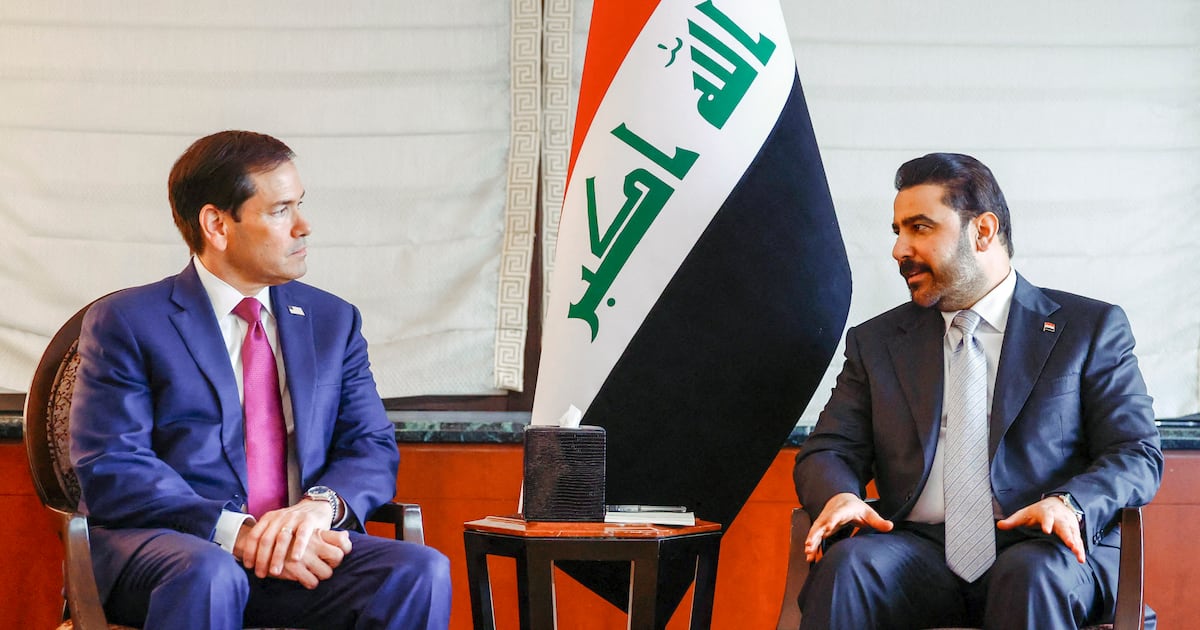
U.S. Secretary of State Marco Rubio and Iraqi Prime Minister Ali Al Zaidi met during the UN General Assembly in New York to discuss crucial issues affecting Iraq, particularly the disarmament of militia groups. The timeline for integrating these armed factions into state control has been extended, now set for June next year, rather than the previously anticipated deadline of the end of this month. This conversation highlights the ongoing regional complexities and the challenges that lie ahead in solidifying Iraq’s sovereignty.
Disarming Militia Groups
In their discussions, Rubio and Al Zaidi emphasized the necessity for Iraq to dismantle terrorist militias that pose security threats and hinder the nation’s sovereignty. A statement from the U.S. State Department remarked on the consensus between the two leaders regarding the need to eliminate these armed factions and prevent foreign-led attacks from Iraqi soil. The Iraqi Prime Minister is under significant pressure from Washington to curb Iran-backed militia groups while bringing non-state actors’ weapons under government authority.
Al Zaidi previously set a deadline of September 30 for the disarmament of these groups, aligning it with the timeline for the withdrawal of U.S.-led forces from Iraq. However, recent statements indicate that this goal may not be met, with Al Zaidi suggesting that a more realistic timeline may extend to June 2027. This announcement casts doubt on the effectiveness of the initial deadline and suggests a lengthy, potentially contentious process ahead.
The Resistance from Militia Groups
Resistance from the militia groups themselves has complicated the disarmament initiative. While factions such as Asaib Ahl Al Haq and Kataib Imam Ali, which are aligned with Iranian interests, assert they have complied by placing their arsenal under state control, others, especially hardline groups like Kataib Hezbollah, refuse to disarm until foreign military presence is fully withdrawn. This clear division among militia groups represents a significant obstacle to the Prime Minister’s objectives.
Recently, Qasim Al Araji, a security advisor to Al Zaidi, confirmed the absence of a definitive timeline to finalize disarmament, thereby raising questions about the September 30 deadline. An insider close to the Prime Minister indicated that Iran-backed militias show little willingness to surrender their weapons, posing a significant challenge not only to the disarmament process but also to Iraq’s internal security landscape.
Commitments to Disarmament
Al Zaidi underscored the importance of disarming militia groups, describing it as a non-negotiable issue. He firmly stated that previous leaders who attempted to tackle this issue often retreated due to external pressures. For Al Zaidi, the topic of disarmament, alongside corruption, remains a matter of national honor, emphasizing its significance in his administration’s priorities.
Since taking office in May, Al Zaidi has faced substantial international pressure, particularly from the U.S., to confront these critical issues. During his meeting with Rubio, he reiterated the Iraqi government’s commitment to fulfilling its sovereign responsibilities, highlighting the need for all arms to be under state authority. To address these challenges, a committee has been formed, drawing from the Co-ordination Framework, which consists of Iran-aligned political factions and militias, specifically to facilitate the process of transferring weapons into state hands. This development could play a pivotal role in shaping the future of Iraq’s security and governance.