
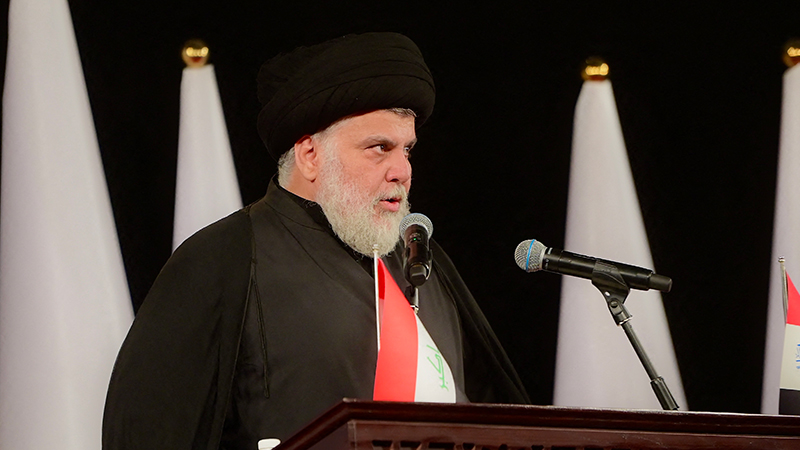
Iraq is poised at a significant juncture following Shia cleric Muqtada al-Sadr’s recent decision to bring his armed faction, Saraya al-Salam, under the government’s authority. This move, announced on May 27, 2026, raises questions about whether it signifies a genuine commitment to disarmament or is merely a tactic for Sadr to maintain relevance in an evolving political landscape. As the United States intensifies its pressure on Baghdad to control armed groups, Sadr’s announcement could help bolster the new government led by Prime Minister Ali al-Zaidi in reaffirming state sovereignty.
Implications of Sadr’s Decision
Skeptics argue that Sadr’s intentions might not be rooted in a sincere desire for disarmament. Some commentators view his actions as an attempt to undermine pro-Tehran factions, which he has criticized for their impact on Iraq’s sovereignty. Historical precedents exist to question Sadr’s commitment, as previous calls for disarmament have not resulted in significant changes. The crucial task lies in whether the Iraqi state can create a framework that integrates all armed factions, regardless of sect, thereby advancing actual state sovereignty rather than simply redefining militia power.
The Challenge of Disarmament
The formation of armed groups like the Mahdi Army in the aftermath of the 2003 invasion highlights the complexity of Iraq’s militia landscape. Founded on nationalistic sentiments, these groups have undergone various forms of disbandment and reactivation influenced by political dynamics. For example, the Mahdi Army’s ceasefires and eventual transformation into Saraya al-Salam illustrate Sadr’s adaptability. His movement resonates with ordinary citizens by advocating for social services, anti-corruption efforts, and anti-occupational sentiments. However, his historical shifts in strategy raise doubts about his recent claims of disarming an armed faction.
The integration of militias into the state framework presents multifaceted challenges. While some factions may genuinely seek to align under a unified command, others might maintain political clout while still operating independently. The PMF’s official status complicates this dynamic, as many militias enjoy high autonomy despite their formal ties to the state. Therefore, understanding state control in Iraq involves a nuanced examination of how existing power structures will interact with armed groups going forward.
Regional Influences and Future Scenarios
The political rift among Iraq’s Shia factions post-Sadr’s announcement underscores the challenges of achieving unity. While some factions have expressed willingness to cooperate with the government, others remain uncompromising, influenced heavily by Iran’s strategic interests. This division complicates the path to disarmament. Iran’s longstanding involvement in Iraq creates a landscape where pro-Iran factions resist disarmament as they perceive it as a threat to their survival and operational efficacy.
Despite optimistic views regarding Sadr’s initiative, the entrenched role of armed groups backed by Tehran complicates the picture. Future success in state integration will largely depend on the national institutions’ capacity to implement necessary reforms and how they navigate these deeply rooted sectarian divides. Ultimately, while Sadr’s move might inspire some level of cooperation, Iraq’s broader political turmoil could continue to hinder significant progress.
Conclusion
Muqtada al-Sadr’s announcement marks a pivotal moment for Iraq, presenting a tightrope walk between disarmament and political sovereignty. The country faces an uphill battle in ensuring militia compliance while maintaining a cohesive state structure. As the issue of disarmament unfolds, the interplay between domestic political considerations and external influences from actors like Iran will shape the landscape ahead. The real question lies not only in whether these militias can be systematically integrated but also whether the Iraqi state can truly assert itself amid competing interests.