
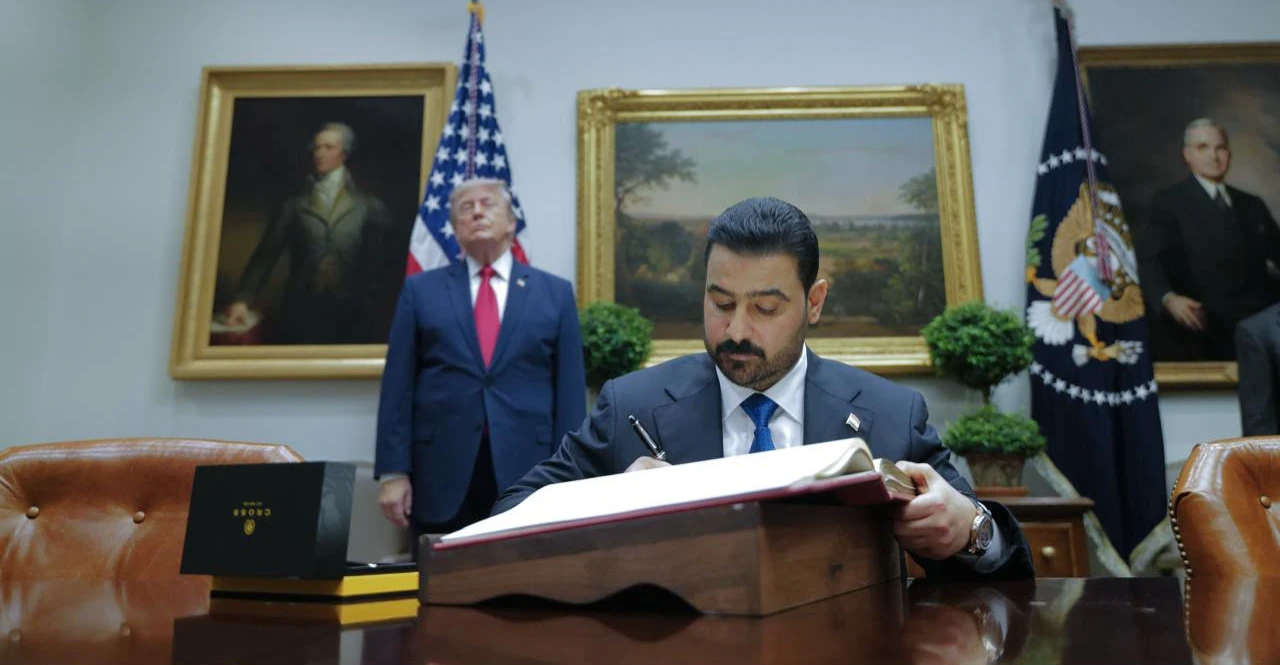
Iraqi Prime Minister Ali al-Zaidi is poised to request that President Joe Biden delay any potential U.S. economic or financial sanctions against Iraq. This request comes at a critical time as Iraq approaches a significant deadline for the control of faction weapons.
Key Background Context
The urgency behind al-Zaidi’s appeal ties into the date of September 30, which was originally set for Iraq to take complete control of factional weapons. This date also coincides with the anticipated end of the U.S.-led Coalition’s military mission in Iraq. A senior Iraqi government source has indicated that while the Iraqi administration had initially aimed to finalize the weapons process by this date, it has since acknowledged the need for additional time. “Baghdad is yet to resolve the matter, and Al-Zaidi is seeking an extension from Washington,” the source noted.
Meeting at the UN General Assembly
During an upcoming meeting at the UN General Assembly in New York, al-Zaidi is expected to reassure President Biden that his government will approach the resolution of this weapons issue promptly after the timeline of September 30 and the completion of U.S. military withdrawal. Not only will he inform Biden of ongoing discussions with various factions regarding the surrender of their weapons, but he will also emphasize that Iraq’s decisions regarding peace and conflict should reside with its state institutions—not external entities.
Concerns Over Economic Sanctions
One of al-Zaidi’s motivations for this appeal is a rising concern that the United States may discontinue dollar shipments to Iraq if significant progress is not made. The Iraqi economy relies heavily on oil revenues, which are deposited in U.S. banks, thus giving the U.S. substantial influence over financial transactions in Iraq.
In mid-July, al-Zaidi made an official trip to the United States accompanied by a delegation of high-ranking officials. The visit’s primary focus was to advocate for increased U.S. investment in Iraq, particularly in the energy sector, as well as to explore alternative routes for crude oil exports.
U.S. Support for Iraqi Sovereignty
The Biden administration has shown support for al-Zaidi’s efforts to reaffirm Iraqi sovereignty as the country navigates through a new political landscape. A State Department spokesperson has conveyed that the United States backs al-Zaidi’s vision for a future free from terrorism and emphasizes the need for stability within Iraqi borders. However, the spokesperson did not confirm whether the U.S. is considering financial or economic penalties against Iraqi individuals or entities if progress on weapon disarmament is not achieved.
The ongoing situation illustrates Iraq’s precarious position, caught in a struggle between its internal factions and external pressures, all while striving to maintain autonomy and stability in a turbulent regional landscape. As the September deadline approaches, the actions taken—or not taken—by both the Iraqi government and the U.S. will significantly shape the future of the relationship between the two nations and the overall security situation in Iraq.