
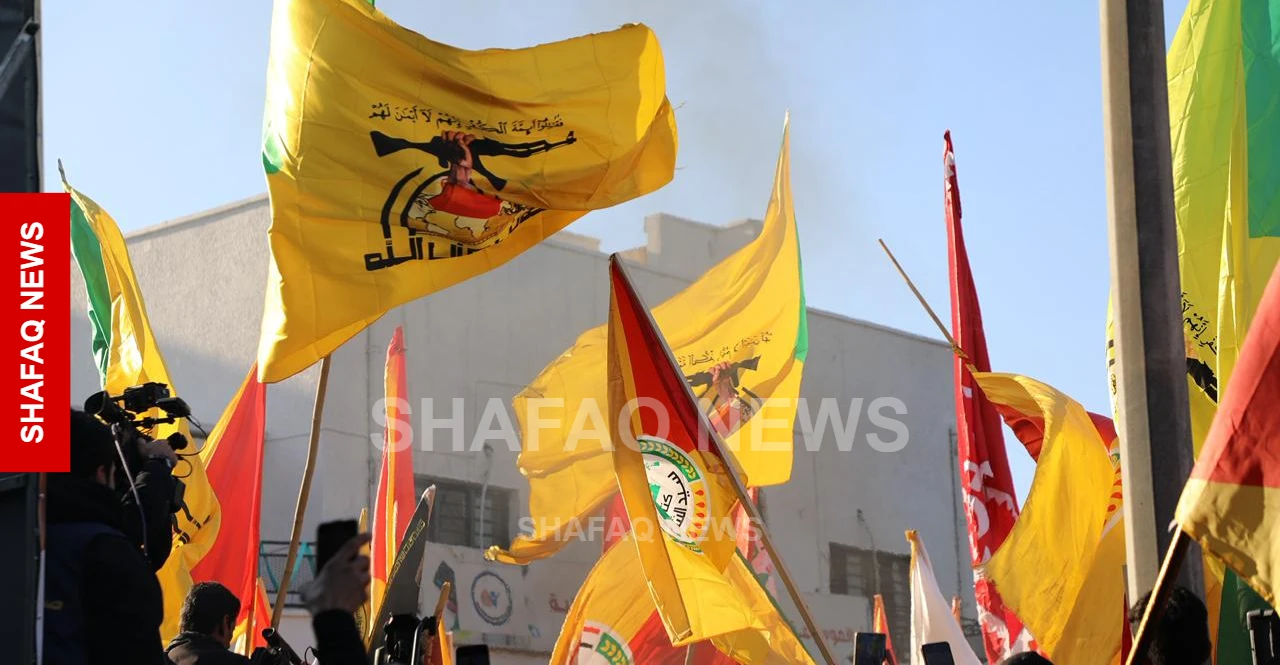
In a significant development for Iraq’s security landscape, four armed factions are willing to relinquish their weapons under specific conditions. These factions, identified by lawmaker Faleh Al-Khazali, are outlining their prerequisites for enhancing national security and stabilizing the region.
Conditions for Disarmament
The four groups—Kataib Hezbollah, Kataib Sayyid Al-Shuhada, Harakat Al-Nujaba, and Ansar Allah Al-Awfiya—have set essential conditions for placing their arms under state control. Al-Khazali, head of the Montasiroun parliamentary bloc within the State of Law Coalition, indicated that their demands include the withdrawal of foreign forces, including U.S. and Turkish troops, and the expulsion of Iranian opposition entities and the Kurdistan Workers’ Party (PKK). They are also calling for enhanced capabilities for the Iraqi military and measures to restrict foreign aircraft’s access to Iraqi airspace, especially to avoid strikes directed at Iran.
Additionally, Al-Khazali emphasized that the ongoing initiative to regulate over six million weapons in private tribal hands aims to fortify Iraq’s security apparatus. By addressing these weapons, the government seeks to empower Iraqi security forces, enabling them to safeguard national interests more effectively.
The Threat Landscape
Al-Khazali pointed out that the PKK, along with Turkish forces and Iranian opposition factions, poses a threat not only to Iraq but also to neighboring countries. Interestingly, he underscored that the four factions have historically refrained from targeting U.S. economic interests, even during the peak presence of around 160,000 U.S. troops. Their primary concern has been focused on U.S. military bases, which they perceive as an encroachment on Iraq’s sovereignty.
Highlighting a critical lesson from Iraq’s recent history, Al-Khazali remarked that ISIS had capitalized on security gaps in the presence of U.S. bases. He advocated for bolstered cooperation and support for Iraq’s security forces to prevent any resurgence of the extremist group.
Calls for Foreign Troop Withdrawal
As the deadline for U.S. military withdrawal looms, Al-Khazali reiterated the urgency for Turkish troops and other foreign military presences to vacate Iraq. He cited the existence of approximately 4,000 Turkish soldiers stationed in the nation, underscoring the need for a comprehensive approach to foreign troop presence.
These armed factions, existing even before the fall of Saddam Hussein’s regime, have noted that their operations have not targeted Iraqi civilians or the nation’s critical infrastructure. Al-Khazali claimed their military losses in past conflicts amounted to over 6,000 members, indicating the cost of their continued struggle for autonomy.
Obstacles to Military Support and Sovereignty
In a recent move to bolster the Iraqi military, Al-Khazali mentioned that he has secured signatures from 80 lawmakers advocating for Chinese support. However, he indicated that U.S. officials have cautioned against this approach, warning that it could provoke economic sanctions against Iraq. Al-Khazali accused the U.S. of obstructing efforts to equip Iraqi forces effectively, emphasizing the importance of Iraq maintaining control over its economic and security decisions without external interference.
He highlighted the problematic dynamic of foreign airstrikes, claiming that daily operations of U.S. and Israeli aircraft within Iraqi airspace are primarily aimed at Iran. These incidents not only undermine Iraq’s sovereignty but also demonstrate the complex international relations influencing its national security. The consensus among Iraqi lawmakers is clear: maintaining control and avoiding foreign domination is essential for ensuring Iraq’s future stability.