
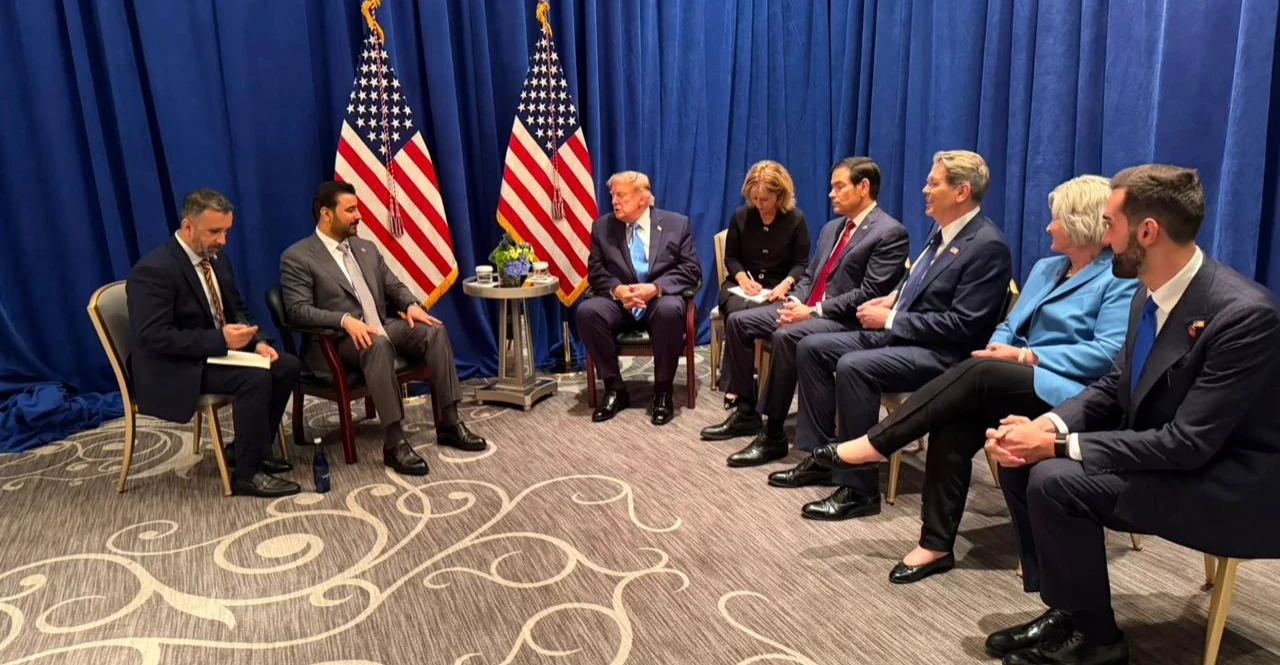
US Secretary of State Marco Rubio has raised concerns regarding the armed factions in Iraq, referring to the potential “Balkanization” of the nation. He emphasizes that consolidating all weapons under government control is essential to eliminate independent forces operating outside of a unified command. This statement underscores the critical link between Iraq’s armed groups and the preservation of the state, a perspective Washington has not previously articulated with such clarity, especially with the impending conclusion of the Global Coalition’s military mission in Iraq on September 30.
### The Nuanced Challenge of Disarmament
Previously, discussions around disarmament primarily revolved around notions of sovereignty and Iranian influence. Rubio’s comments introduce the idea that state survival is at stake. Within Iraq, political figures and analysts largely agree that the multitude of armaments poses a significant threat to cohesive security decisions. However, they are divided regarding the immediacy of Iraq’s potential disintegration, with some arguing that the more pressing concern may be a struggle for control of the state rather than outright partition.
During a press briefing in New York following meetings with Iraqi Prime Minister Ali al-Zaidi, Rubio acknowledged al-Zaidi’s genuine commitment to disarmament but also described the task as colossal and complex. He noted that while some armed groups have cooperated and integrated into state structures, others remain resistant. Completing the disarmament process, he asserted, would prevent independent factions from further dividing the country.
### Changing Timelines for Disarmament
The timeline for disarmament has shifted, with September 30 now expected to coincide with the announcement of a new weapons-control initiative. Meanwhile, Prime Minister al-Zaidi has set a target date of June 30, 2027, to finalize the disarmament agenda. The discussion primarily involves Shia factions within the Popular Mobilization Forces (PMF), some of which hold parliamentary seats. Their reactions to disarmament vary significantly. While some have pledged cooperation, groups like Kataib Hezbollah propose retaining custody of sophisticated weaponry instead of outright surrender, and Harakat Hezbollah al-Nujaba has outright rejected the process.
Rubio’s choice of terminology evokes historical memories and fears of violent fragmentation reminiscent of the Balkan wars between 1991 and 1999, leading to the breakup of Yugoslavia into several nations. The mention of “Balkanization” is particularly resonant in Iraq, where concerns about divisions along Shia, Sunni, and Kurdish lines remain deeply ingrained.
### The Risk of Multiple Centers of Force
Khalid Sido, a member of Iraq’s Security and Defense Committee, notes that the issue transcends just armed factions. The existence of various armed entities, including those from the US-led coalition and Turkish military, compromises the state’s ability to exercise a monopoly on force. This situation fosters an environment where competing influences and political pressures can thrive. Turkey maintains military bases in northern Iraq to combat the PKK, heightening the complexity of Iraq’s security landscape.
Sido argues that these multiple centers of military power dilute the effectiveness of a unified security strategy. He supports al-Zaidi’s initiative to regulate weapons and consolidate authority, despite the inherent risks of fragmentation. However, he also acknowledges the importance of cooperation, as seen in the intelligence-sharing efforts between Baghdad and the Kurdistan Regional Government (KRG).
### Division Amid Governance Challenges
Political analyst Ziad al-Arar prioritizes the immediate threats of political division over physical fragmentation, pointing out that factional interests often overshadow public welfare. He warns that unchecked arms pose a broader regional concern, which could hinder investment and make Iraq vulnerable to external aggression. He believes that despite external pressures, Iraq’s existing structures still act as buffers against imminent division.
Security experts, including Ahmed al-Sharifi, express skepticism over the likelihood of Balkanization. He points to Iraq’s resilience following significant crises, emphasizing that any potential conflicts are more likely to arise from struggles over political authority rather than from outright partition. The evolving dynamics between the US and Iran may also influence Iraq’s political stability, as negotiations between these powers become crucial for local governance.
### Looking Ahead: Unity or Fragmentation?
The varied opinions among Iraqi experts suggest a consensus against the notion of total disintegration, yet they do not underestimate the internal risks associated with rival power centers and factional loyalties. How Iraq manages to reintegrate these factions into the state apparatus will be pivotal. The challenge lies in transforming these groups into reliable components of the national security framework without compromising the integrity and unity of government decision-making. Balancing these interests will determine Iraq’s trajectory in maintaining its sovereignty and cohesive governance in the years to come.