
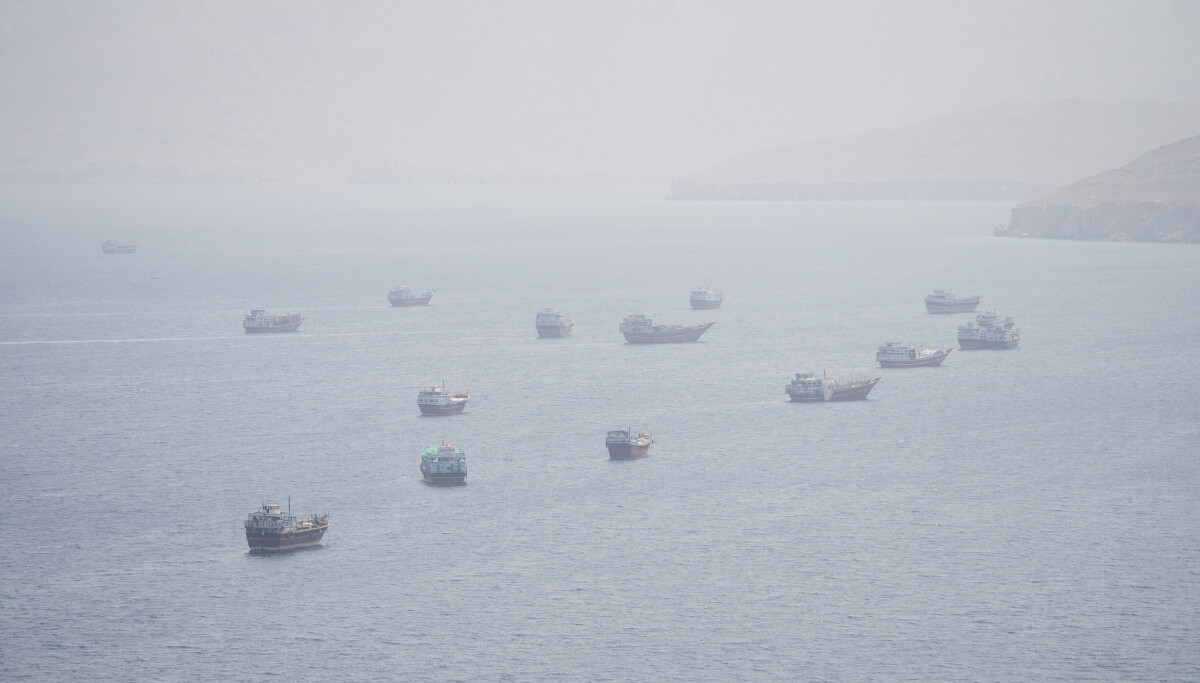
The discussion surrounding Korea’s potential military involvement in the Strait of Hormuz has resurfaced, echoing the controversial troop deployment that took place in 2003 under then-President Roh Moo-hyun. As the current administration led by President Lee Jae Myung considers sending military resources to the region, the dynamics surrounding this decision are far more complex than they were two decades ago.
Complexities in Current Military Discussions
Both administrations are governed by the Democratic Party (DP) and face external pressures from the United States. However, the landscape of international relations and internal politics has shifted significantly. Unlike in 2003, where winning National Assembly approval involved extensive negotiations with opposition parties, the situation today presents a new set of challenges. While the DP has a commanding majority in parliament, opposition to military action has emerged from within, complicating troop deployment discussions.
During the early 2000s, the Roh Moo-hyun administration garnered significant support from conservative parties for the Iraq deployment, which was largely motivated by a desire to strengthen the Korea-U.S. alliance. In contrast, the current DP faces dissent among its ranks, including from the Rebuilding Korea Party and the Jinbo Party. This internal opposition means that the government will first need to convince these influential factions of its strategic decisions.
Shifting Justifications for Deployment
The ability of the current government to provide a compelling justification for deployment has also weakened compared to 2003. Back then, the U.S. government cited serious threats posed by Saddam Hussein’s regime, including alleged development of weapons of mass destruction. The Bush administration sought and failed to obtain a United Nations resolution for military action, but did have Congressional backing. Today, the situation regarding Iran is markedly different; the case for involvement lacks a solid legal foundation and has met significant skepticism both domestically and internationally.
Recent concerns about Iran’s nuclear capabilities do not meet the criteria for an “imminent” threat justifying military intervention. Criticisms have intensified regarding military actions taken without legislative backing, and many close U.S. allies are wary of committing their forces, unlike in the past.
Geopolitical Implications and Risks
The geopolitical risks involved in a potential deployment to the Strait of Hormuz are substantial. While North Korea’s nuclear capabilities were less developed in 2003, the situation today is much graver. North Korea is now a recognized nuclear state, with advanced missile technology and alliances strengthening its position. Should Korea commit military resources to the Hormuz region, it may inadvertently divert attention and resources from the heightened threat posed by North Korea.
Moreover, the nature of the proposed deployment raises concerns. Troops sent to Iraq post-Saddam Hussein were primarily for peacekeeping roles. However, any military resources sent to the Strait of Hormuz may be interpreted by Iran as direct support for its adversaries, particularly when considering that Korea’s reliance on Middle Eastern oil adds an economic dimension to this potential conflict.
The ramifications of such actions have been underscored by statements from Iranian officials, who have made it clear that any Korean involvement in operations against Iran in the Strait should be regarded as military participation.
In summary, the considerations surrounding Korea’s potential military deployment to the Strait of Hormuz are vastly more complicated than they were in 2003. The interplay of domestic opposition, weak justifications, and regional security dynamics complicates the decision-making landscape for the current administration. As if to underscore the sensitivity of this issue, regional tensions remain elevated and could significantly affect Korea’s national interests.