
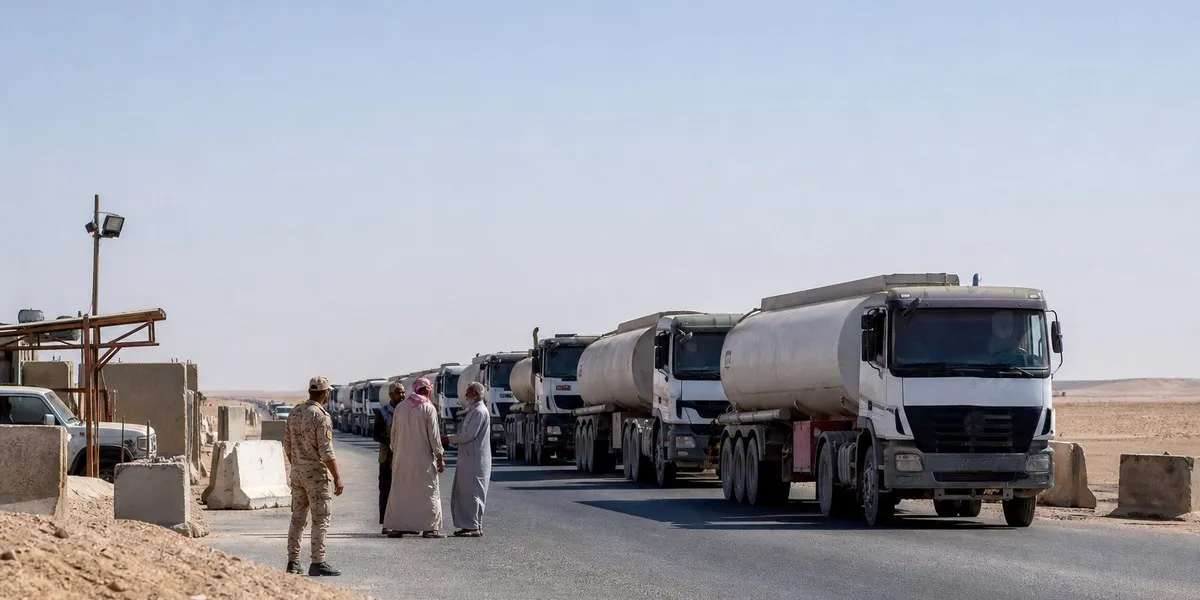
Syria is making strides in improving its fuel distribution network by commencing the transit of imported gasoline to Iraq via the Al-Tanf border crossing. This initiative kicked off with the first convoy of 57 tanker trucks departing this past Thursday. Future plans indicate an escalation in this effort, targeting a daily transport of around 200 trucks, as reported by Syria’s state-run news agency, SANA.
Gasoline Acquisition and Supply Process
The gasoline being transported to Iraq is sourced from the Qatari company UCC, which procures it from various international suppliers. After arriving at the oil terminal in Baniyas, Syria organizes the distribution to its neighboring country. The Syrian Petroleum Company oversees this logistics operation and receives transit fees for facilitating the transport.
Prior to the trucks’ departure, a meticulous inspection process is implemented. Workers assess the truck tanks, check the weight of the cargo, and seal the containers to ensure compliance. Customs officers also conduct thorough document verification. This supply agreement is currently set for three months but could potentially be extended to continue providing vital fuel supplies to Iraq, especially in light of disruptions affecting routes through the Strait of Hormuz.
Establishing a New Energy Corridor
According to Ahmed Kubbaji, the deputy head of the Syrian Petroleum Company for transportation and storage, an impressive number of 1,000 to 1,200 tanker trucks carrying Iraqi oil traverse Syrian territory daily. The overall transport capacity can vary based on several factors, including weather conditions, transport activity, and the arrival schedules of the tankers.
At the present time, gasoline and fuel oil are being funneled through Al-Tanf. However, plans are in motion to explore additional border crossings that could facilitate the transport of various other goods to Iraq, such as coal and sulfur. Additionally, Syria is working on making the Arab Gas Pipeline operational towards the Jordanian border, with aspirations for a linkage to Lebanon as well.
Future Prospects and Collaborations
Syria’s ambitions extend beyond immediate fuel transport. Recently, a memorandum of understanding was signed regarding the Kirkuk-Baniyas oil pipeline, which involves significant foreign investment from renowned companies like Chevron, Total, and UCC. This project is poised to enhance the energy infrastructure in the region and can potentially transform the dynamics of fuel supply and energy security in the Middle East.
This growing collaboration not only signifies a marked improvement in fuel logistics but also indicates a strategic move towards strengthening energy ties between Syria and Iraq. As Syria builds on this framework, it can pave the way for more diverse energy partnerships, contributing to regional stability and economic development.