
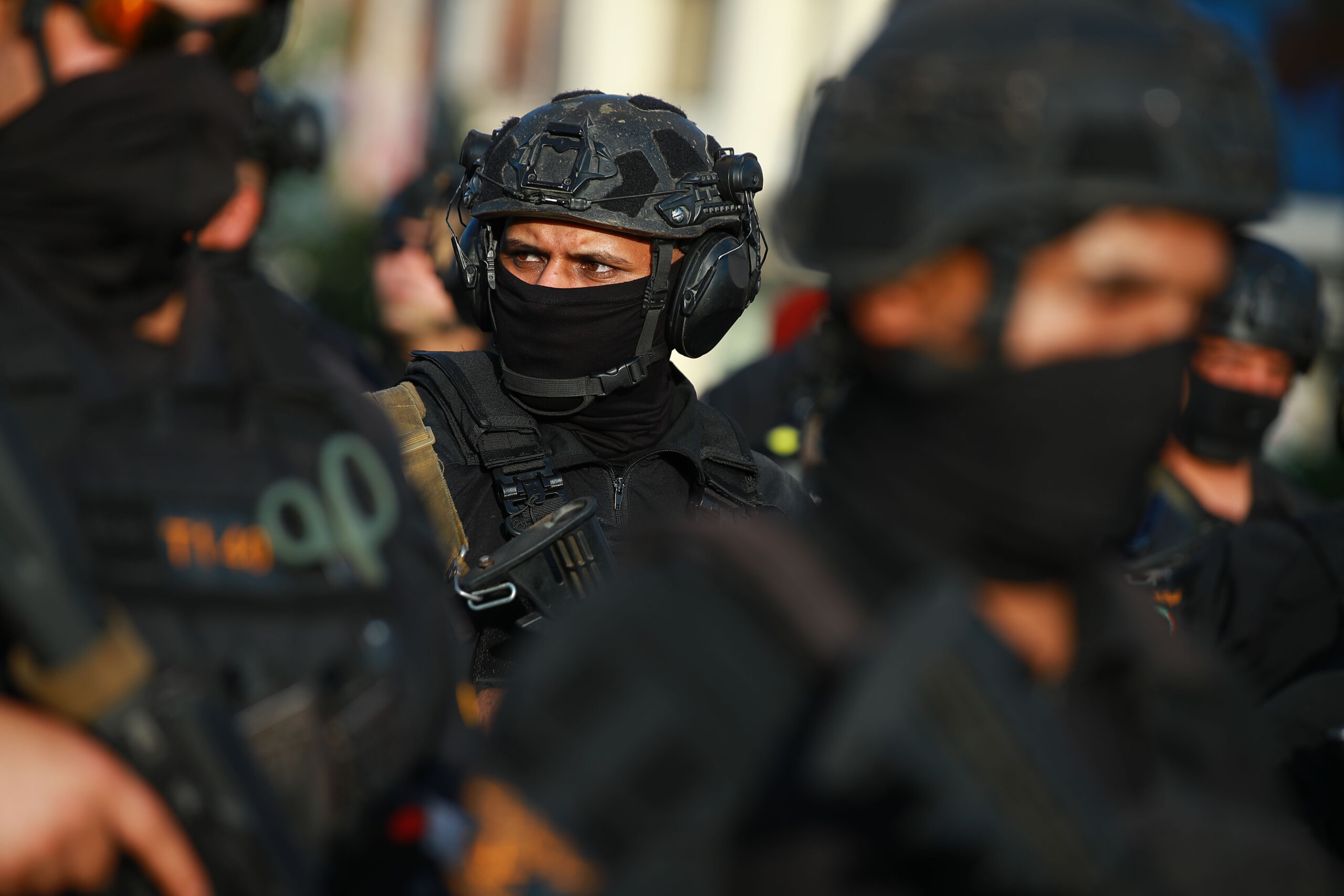
Iraq’s recent Sovereignty Day celebrations on October 1 were marred by incidents that challenge the government’s authority amidst the backdrop of a significant military withdrawal. Prime Minister Ali al-Zaidi’s condemnation of flag trampling during the festivities highlights the tensions between the Iraqi government and various armed factions. Following al-Zaidi’s remarks, a provocative video surfaced, showing Akram al-Kaabi, leader of Harakat Hezbollah al-Nujaba, stepping on U.S. and Israeli flags. This public defiance adds to the pressure on the Iraqi leadership, emphasizing the need for a cohesive strategy to regain control over security and resist foreign influence.
The Withdrawal and Its Implications
The departure of U.S. forces from Iraq marks a pivotal moment for the nation. The end of Operation Inherent Resolve, although framed as a reclamation of sovereignty, raises questions about Baghdad’s control over its armed factions. Although the Iraqi government invited the coalition in 2014 to assist in combatting ISIS, the need for a robust counterweight has become increasingly pressing. By securing the withdrawal of foreign military forces without simultaneously ensuring compliance from domestic armed groups, the government has eroded its leverage, particularly against Iranian allies operating within Iraq.
The challenge lies in the government’s reliance on a fragmented military landscape, where groups like Asaib Ahl al-Haq and Kataib Hezbollah have established their political and military networks. They hold formal positions within the Popular Mobilization Forces (PMF) and enjoy financial and operational support from Iran. These factions operate with a degree of autonomy, posing a significant obstacle to Baghdad’s authority. The political clout of these militias complicates the government’s capacity to enforce national legislation and maintain security.
A Sovereignty Day Celebration with Unresolved Challenges
Designating October 1 as Sovereignty Day allowed the government to celebrate the withdrawal of foreign troops. However, this achievement is overshadowed by the extension of the deadline for incorporating non-state military forces into the national security framework. The government’s decision to delay full integration of these militias until mid-2027 suggests a lack of capacity or willingness to enforce rules against powerful factions. This postponement invites skepticism regarding the government’s commitment to true sovereignty, revealing an ongoing struggle between national authority and the demands of partisan groups aligned with foreign interests.
The rhetoric surrounding this celebration exposed the tensions between state and militia loyalties. Al-Kaabi’s video challenge to the government suggests that opposition to U.S. influence could outlive the troops’ withdrawal, as these factions leverage their popular support to undermine Baghdad’s authority. Negotiations over security and economic matters—especially regarding Iran—illustrate the struggle between maintaining national interests and appeasing armed groups.
The New Balance of Power
The withdrawal of U.S. forces unsettles the balance of power in Iraq. Successive governments have sought to navigate relations between Washington and Tehran, utilizing foreign military presence to bolster their security forces against internal and external threats. However, the absence of this counterweight might embolden Iran and its affiliates, further complicating the security landscape. Armed factions could seize on this vacuum, potentially destabilizing the government.
For effective governance, Iraq must establish a unified command over its military assets and ensure that non-state actors comply with government authority. This includes conducting inspections of militia arms and enforcing regulations that tie financial incentives to lawful behavior. As the country seeks to emerge from foreign dependency, it must strengthen its institutions and resist the intertwined interests of these factions, which threaten to undermine national sovereignty.
In conclusion, true sovereignty for Iraq will not be attained merely through the withdrawal of foreign forces. The government must assert its authority over all armed actors within its territory. Building a cohesive military command and enforcing governmental decisions against rebel groups represent crucial steps toward ensuring a unified Iraq, capable of safeguarding its interests and autonomy.