
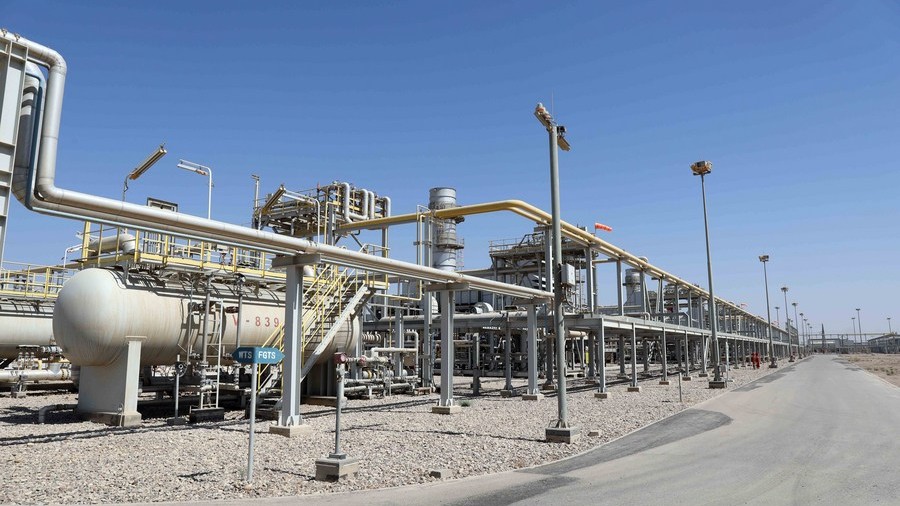
The dynamics of global oil markets have undergone significant transformations since World War II, often in subtle ways that go unnoticed by major news outlets. A historic agreement between U.S. President Franklin D. Roosevelt and Saudi King Abdulaziz bin Abdul Rahman Al Saud in 1945 laid the groundwork for a complex relationship that influenced energy and geopolitical landscapes for decades. The recent announcement of an LNG import terminal project in Iraq has the potential to similarly reshape energy ties, albeit within a modern context.
New LNG Initiatives in Iraq
The unveiling of the liquefied natural gas (LNG) import terminal project in Iraq marks a pivotal development in the nation’s energy strategy. Operations are planned to commence in the second quarter of 2027, with Excelerate Energy spearheading the initiative. This is particularly noteworthy as it represents the first LNG import terminal in Iraq, symbolizing the U.S. commitment to bolstering its influence in the region. The project is backed by a robust initial budget of $450 million, highlighting the seriousness with which the U.S. is approaching this endeavor.
Excelerate Energy is a notable player in the LNG sector, specializing in floating storage and regasification units (FRSUs). The project at the Port of Khor Al Zubair will encompass the entire chain of operations—from engineering and procurement to dredging and site clearance. This comprehensive approach also includes the installation of crucial infrastructure needed to support FSRU operations, highlighting the scale and ambition of the project.
Geopolitical Implications
The United States’ renewed focus on Iraq signifies a strategic pivot away from the overwhelming influence of Iran in the region. The relationship between Iraq and Iran has long been characterized as one of dependency, particularly since Iran’s Islamic Revolution in 1979. The U.S. has viewed Iraq as a state increasingly aligned with Tehran, attributing a client-like status to it in geopolitical discussions. This has raised concerns within Washington, prompting efforts to disentangle Iraq from Iran’s grasp while simultaneously limiting China’s expanding influence.
The stakes are high: more than 90% of Iraq’s government revenue derives from oil and gas. Establishing a major LNG hub in Iraq could significantly weaken Iran’s hold, especially as the global demand for LNG surges in response to the crisis in Ukraine. The U.S. aims to position Iraq as a key energy player in the region, facilitating new diplomatic dialogues akin to the Abraham Accords, which have normalized relations between various Arab states and Israel.
Strategic Energy Security
The geoeconomic landscape is rapidly shifting as China and Iran engage in comprehensive energy agreements that bolster their control over vital resources. The U.S. recognizes that establishing a strong LNG presence in Iraq can counteract this trend. Analysts note that having a strategic energy foothold in Iraq will allow the U.S. to reinforce its influence in the Middle East while undermining both Iran and China’s ambitions.
This move comes at a time when the U.S. has solidified its role as a leading LNG exporter. With projections indicating a potential doubling of U.S. export capacity by 2031, the stakes could not be higher. By anchoring its presence in Iraq through the LNG project, the U.S. not only seeks to provide energy security to its allies but also aims to assert its dominance in a region historically fraught with conflict.
In conclusion, the recent LNG initiative in Iraq has the potential to redefine energy dynamics and geopolitical alignments, echoing the significance of past agreements that shaped the course of global oil markets. The implications extend far beyond mere infrastructure and investments, setting the stage for a new era of energy diplomacy in the Middle East.