
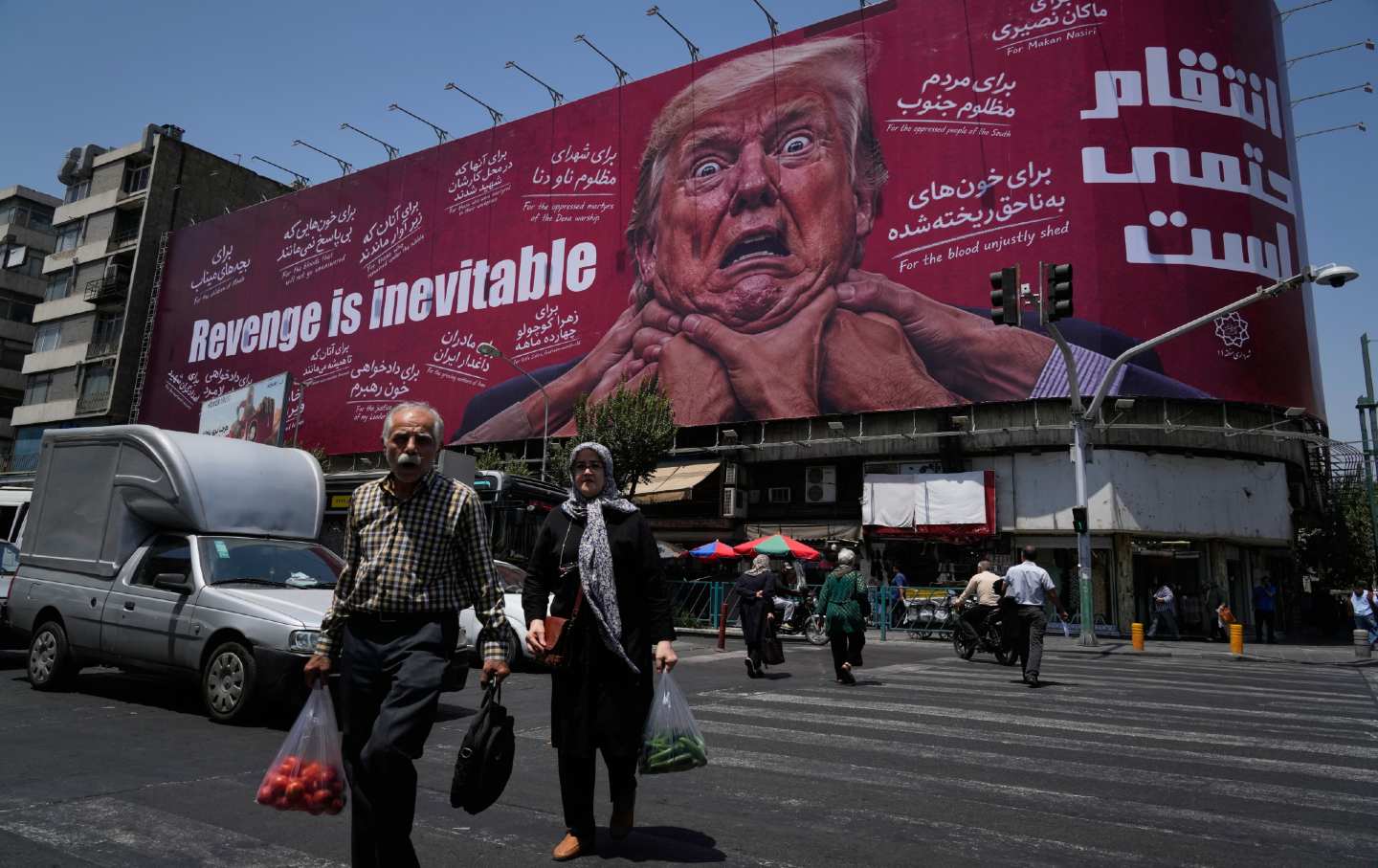
The escalating conflict between the United States and Iran signals a dangerously unsustainable trajectory. President Trump’s latest military maneuvers, including threats of bombing, reflect an alarming trend devoid of strategic clarity and political purpose. As tensions rise, both nations seem mired in a cycle of provocation and retreat, making it increasingly challenging to foresee a peaceful resolution.
Cycle of Provocation
The precarious situation escalated after the June Memorandum of Understanding between the two countries fell apart. Trump’s administration has alternated between displaying indifference and issuing aggressive threats. Most recently, plans for an extensive bombing campaign were scrapped at the last moment, following warnings about depleting critical resources. Despite brief pauses in hostilities, Iran has intensified its missile attacks on U.S. bases, showcasing its capability to inflict damage. Indeed, Trump’s fierce rhetoric aims to project strength but ultimately reveals a concerning lack of coherent policy direction.
As Iran continues to respond with greater resolve, its leadership believes it holds the upper hand. The perception of America as a waning power, unable to enforce its agenda, has transformed the conflict into a regional affair. Iran’s influence now extends into more areas, with recent actions demonstrating its ability to disrupt key maritime routes such as the Fujairah port in the UAE, further illustrating its capabilities in the ongoing tussle for regional dominance.
Regional Consequences
The ramifications of this conflict extend beyond Iran and the U.S. Iran’s alliances with Houthi factions and their shared ambitions to control strategic points like the Bab al-Mandab choke point underscore the widening scope of the war. With the Houthis declaring intentions to block passage and impose fees on vessels, the stakes are higher than ever. Additionally, attacks on American infrastructure, exemplified by strikes on a base in Jordan, indicate that U.S. vulnerabilities are increasingly exposed.
Moreover, recent engagements involving Iranian drones against U.S. shipping in areas far removed from the Strait of Hormuz underscore Iran’s capacity to project its military reach. This underscores a precarious reality where the U.S. must consider broader implications for energy security and international trade routes. As the risk of further escalation looms, the conflict teeters on the edge of becoming a protracted “forever war,” with the potential to affect global energy supplies and exacerbate conflicts elsewhere, such as the ongoing situation in Ukraine.
Implications for U.S. Foreign Policy
The Biden administration finds itself grappling with a complex quagmire, made more challenging by Trump’s penchant for erratic decisions. The specter of targeting Iranian civilian infrastructure has resurfaced amidst the chaos, raising ethical concerns regarding potential war crimes. The potential fallout of such actions could lead to Iranian retaliation far beyond its current engagements, further destabilizing the situation.
As Iran consolidates its power amid continued U.S. missteps, the perception of American military dominance is changing. The U.S. may soon face the harsh reality that its longstanding containment strategies may no longer be viable. Instead of merely managing the conflict, Americans may have to reckon with profound shifts in geopolitical power that could result from Iran’s burgeoning regional influence.
In summary, the current U.S.-Iran conflict is not just a matter of isolated military actions, but a larger strategic dilemma demanding thoughtful engagement. If the U.S. is unable to navigate these turbulent waters skillfully, it risks reinforcing Iran’s ascendancy while leaving its own interests in jeopardy. The pathway towards peace and stability seems arduous, requiring a long-term commitment while navigating the immediate fallout of reckless decisions.