
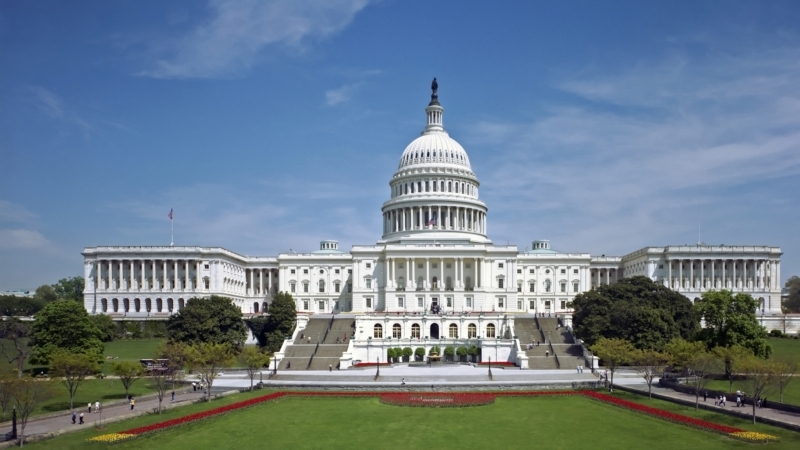
Recent developments in the U.S. Congress and the Executive Branch highlight a growing complexity in U.S. foreign policy, particularly regarding Israel and the broader Middle East region. With an increasing focus on human rights and geopolitical stability, lawmakers are attempting to address pressing issues that affect U.S. relations with both Israel and Palestine, as well as other nations in the region.
Legislative Developments in Congress
A significant resolution aimed at investigating Israel’s human rights practices in the West Bank faced failure in the Senate on September 29. Despite near-universal support from Senate Democrats, the resolution (S.Res.852), introduced by Senator Chris Van Hollen, fell short of the majority needed, receiving a 47-51 vote. This piece of legislation sought to require the State Department to report on escalating violence connected to Israeli settlers and military actions in the occupied territories. This vote signals changing sentiments among Democrats concerning Israeli occupation, indicating a shift toward more scrutiny in U.S. policy.
Simultaneously, another Senate bill introduced by Senator Rand Paul sought to restrict U.S. aid to Palestinian governing bodies unless certain unspecified criteria are met. This measure reflects a complicated approach to foreign aid, with implications for the already tenuous U.S.-Palestine relations. Additionally, the House is also working on measures, such as a bill from Representative Joaquin Castro that aims to sanction foreign entities involved in settlement expansion in the occupied West Bank and Gaza.
Engagement with Lebanon and Regional Diplomacy
Bipartisan engagement remains a cornerstone of U.S. foreign policy, as illustrated by a recent Congressional delegation to Lebanon led by Representatives Josh Gottheimer and Darin LaHood. They met with high-ranking Lebanese officials, discussing pressing topics such as Hezbollah disarmament, Iranian influence, and bilateral relations with Israel. These dialogues are critical for maintaining stability in the region, highlighting the U.S. commitment to supporting Lebanese state institutions amidst ongoing geopolitical challenges.
Executive Actions and International Relations
In the Executive Branch, President Trump recently issued a warning to Iran concerning its alleged involvement in a flight incident linked to Israel. This demonstrates the administration’s hardline stance on Iranian activities, particularly as the U.S. increases its military presence in the Middle East. The Trump administration has also made strides in arms policy, lifting the export ban on Syria, signaling a potential shift in U.S. engagement with the Assad regime against the backdrop of regional threats.
Additionally, the State Department has been actively working to disrupt Iranian weapon procurement efforts, announcing sanctions against various individuals and entities involved in these activities. On October 1, the U.S. announced it would target Hamas financing networks, illustrating a multi-faceted approach to combating terrorism in the region while attempting to maintain stability through military and diplomatic avenues.
In summary, the legislative moves and executive actions reflect a nuanced and evolving U.S. foreign policy landscape. Ongoing political engagements, legislative resolutions, and foreign aid considerations are crucial in shaping the U.S. approach to Israel, Palestine, and broader Middle Eastern dynamics. The future of U.S. influence in the region will likely depend on balancing these complex relationships while addressing human rights concerns and regional stability.