
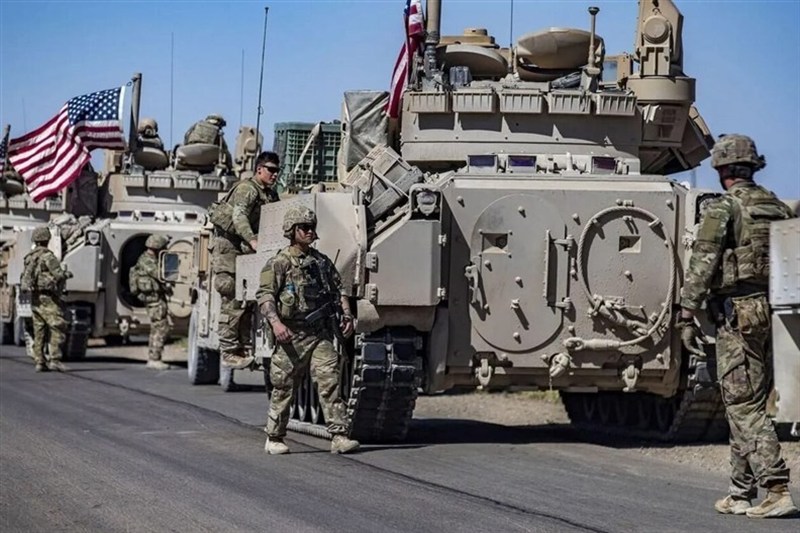
The Pentagon has officially announced the conclusion of the coalition’s military mission in Iraq, marking a significant shift in the country’s security landscape. Following the withdrawal of remaining forces and equipment, the United States affirmed its commitment to providing targeted training and intelligence support to Iraqi partners, signaling the transition to an Iraqi-led security framework.
The Background of U.S. Involvement in Iraq
The withdrawal of U.S. forces was part of a 2024 understanding between Baghdad and Washington to conclude the coalition’s military efforts in Iraq. The United States had re-established a considerable military presence in the country in 2014 with the central aim of combating Daesh (ISIL or ISIS). This re-engagement occurred three years after American forces had fully exited Iraq post-2003 invasion, which saw the ousting of Saddam Hussein.
Despite the military defeat of Daesh as a territorial entity, the U.S.-led coalition’s presence became increasingly contentious, facing opposition from various Iraqi political factions and individuals who sought to terminate foreign military involvement. Iraqi officials have highlighted that this withdrawal does not signify a cessation of the fight against terrorism but rather a newfound capability for Iraq to lead its security operations.
Significant Withdrawals and Transfers
The final exit of U.S. troops occurred at key locations, including Erbil Air Base in northern Iraq and the Victoria base near Baghdad International Airport. Erbil had been a crucial hub for U.S. military operations in northeastern Syria and supported the Kurdish-led Syrian Democratic Forces. The Victoria base served as an important security and intelligence facility for years, providing essential protection for U.S. diplomats.
Unlike the 2011 troop withdrawal, which left substantial military equipment behind, this latest exit was characterized by the careful removal of all remaining U.S. military assets. The equipment has been transferred to other regional locations, including Kuwait, Turkey, and Jordan. This strategic decision marks a significant departure from earlier practices and emphasizes the intent for a complete transition in military presence.
The Transition to Iraqi-Led Security
In a formal ceremony coinciding with Sovereignty Day in Baghdad, Iraqi Prime Minister Ali Faleh Al-Zaidi announced the end of the international coalition’s mission. He emphasized that the mobilization of Iraqi citizens alongside their armed forces has opened a new chapter in national security, highlighting the importance of reorganizing command structures to confront terrorism more decisively.
Al-Zaidi acknowledged the support from friendly nations while reiterating that the end of the coalition’s mission does not equate to a cessation of Iraq’s fight against terrorism. He stated, “Ending the international coalition’s mission does not mean the end of our battle with terrorism, but rather Iraq’s transition to a stage in which it assumes full responsibility for its security and stability.”
Looking Ahead: Iraq’s Security Landscape
The conclusion of the U.S.-led military mission marks the end of a significant era that began with the return of foreign forces in 2014 and shifts the responsibility for Iraq’s security increasingly towards its own institutions. Al-Zaidi outlined a vision for the future focusing on Iraq’s sovereignty, the robustness of its institutions, and the unity of decision-making, combined with balanced partnerships with international allies.
As Iraq transitions into this new phase, it is crucial to monitor the evolving security dynamics and the effectiveness of its forces in maintaining stability while continuing to address the underlying threats posed by terrorism. This new chapter is both an opportunity and a challenge as Iraq seeks to assert its sovereignty while navigating complex geopolitical realities.