
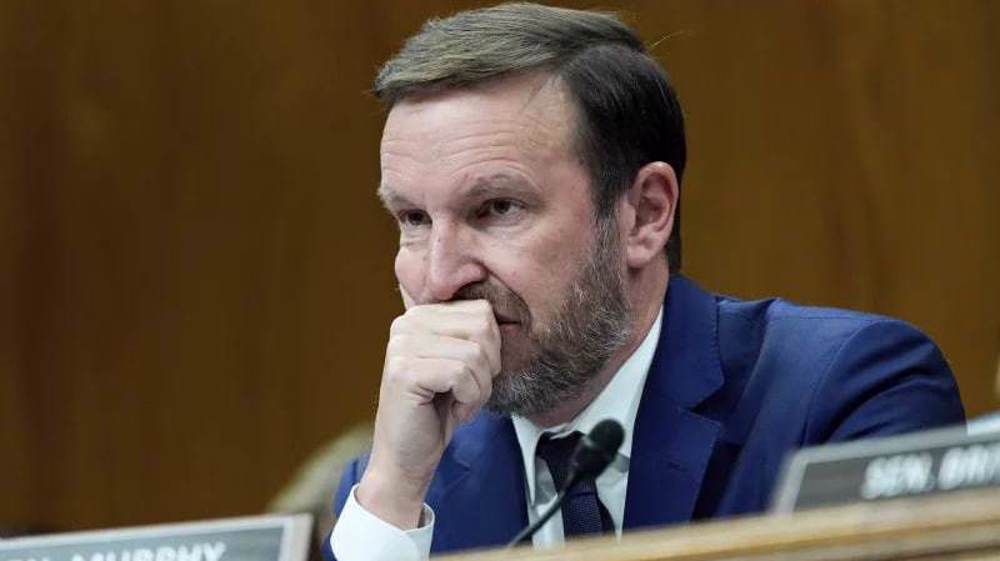
US Democratic Senator Chris Murphy has expressed severe criticism of President Donald Trump’s military actions in Iran, labeling the ongoing conflict as “disastrous and unwinnable.” Murphy’s comments highlight the urgency of addressing what he calls the most significant foreign policy blunder in over twenty years.
Murphy’s Critique of Trump’s Foreign Policy
In a statement shared on X, Murphy made it clear that the aggression against Iran, which began in late February, has had dire consequences for the United States. He emphasized that the war has been nothing short of catastrophic, asserting that its failure was apparent from the outset. According to him, Trump’s overconfidence has ushered in what he describes as the biggest foreign policy failure since the invasion of Iraq in 2003.
Murphy went on to elaborate in an interview with NBC News, stating that Trump had “lost this war” with Iran. He argued that the ongoing conflict has not only made America weaker but has simultaneously empowered the Islamic Republic. “America is weaker. Iran is stronger,” he asserted, underscoring the need for a shift in strategy.
The Cost of Continued Conflict
Murphy made a compelling case for peace, mentioning that even a subpar agreement with Iran could pave the way for a ceasefire and the reopening of the vital Strait of Hormuz. The senator highlighted the rising costs associated with keeping this strategic waterway closed, warning that the current state of negotiations is worsening the situation. He urged Trump to consider the economic ramifications of the war for American citizens, as prices continue to escalate while the conflict drags on.
The senator voiced his intention to oppose any further funding for the war, although he indicated that he would support replenishing U.S. military supplies after hostilities have ceased. This stance reflects a growing concern regarding the depletion of U.S. munitions, as Trump has acknowledged critical shortages in military stockpiles following the attacks on Iran. Reports indicate that substantial portions of U.S. advanced munitions have been exhausted in just five months since the conflict began.
Iran’s Strategic Gains
Brigadier General Hossein Mohebbi, spokesperson for the Islamic Revolution Guards Corps (IRGC), echoed Murphy’s concerns, stating that the U.S. has exposed itself to strategic vulnerabilities. Mohebbi pointed out that the costs of war have been passed back to the United States, inflicting wounds on its economy. He highlighted the significant depletion of U.S. weaponry as a consequence of the Iran conflict, arguing that these losses could not be rapidly replaced.
The comments from both Murphy and Mohebbi serve to underscore the increasingly complex dynamics of the Iran conflict, which continues to evolve. As pressure mounts for a reassessment of U.S. foreign policy in the region, the conversations surrounding this issue will likely intensify, pushing for a more balanced approach that minimizes further conflict while prioritizing national interests.
This escalating situation calls for urgent political dialogue and assessment at the highest levels, as the ramifications of the war extend beyond immediate military engagements, ultimately impacting both domestic and international stability.