
US President Donald Trump has stirred debate in the Middle East by asserting that Kurdish factions are withholding U.S.-supplied weapons intended for Iranian protestors. This claim comes amidst escalating tensions in the region, particularly at the outset of conflict involving the U.S. and Iran.
Trump’s Claims on Kurdish Groups
In early March, as hostilities intensified, Trump suggested that it would be beneficial if Kurdish forces in Iraq launched offensives against the Iranian regime. In an interview with Fox News a month later, he again claimed the U.S. attempted to provide weaponry to Iranian demonstrators via Kurdish intermediaries. “We sent guns to the protesters, a lot of them,” Trump stated, implying that Kurdish groups had failed to deliver these arms. By May, his frustration was evident as he criticized the Kurds for supposedly retaining the equipment rather than forwarding it to those in need.
However, Kurdish representatives from various factions across Iraq, Turkey, and Syria have firmly refuted Trump’s allegations. They assert, under the condition of anonymity, that no arms from the U.S. were ever received. This strong denial raises questions about the validity of Trump’s assertions, indicating possible political motives rather than factual accuracy.
Kurdish Leaders Respond
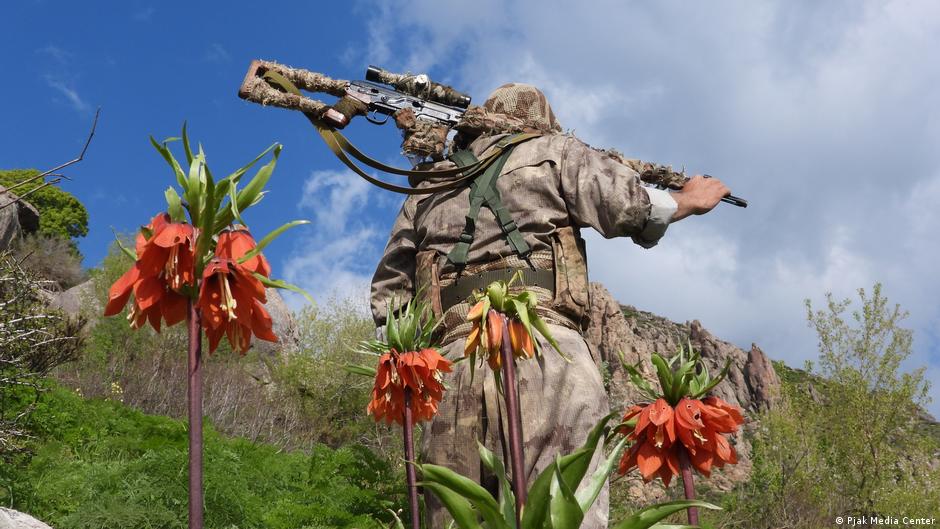
Kurdish organizations in Iran, including the Military wing of the Free Life Party of Kurdistan (PJAK), have publicly denounced Trump’s narrative. Fariba Mohammadi, a prominent Kurdish leader, characterized these claims as an act of “psychological warfare” aimed at undermining both Kurdish political unity and the realities of their struggle against oppression. Additional voices from Kurdish factions agree, declaring the operational logistics of such a weapons transfer impractical, considering the strict control exercised by Iranian authorities over border areas.
Mustafa Mouloudi, Deputy Secretary-General of the Democratic Party of Iranian Kurdistan (KDPI), emphasized that escalating security measures between Iran and Iraq have made these claims implausible. Mouloudi’s insights suggest a broader context in which Trump’s statements could be interpreted as politically motivated rather than grounded in reality.
The Kurdish Identity and Politics
Experts indicate that Trump’s framing of the Kurds as a singular entity overlooks the rich tapestry of Kurdish political society. With a population of over 30 million spread across Iran, Iraq, Turkey, and Syria, the Kurdish community is comprised of diverse factions and ideologies, including both conservative and leftist elements. Dr. Kamran Matin, an academic specializing in international relations, argues that Trump’s oversimplification of Kurdish identity could fuel anti-American sentiment and incite dangerous reprisals against various Kurdish groups.
By failing to recognize the complexities of Kurdish politics and society, Trump’s comments not only misrepresent the situation but also risk exacerbating regional tensions. This misunderstanding can lead to dire consequences, both for Kurdish populations and U.S. foreign policy in the Middle East.
The Timing of Trump’s Assertions
Analysts suggest that Trump’s claims may be a strategic maneuver to deflect attention from perceived failures in his Iran policy. Kamal Chomani, Editor-in-Chief of The Amargi Outlet, parallels this situation to biblical narratives about mislaid responsibility. With little success in undermining the Iranian regime, Trump appears to be using the Kurdish claims as a scapegoat.
Chomani articulates that no substantial evidence supports the idea of weapons being sent to Kurds for redistribution to Iranian citizens. Instead, logistical challenges have hampered efforts to provide even basic support, highlighting the implausibility of such a transfer. Matin supports this view, noting that Trump deflects blame onto the Kurds to save face regarding his promises to aid Iranian demonstrators during their struggles against the government.
In summary, Trump’s recent comments about Kurdish groups raise significant concerns not just regarding their truthfulness, but also regarding the implications for Kurdish-Americans, U.S.-Kurdish relations, and the broader regional stability in the Middle East.