
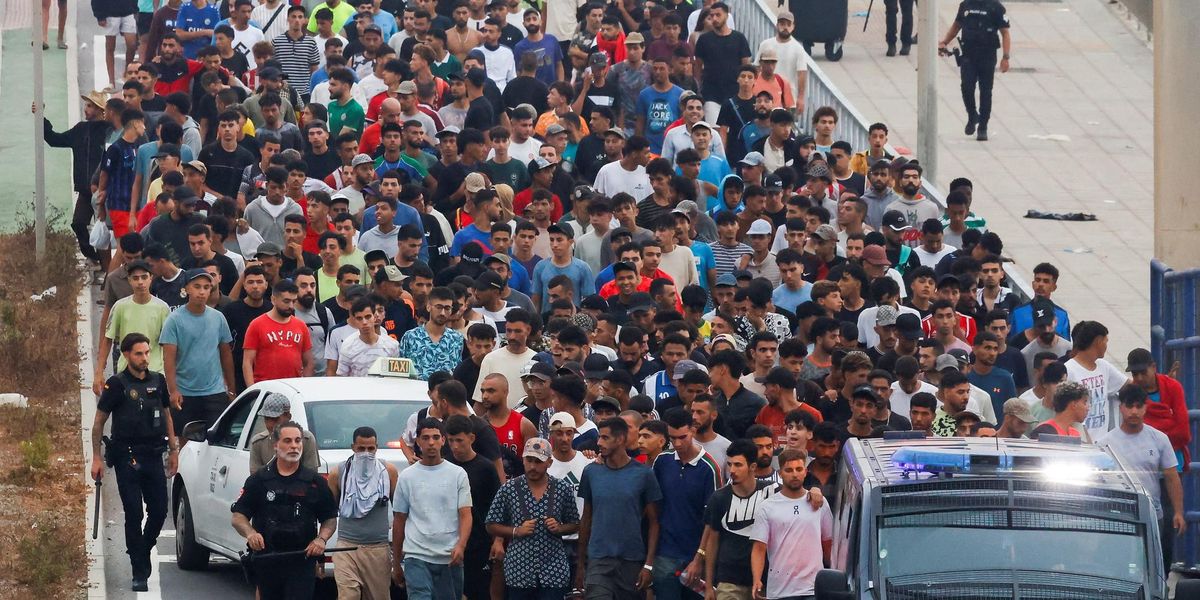
The recent influx of nearly 60,000 migrants from Morocco into Ceuta, a small Spanish enclave at the northern tip of Africa, has raised numerous questions about border security and political motives. This unprecedented migration wave has drawn attention to the complexities of international relations, particularly between Morocco, Spain, the United States, and Israel.
Understanding the Migrant Surge
The shocking number of migrants managed to cross the Moroccan border despite the apparent absence of security forces. Analysts suggest that this large-scale movement was not merely a spontaneous outpouring but was driven by social media encouragement and possibly orchestrated chaos. This incident has been interpreted by many as a calculated move by the Moroccan government, leveraging what has been termed “migration blackmail” to exert pressure on Spain and, by extension, its European neighbors. This tactic has a history, and the involvement of external actors like Israel and the United States complicates the narrative even further.
Previously, Ceuta has faced similar incursions, notably in 2021 when approximately 6,000 migrants crossed into Spanish territory. At that time, Spain accused Morocco of relaxing its border controls as retaliation for criticism related to the Trump administration’s recognition of Moroccan sovereignty over Western Sahara. The underlying issue seems to be a tug-of-war over political concessions, as Spain had later agreed to support Morocco’s autonomy plan in exchange for a commitment to curb future migration.
Political Implications and International Relationships
The recent migratory episode highlights the fluctuating political dynamics among Morocco, Spain, and its allies. Observing the timeline of events, some analysts speculate that Morocco might be positioning itself for a more aggressive stance regarding Ceuta, which it views as illegal occupation. Even though the U.S. recognizes Ceuta as Spanish territory, some voices both in the U.S. and Israel have been advocating for Morocco’s claims over the enclave.
Complicating this intricate web of diplomacy is the history of Morocco’s use of migration as a tool for political leverage. For example, Morocco’s refusal to accept undocumented children returned from France until it received trade concessions poses serious concerns about the ethical dimensions of using vulnerable migrants in geopolitical strategies. The European Union, for its part, has consistently rewarded Morocco with financial aid, reinforcing this cycle of dependency and manipulation over migration issues.
Geopolitical Tensions and Future Implications
The recent surge in migrants has incited a wave of criticism from U.S. and Israeli officials, many viewing it as a failure of Spain’s left-leaning government to maintain border security. High-profile commentators have argued for Moroccan claims over Ceuta, stoking flames of anti-immigration sentiments. This new phase of migration blackmail transcends national boundaries, impacting not only Spain but also the political climate across Europe, Africa, and beyond.
In light of these events, Morocco’s failure to officially acknowledge its role in the migrant crisis raises ethical questions about accountability. Despite this, the Moroccan government has ramped up border security and swiftly transported thousands of migrants back to its territory, suggesting an intent to control the narrative and mitigate any residual fallout from the encroachment.
Ultimately, the interplay of migration, geopolitics, and international alliances illustrates the nuanced and often fraught relationships among nations. The incident serves as a political tool for Israel and the U.S. to critique Spain while also casting a spotlight on the evolving dynamics of migration management in Europe. The repercussions extend well beyond the immediate crisis, potentially reshaping geopolitical alignments and influence for years to come.