
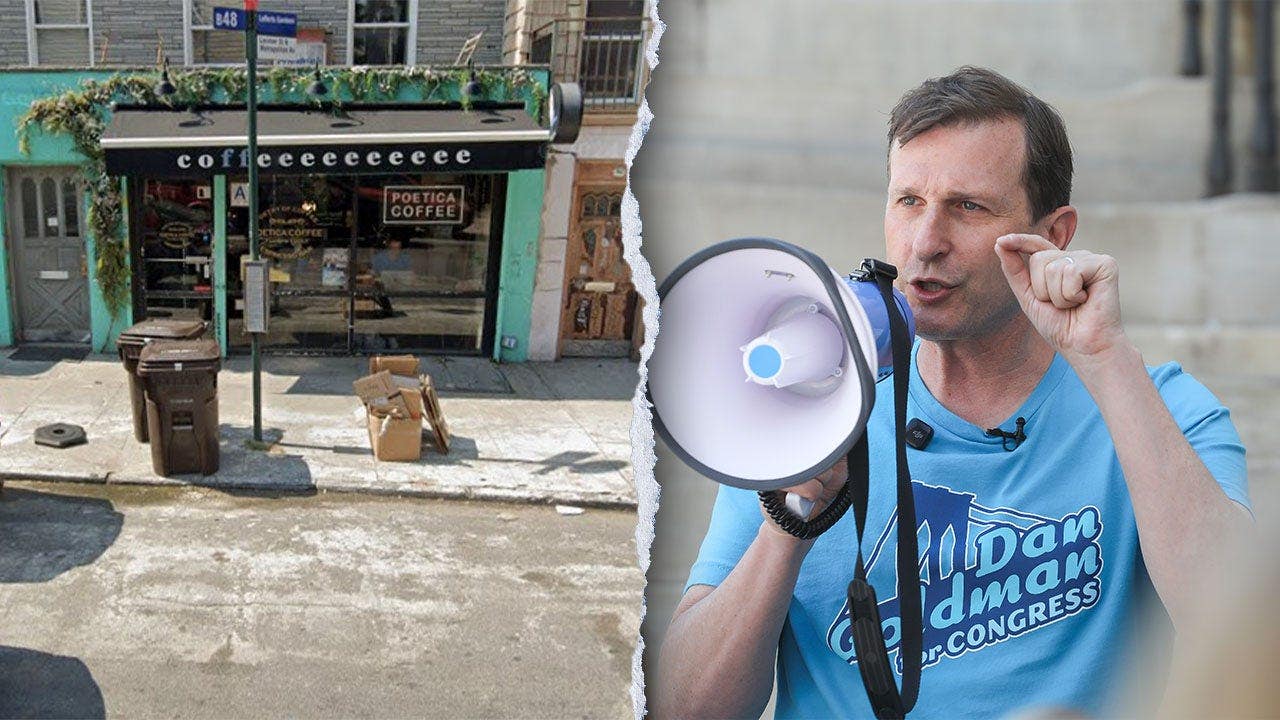
In a recent incident that has sparked considerable debate, a Brooklyn coffee shop has publicly criticized Representative Dan Goldman, a Democrat from New York, for his support of Israel. This incident raises questions about the interplay of personal beliefs and business practices in today’s politically charged atmosphere.
Poetica Coffee’s Controversial Stance
Poetica Coffee took to social media to express its discontent after Goldman visited their shop with his daughter. The café issued a refund for his purchase, stating that they do not serve those they label “genocide enablers,” a direct reference to Goldman’s pro-Israel stance amid ongoing tensions in Gaza. The shop’s post mocked Goldman, suggesting that the coffee he purchased “doesn’t taste like genocide juice.” In doing so, they vehemently positioned themselves against his political views while asserting their belief in treating individuals with dignity.
Goldman’s Response
Goldman responded publicly, expressing disappointment with the coffee shop’s remarks. He emphasized the kindness shown to his daughter during their visit, highlighting that the barista had even allowed her to use the bathroom without requiring a purchase. He urged the café to ensure that the barista received any tip she deserved, further pointing out the disconnect between their public statements and actual service. Goldman’s reaction underscores the complexity of navigating customer interaction in light of political beliefs.
Public and Community Reactions
The coffee shop’s post quickly became controversial, with mixed reactions flooding social media. Critics voiced concerns about the implications of turning personal ideology into business policy, questioning whether it is acceptable to deny service based solely on one’s political stance. Mark Treyger, CEO of the Jewish Community Relations Council of New York, remarked that equating coffee with a litmus test of ideological purity undermines the rights of all patrons to receive service without discrimination. His remarks resonate with broader discussions on human rights and business ethics in contemporary society.
Contradictions in Business Philosophy
The incident starkly contrasts Poetica Coffee’s stated values, which highlight an ethos of unconditional dignity for all customers. The café claims it aims to create an inclusive environment, providing a community space where all individuals are welcome without regard to their background or beliefs. This contradiction invites a deeper examination of how businesses must balance their political beliefs with their operational commitments to inclusivity and respect.
As this situation unfolds, businesses across New York and beyond may find themselves at a crossroads. The core challenge lies in determining how to engage with the politically charged climate without alienating potential customers or compromising on their principles. The implications of such incidents are far-reaching, prompting discussions on ethics and responsibilities in an increasingly polarized environment.