
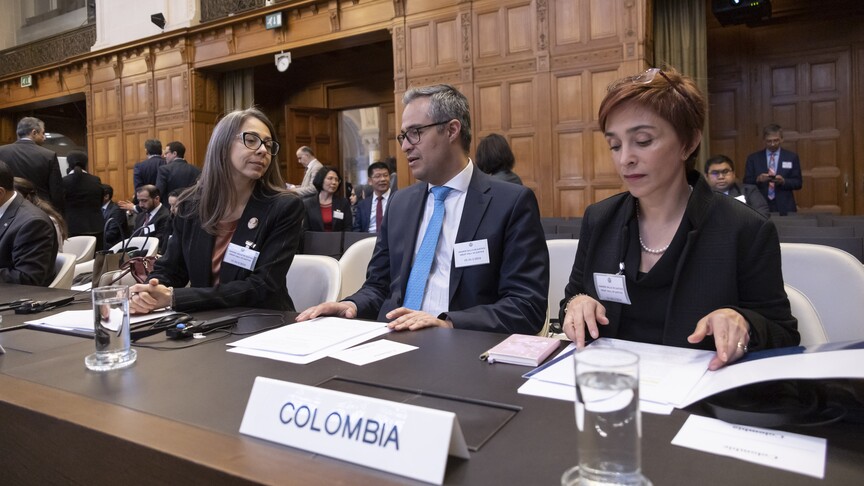
Colombia has recently made headlines by announcing its withdrawal of intervention in a significant legal case currently before the International Court of Justice (ICJ). This decision pertains to the application of the Genocide Convention in the context of allegations made by South Africa against Israel regarding its actions in the Gaza Strip.
Background of the ICJ Case
The International Court of Justice has been engaged in a case initiated by South Africa in December 2023, where it claims that Israel is violating its obligations under the Genocide Convention in relation to Palestinians residing in Gaza. In April 2024, Colombia decided to intervene in this case, invoking Article 63 of the ICJ Statute, which allows countries party to a convention in question to participate in proceedings. However, this intervention did not render Colombia a formal party to the core case initiated by South Africa.
Shift in Colombian Policy
Colombia’s withdrawal from the intervention marks a significant shift in the country’s foreign policy, particularly following the administration of former President Gustavo Petro. Petro took a firm stance in support of Palestine during his time in office, even severing diplomatic ties with Israel in May 2024, citing Israel’s actions as genocidal. He also announced plans to enhance diplomatic relations with Palestine, including the establishment of an embassy in Ramallah. Policies implemented under his leadership, such as halting coal exports to Israel, drew attention to his administration’s efforts to assert solidarity with the Palestinian cause.
New Presidential Administration
However, the political landscape changed when Abelardo de la Espriella took over as president in August 2024. His administration has sought to restore relations with Israel and has announced intentions to withdraw Colombia’s declaration of intervention in the genocide case. As part of this reorientation, Colombia’s Embassy in Jerusalem is set to be reopened, and a bilateral economic commission between Colombia and Israel is in the works. Moreover, plans are laid out for a Colombian delegation to visit Israel, indicating a shift towards strengthening economic and diplomatic ties.
Current Status of the Case
The ICJ continues to address multiple aspects of this high-profile case, having issued various provisional measures since January 2024. Meanwhile, Israel has rejected South Africa’s allegations, arguing that its actions in Gaza do not amount to genocide. As the proceedings remain open before the Hague-based court, international observers are closely monitoring the situation, with potential implications not only for the involved nations but also for the future of international law concerning genocide and human rights violations.
Colombia’s decision to withdraw its intervention emphasizes the fluid nature of foreign policy and the complexities involved in international legal disputes. By shifting away from its former alignment, the current Colombian government signals a readdressed stance on a multifaceted issue that continues to elicit global scrutiny. As the case develops, it will be crucial for both countries involved and the international community at large to uphold justice and accountability.