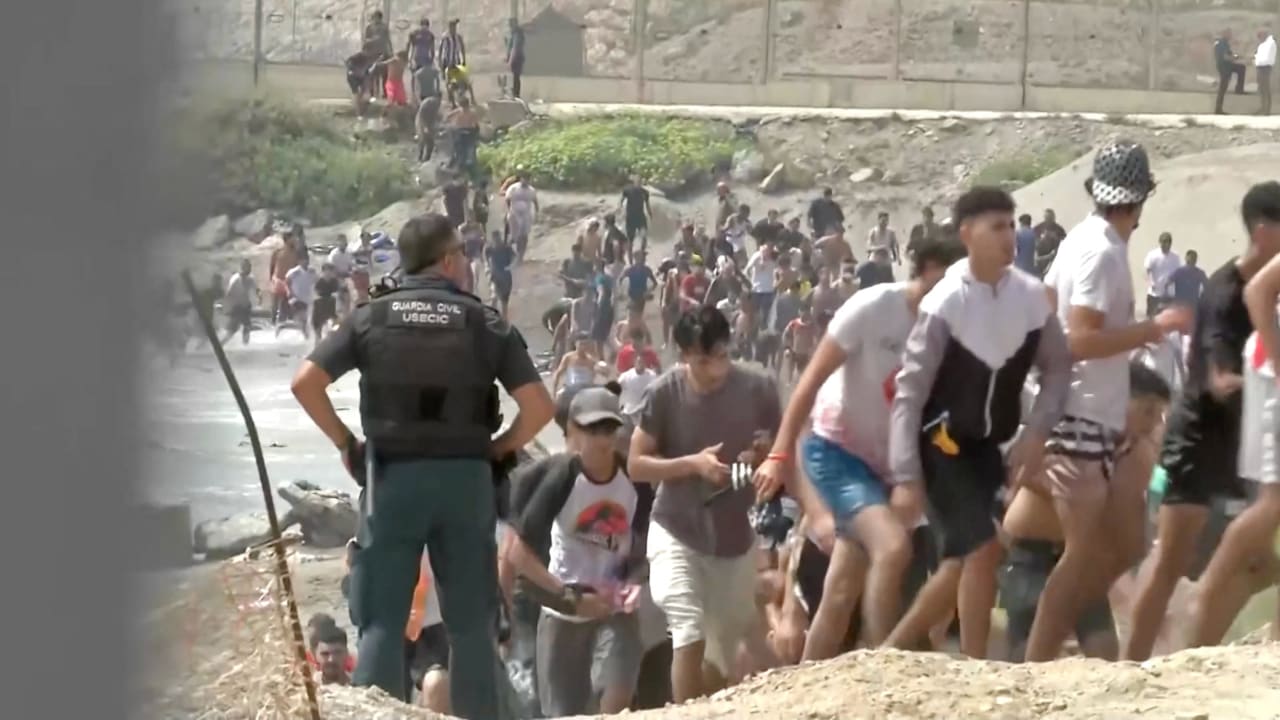
Over the weekend, social media witnessed a barrage of conspiracy theories targeting Israel, especially concerning border disruptions in the Spanish cities of Ceuta and Melilla. Various accounts have echoed these claims, referencing outdated remarks by Yair Netanyahu as alleged evidence of Israeli involvement.
Dissecting the Claims of Far-Right Influencers
Notably, far-right commentator Candace Owens highlighted a post from Yair Netanyahu that dates back over seven years. In this post, Netanyahu warned against funding NGOs advocating for Spain to relinquish Ceuta and Melilla, insisting that the same conditions would apply to Spain’s financial support for organizations campaigning for land in Judea and Samaria.
Adding to the discussion, Ana Alcalde—who has gained notoriety as “Gaza Barbie” for her activism—attributed the migration crisis in Ceuta and Melilla to Israeli machinations. She posited that this scenario was engineered to destabilize the progressive government of Prime Minister Pedro Sanchez. Alcalde’s assertions came just hours after the first migrants began entering Ceuta, as she continued to spread theories linking Israeli leadership to the ongoing crisis.
Far-Right Conspiracy Theories Intensify
Exploring further, far-right media personality Alex Jones claimed that Israel orchestrated an “Islamic invasion of Spain.” He contended that the U.S. government was complicit in supporting Netanyahu’s alleged plans to initiate this supposed invasion from Moroccan territory. Such extreme narratives resonate with a section of the populace looking for scapegoats amidst complex geopolitical issues.
While conspiracy theorists converge on Israel’s alleged involvement, mainstream media like The New York Times reported indications that Moroccan authorities may have influenced the migrant crossings. Several individuals recounted seeing social media appeals that prompted them to gather at the border, with police reportedly encouraging them to undertake the risky journey over to Spain.
Analyzing the Political Response
Spanish Prime Minister Pedro Sanchez characterized the situation as an assault on Spain’s territorial integrity. His remarks came during a visit to Ceuta, where he emphasized that Italy was a transitioning partner rather than a threat. Interior Minister Fernando Grande-Marlaska attributed the crisis to smuggling networks exploiting vulnerable migrants, further clarifying that no intelligence indicated a premeditated mass entry scenario was on the horizon.
By the weekend, Spanish authorities reported that most migrants had returned to Morocco, effectively halting the sudden influx. To manage future crossings, law enforcement began deploying a floating barrier along the border with Morocco, a proactive measure aimed at enforcing stricter control and maintaining order in the area.
In light of the complex interplay between domestic political narratives and international events, it is crucial to dissect the motivations behind these conspiracy theories while considering the socio-political context influencing public perception. The situation remains fluid, and the discourse surrounding it will undoubtedly evolve as the international community continues to monitor developments.