
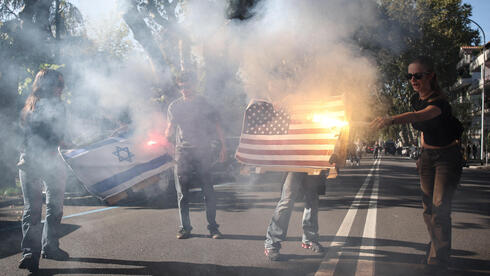
Pro-Palestinian protests erupted in Rome on Friday, where demonstrators expressed their discontent by burning flags of Israel and the United States. Reports indicate that thousands of protesters, estimated at around 20,000 by organizers, took to the streets demanding a boycott of Israel as part of a larger student-led rally dubbed “No Meloni Day.”
Voices Against Military Spending
Slogans like “Money for schools, not war” filled the air, reflecting the demonstrators’ frustration with Prime Minister Giorgia Meloni’s policies, particularly regarding military expenditures versus education rights. Protesters aimed to draw attention to issues surrounding military funding and called for improvements in the educational system, criticizing recent reforms that have limited access for foreign students. Their chants resonated with a collective desire for increased funding for educational institutions rather than armaments.
During the demonstration, participants waved Palestinian flags and engaged in various acts of protest. Trash bins were overturned, fires were set, and fireworks lit up the sky as the crowd marched from the iconic Colosseum to the Ministry of Education in the Trastevere district. These actions were not merely spontaneous; they illustrated a sense of urgency and a unified demand for tangible reforms in educational policy.
Issues in the Education System
Criticism was directed particularly at Education Minister Giuseppe Valditara, who was accused of ignoring pressing concerns in the education system. Protesters voiced their frustration, claiming, “He cannot bury his head in the sand and keep running away.” They emphasized the dire state of schools in Italy, citing inadequate resources and deteriorating conditions as serious issues warranting immediate action. As a result of the protests, students announced plans for a general strike scheduled for October 30, amplifying their calls for change.
These protests unfolded in the context of broader unrest across Europe, especially following recent demonstrations in France and Spain that highlighted similar issues. Participants called attention to inadequate funding and the perceived erosion of educational rights, echoing concerns voiced by students throughout the continent. The movement seeks a significant shift in priorities, demanding that state funding be directed toward improving school infrastructure.
A Nationwide Movement
The discontent seen in Rome was not confined to the capital. Protests erupted in various other cities, including Turin, where demonstrators clashed with police, and Verona, where trash bins were set ablaze. Reports also noted the arrest of 20 minors for their involvement in throwing objects and obstructing roads during these protests. Demonstrations occurred in Genoa, Venice, and Padua, further illustrating that the movement resonates on a national scale.
Education Minister Valditara criticized the protests, labeling them as “political hooliganism.” He argued that the action taken did not represent valid democratic dissent but rather fell under the category of violence and disruption. Deputy Prime Minister Matteo Salvini further condemned the actions, asserting that the perpetrators were not students but individuals seeking to cause chaos.
As Italy grapples with these protests, the absence of a statement from Prime Minister Meloni raises questions about the government’s stance on the growing student unrest. The situation in Italy highlights deep-rooted frustrations regarding educational investment, making it clear that student voices are demanding serious attention and reform.