
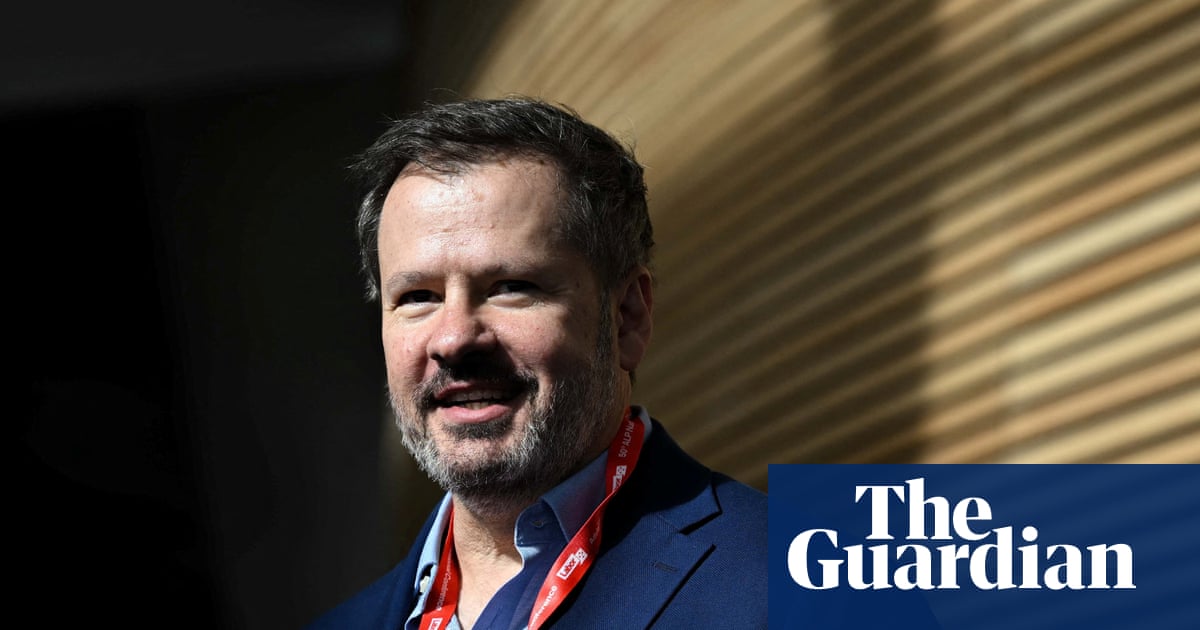
Ed Husic’s recent appeal for the Labor Party to acknowledge claims of genocide against Israel has come to an unsuccessful conclusion, primarily due to pushback from influential party members. This led Husic, a backbencher and former industry minister, to openly criticize the current party culture under Anthony Albanese. He stated his determination to continue voicing controversial opinions, regardless of potential isolation from senior colleagues.
Conference Proceedings and Party Unity
At the party’s 50th national conference held in Adelaide, there was a concerted effort to maintain a facade of unity and avoid any significant disputes. Although tensions regarding Israel and Palestine were anticipated, they ultimately did not come to fruition. During the conference, a noteworthy moment occurred when MPs Josh Burns, who is Jewish, and Basem Abdo, the son of Palestinian refugees, jointly endorsed a modification to the party’s foreign policy platform that aligns with the government’s stance on Israel, Palestine, and Hamas.
Husic had proposed a resolution that went well beyond the existing language regarding Israel, asserting that the international court of justice had recognized Palestinians’ “plausible” claims against acts of genocide. His proposal also called for adherence to a recent UN report stating that Israeli authorities had deliberately targeted Palestinian children, a claim that has been vehemently denied by the Israeli government. Despite these bold amendments, internal dynamics complicated Husic’s attempts to rally support for his stance.
Lost Support and Internal Tensions
Initially, the Maritime Union of Australia (MUA) had pledged to support Husic’s resolution; however, they retracted their backing just hours before the planned debate. This withdrawal left Husic without a critical second for his motion, stifling discussions on what he referred to as one of the major moral dilemmas of today’s global landscape. Although he suggested that friend and foe alike had united behind the scenes to suppress his motion, he was careful not to name specific individuals behind the effort.
Despite Husic’s frustrations, New South Wales Labor MP Stephen Lawrence claimed that most delegates at the conference resonated personally with Husic’s proposal. Nevertheless, senior party figures refuted the idea that a coordinated effort had taken place to stifle Husic’s resolution, insisting that he simply lacked sufficient backing.
Acknowledgement and Future Directions
In a closing address, Albanese hailed the conference as the most “purposeful and united” gathering he had ever attended. During the conference, Burns and Abdo received a standing ovation from participants, including key figures such as Foreign Minister Penny Wong and Defence Minister Richard Marles for their unified front. Both MPs recognized that while the final text was a compromise, it marked progress in addressing a complicated issue.
The conference delegates also endorsed the government’s defense policies after factional disagreements prevented calls for a withdrawal from the Aukus security pact. The tensions surrounding Israel and Palestine were underlined as significant, emerging amid an otherwise conflict-free event. As various interest groups sought to influence party policy on this issue, the government maintained its position, striving to balance concerns from both detractors and supporters of different narratives. The modified draft now emphasizes Labor’s disapproval of the annexation of Palestinian territories and calls for an end to settler violence and occupation, highlighting the evolving landscape of party policy.