
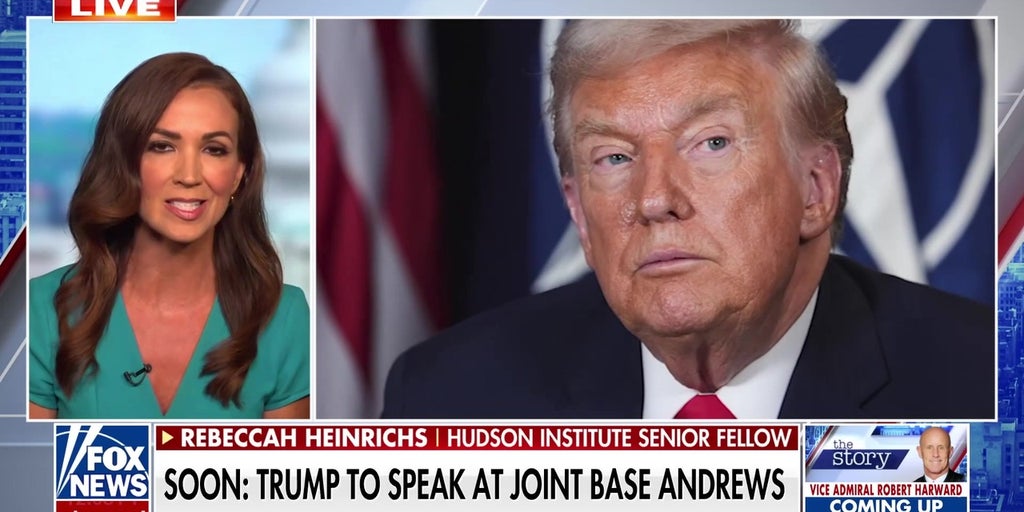
Iran’s approach to testing the United States’ determination has come into sharper focus recently, particularly through its financial backing of Hezbollah. Rebeccah Heinrichs, a senior fellow at the Hudson Institute, sheds light on this intricate relationship and its implications for U.S. foreign policy. As tensions escalate in the Middle East, understanding this dynamic becomes crucial for assessing regional stability and the U.S.’s position within it.
Iran’s Support for Hezbollah
Iran has consistently provided substantial financial and military support to Hezbollah, the Lebanon-based militant group. This alliance is not merely a matter of ideology; it serves as a strategic tool for Iran to project power and influence across the region. By empowering Hezbollah, Iran aims to create uncertainty for its adversaries, particularly Israel and the United States. This funding allows Hezbollah to maintain its military capabilities, enabling it to conduct operations that challenge not only Israel but also American interests in the region.
Testing U.S. Resolve
Heinrichs emphasizes that Iran’s provocations involving Hezbollah are a deliberate strategy designed to test America’s resolve. Recent escalations, such as Hezbollah’s increased military activity, serve to gauge the U.S.’s willingness to respond to aggression. The broader context includes America’s recent decisions, like the lifting of the blockade through the Strait of Hormuz, which can be interpreted as a signal of diminishing American commitment to maintaining stability in the region. Such moves lead to questions about the U.S.’s role as a deterrent against aggression from state actors like Iran.
Implications for U.S. Foreign Policy
The ramifications of this funding and provocations extend beyond immediate military concerns. If the U.S. falters in its response, it risks emboldening Iran not just in Lebanon but across a wider range of frontlines. A weakened U.S. stance could have ripple effects on its allies and adversaries alike, potentially altering the balance of power in the region. The ongoing support for Hezbollah serves as a reminder of Iran’s strategic calculus and its aspirations to diminish U.S. influence.
Conclusion
As the situation unfolds, policymakers must consider the interconnectedness of Iran’s support for Hezbollah and the United States’ global commitments. A failure to adequately respond to Iranian provocations could lead to greater instability and embolden other adversaries. Understanding this dynamic is essential not only for strategic planning but also for fostering a more secure environment in the Middle East. The stakes are high, and the U.S. must navigate these challenges carefully to uphold its interests and those of its allies.