
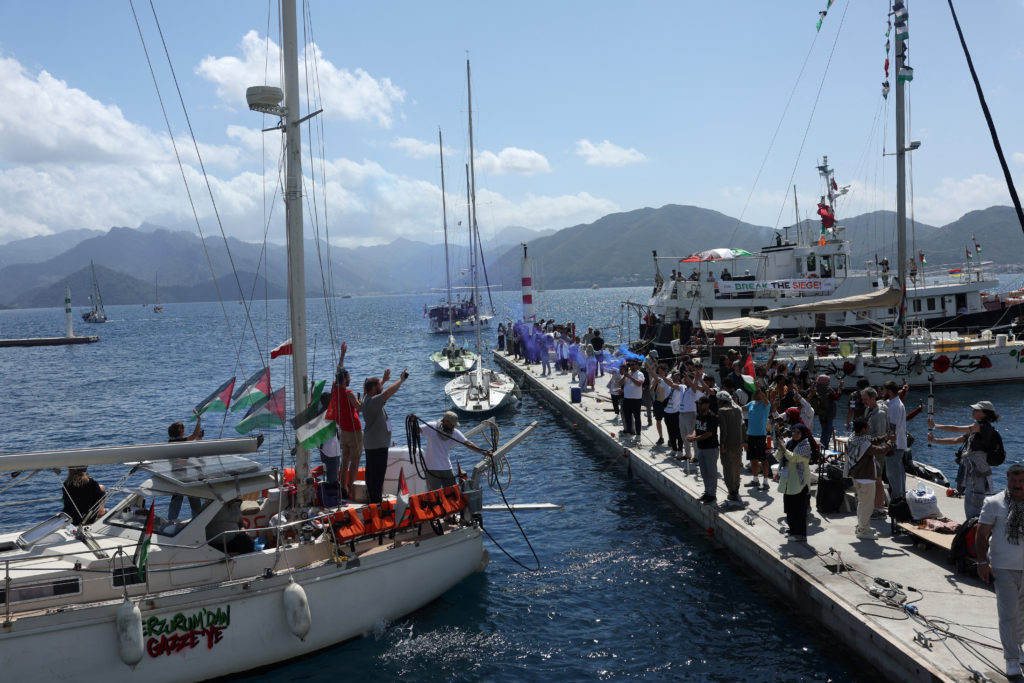
Marmaris, Turkey recently witnessed a significant maritime mobilization as over 50 boats departed from its port, aiming to deliver aid to the Palestinians in Gaza. This event, organized under the banner of the Global Sumud Flotilla, marks an extensive attempt to challenge Israel’s ongoing naval blockade. Just weeks prior, another flotilla attempting a similar mission was intercepted by Israeli forces, resulting in the detention of two activists.
Recent Naval Activism
On a Thursday morning, activists and supporters set sail from Turkey’s Mediterranean region, highlighting a renewed commitment to addressing the humanitarian crisis in Gaza. This latest endeavor saw a diverse group of nearly 500 individuals from 45 countries participating. The flotilla’s organizers emphasized that this current effort represents a regrouping after the recent interception, where Israeli forces had acted against a larger flotilla near Crete, detaining about 175 activists.
In that previous incident, Israel detained two activists, sparking international condemnation and serious questions regarding the legality of enforcing a blockade in international waters. Israeli authorities claimed the interception was necessary due to the high number of boats involved, while the detained activists accused the nation of human rights abuses. Spain and Brazil expressed outrage at the treatment of their citizens, who were later deported after several days of interrogation.
The Ongoing Humanitarian Crisis
The current backdrop for these flotilla attempts is the dire situation in Gaza, which has been in turmoil since the recent Israel-Hamas conflict escalated. According to data from the Gaza Health Ministry, a staggering 72,744 Palestinians have lost their lives since the conflict reignited with the Hamas-led attack on Israel on October 7, 2023. This attack not only resulted in significant fatalities but also saw many hostages taken, compounding the already precarious humanitarian conditions in the region.
Even with a fragile six-month ceasefire in place, the reality for the approximately 2 million residents in Gaza continues to be bleak. With extensive destruction of infrastructure, food and medical shortages persist, while aid access remains severely limited, funneled through only one Israeli-controlled border crossing. Critics argue that the ongoing blockade meets the definition of collective punishment, while supporters claim it is a necessary measure against Hamas’s capabilities.
Historical Context and Challenges
Historically, attempts to breach the Gaza blockade have faced significant obstacles. A notable incident occurred in 2010 when Israeli forces boarded the Turkish boat Mavi Marmara during a similar humanitarian mission, leading to the deaths of several activists. Despite various efforts by international activists and organizations over the years, the last successful delivery of aid by boat to Gaza happened back in 2008.
The legacy of those past actions continues to shape the current narratives surrounding humanitarian missions to Gaza. Additionally, previous efforts, such as last year’s flotilla that included high-profile personalities like Greta Thunberg and Mandla Mandela, were also halted by Israeli authorities. Activists involved in those attempts reported instances of mistreatment, which Israeli officials have consistently denied, framing their operations as essential for national security.
With the continuous struggle for the rights and dignity of the Palestinian people, the Global Sumud Flotilla serves as a reminder of the ongoing efforts to challenge the blockade and bring international attention to the humanitarian crisis in Gaza. Persisting through significant challenges, these activists aim to shed light on the current situation, advocating for change in a region rife with tension and conflict.