
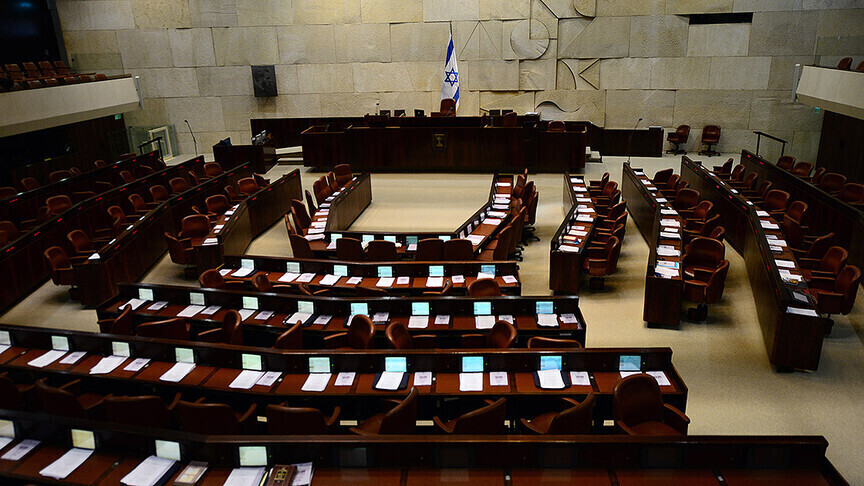
Farid Hafez, a senior research fellow at The Bridge Initiative and an assistant teaching professor of international relations at the College of William and Mary, explores the evolving relationship between Austria’s far-right Freedom Party (FPO) and Israel. The contrasts between the FPO’s past and its current positioning encapsulate the broader shifts within European politics, especially regarding nationalism and identity politics.
Historical Context of the FPO
When the FPO entered a government coalition in 2000, it marked a significant moment as the first far-right party in the European Union to achieve such a status. Led by the controversial Jörg Haider, the party faced international condemnation, including an Israeli boycott based on its affiliations and antisemitic rhetoric. Political scientist Anton Pelinka characterized the FPO as a party rooted in former Nazi ideals, which contributed to its rejection by mainstream politics not just locally but also globally. In fact, tensions escalated to the extent that Israel recalled its ambassador from Vienna following the party’s rise to power.
Shifting Dynamics in European Right-Wing Politics
Today, the landscape of European right-wing parties has shifted dramatically. The FPO, alongside other radical parties across Europe, has sought to redefine its image, particularly towards Israel. With nationalistic movements gaining traction from Italy to Sweden, these parties aim to cultivate an image as credible allies of Israel, distancing themselves from their historical baggage. A pivotal moment occurred in 2010, when high-ranking members of the FPO ventured to Israel and the West Bank to fiundamentally build ties with Israeli politicians, although they remained on the margins of formal political engagement.
Despite numerous challenges, including significant pushback from Austrian and Israeli officials, the FPO position has improved. As the party leads in Austrian polls, its re-emergence in dialogue with Israeli officials marks a notable turn. Herbert Kickl’s recent address in Strasbourg touched on Islamism and antisemitism, framing these issues as threats to Europe’s freedom. His remarks received a warm welcome from high-ranking Israeli officials, signaling an operational shift in dialogue and outreach.
The Strategic Reasons Behind the Pivot
Several factors contribute to Israel’s decision to reconsider its stance towards the FPO. The rise of radical right politics across Europe cannot be overlooked. With parties such as the AfD in Germany recently gaining electoral victories, Israel’s move toward engaging with these parties can be seen as a strategic alignment to influence the continent’s future political landscape.
Moreover, over the last decade and a half, the far-right has strategically transformed its image to focus on anti-Muslim sentiments, distancing itself from historical antisemitism and presenting itself as a defender of a “Judeo-Christian” Europe. This reinvention has enabled these parties to ally with Israel against perceived Islamic threats. Ultimately, there is a growing normalization of the far-right within Israeli politics that reinforces this pivot, exemplified by the recent reception of FPO members in high-profile Israeli political circles.
In addition, the pressures of international diplomacy have evolved, particularly in light of Israel’s increasing isolation following events in Gaza. Gaining favor with growing far-right voter bases across Europe could significantly bolster Israel’s international standing and public perception.
As discussions continue, the potential lead to a re-assessment of the official boycott against the FPO looms on the horizon, marking a potential landmark change in Austria’s political landscape. If successful, this could signal not just a win for the far-right in Austria, but also for a larger shift in the dynamics of European nationalism and its interactions on the global stage.