
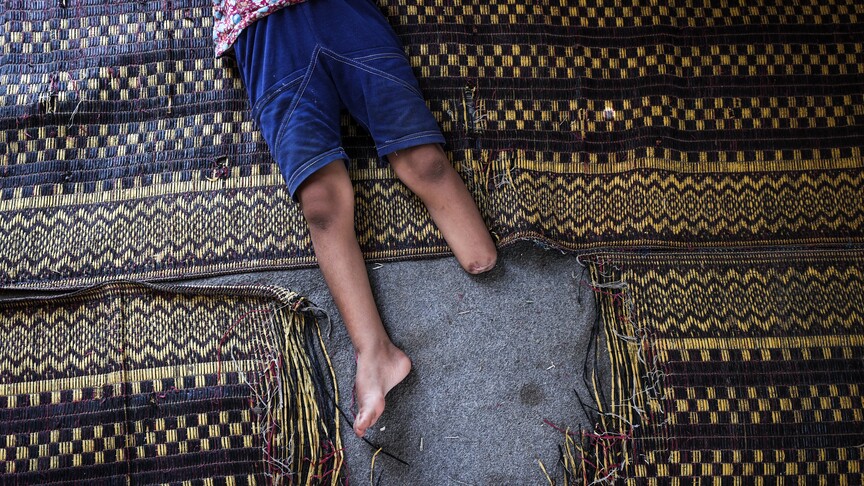
In Gaza, the plight of amputees has been starkly contrasted with a recent Adidas campaign featuring a former Israeli soldier who lost a leg. The local campaign promoting the sportswear giant’s “Single Shoe” service—intended for amputees and those in need of a single shoe—has ignited strong emotions among Palestinian amputees, who continue to face significant challenges in accessing adequate prosthetic care and rehabilitation services.
Outrage Over the Campaign
The campaign has provoked outrage among Palestinians, particularly those who have suffered life-altering injuries due to ongoing conflict. Omar Haliwa, a 14-year-old who lost his leg during an Israeli attack, expressed deep frustration with the choice of featuring an Israeli soldier in the campaign. “How can Adidas highlight an Israeli soldier while we, the victims of war in Gaza, are enduring immense suffering?” Haliwa stated in an interview, underscoring the pain of watching someone receive support that remains unattainable for many in Gaza. The scarcity of essential resources like prosthetics and rehabilitation equipment makes their situation even more dire, highlighting a disconnect that many in the enclave feel when they see international brands favoring certain narratives.
The Reality of Life for Amputees in Gaza
Kifah al-Fakhouri, who lost her leg in an airstrike, voiced her shock at the campaign. She called for Adidas to consider the urgent needs of the people in Gaza, emphasizing that they are suffering without sufficient help. “This soldier now has a prosthetic and resources; here, we have nothing. No treatment or equipment,” she lamented, pointing out that many prosthetic devices available in Gaza are unsuitable for daily life. Fakhouri’s experience illustrates a broader issue; many amputees are left with outdated or improperly fitted prosthetics that inhibit their mobility, affecting every aspect of their lives.
Appeals for Compassion
Ahmed Jawadi al-Balawi, another victim of the ongoing conflict, shared his own challenges with inadequate prosthetics. “Look at us with mercy,” he urged, emphasizing the disparity in resources available to them compared to those like the featured soldier. Many in Gaza are forced to make do with poorly fitting prosthetics and struggle to find compatible shoes. Nabil Abdullah Mahmoud Ibrahim, who lost his leg while playing football, echoed his sentiments by questioning why global brands aren’t more active in supporting those who have suffered injuries similar to those of their advertising subjects.
The Extensive Need for Support
According to Munir al-Barsh, director-general of Gaza’s Health Ministry, there are over 8,000 amputees in the region, including more than 3,000 children. Despite having trained specialists who can produce prosthetics, the ongoing blockade and restrictions on medical supplies have made it nearly impossible for many to receive the care they need. Barsh pointed out that the focus should be on the children and others who require urgent rehabilitation and prosthetics, urging global companies and organizations to step up their support.
The Aftermath of the Controversy
The backlash against Adidas intensified as online discussions gained traction, leading to calls for a boycott of the brand. In response, Adidas Arabia issued an apology acknowledging that the campaign had raised concerns and promising to learn from the experience. They emphasized that the campaign was a local initiative, not part of a global strategy, yet for the amputees in Gaza, this controversy illuminated a profound and troubling divide. While a single individual was showcased and supported, thousands remain overlooked and yearning for a chance to regain their mobility and dignity.
In summary, the stark reality faced by amputees in Gaza makes the Adidas campaign not just a marketing misstep, but a painful reminder of the broader struggles affecting countless lives in the region. The gap between the experiences of those featured in promotional media and those enduring the aftermath of conflict highlights an urgent need for compassion and resources, drawing attention to a humanitarian crisis that demands international awareness and action.