
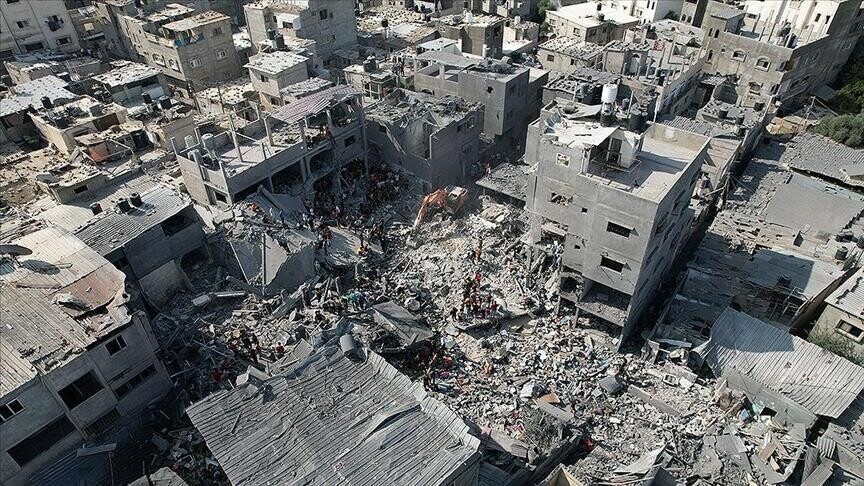
Gaza’s ongoing conflict continues to bring devastating consequences, as evidenced by the recent collapse of the Al-Saada residential building. On Monday, the Gaza government media office firmly rejected the Israeli military’s claim that it had not targeted the structure, asserting that an earlier strike on the building’s foundations led to its tragic downfall and the death of 21 Palestinians including several children.
Al-Saada Building Collapse: Claims and Counterclaims
The Israeli military, in a statement posted on the social media platform X, maintained that the Al-Saada building was not intentionally struck during the conflict. They insisted, “Contrary to the claims, the IDF (Israeli Defense Forces) did not strike the building in question during the war.” However, Gaza’s government media vehemently contested this assertion, stating that the IDF conducted a targeted bombardment on October 9, 2023, which affected the building’s first two floors and its foundational structure. The media office argued that the Israeli strikes were both severe and deliberate, leading to extensive damage that ultimately caused the building’s complete collapse.
The account provided by Gaza’s officials describes a systematic pattern of destruction aimed at civilian infrastructure. They characterized the Israeli military’s attempt at denial as a “desperate and blatant” way to evade accountability. This position is backed by engineering assessments, testimonies from residents, and documented evidence, which collectively dispute the Israeli narrative. The Gaza authorities emphasized that Israel bears “full and direct responsibility” for the incident, framing it as part of a broader strategy that violates international humanitarian law.
The Human Toll of Collapses in Gaza
The implications of this incident extend beyond the immediate tragedy. On the same day of the collapse, 21 Palestinians, including 12 children, lost their lives, raising concerns about broader structural vulnerabilities in the densely populated enclave. According to Gaza’s Health Ministry, this incident contributes to a total of 61 fatalities attributable to collapses resulting from damage incurred during the Israeli offensive. The situation remains dire, as many residents lack adequate shelter due to ongoing infrastructural destruction.
The recent ceasefire, which came into effect on October 10, 2025, has not alleviated the predicament for those affected. Many damaged buildings pose risks of further collapses, leaving the population exposed and vulnerable. The lack of shelter materials has created a humanitarian crisis, as displaced families find themselves relying on damaged structures amid winter conditions. International and local authorities have repeatedly called for the entry of necessary construction materials to stem the tide of casualties linked to ongoing building collapses, flooding, and cold conditions.
The Call for International Accountability
Gaza’s government media office is urging the international community, including United Nations bodies and human rights organizations, to document these cumulative incidents and hold accountable those responsible. They stress the importance of ensuring protection for civilians and their infrastructure in Gaza, highlighting a perceived failure of international governance in addressing these humanitarian crises effectively.
The consequences of the conflict are heart-wrenching, with reports indicating that over 73,000 Palestinians have lost their lives and more than 174,000 have sustained injuries since the war began. A staggering 90% of Gaza’s infrastructure is reported to be either damaged or destroyed, raising pressing questions about the future of its civilian population and the preservation of their basic rights. The situation serves as a stark reminder of the pressing need for a dedicated international response regarding the protection of civilians caught in conflict zones.