
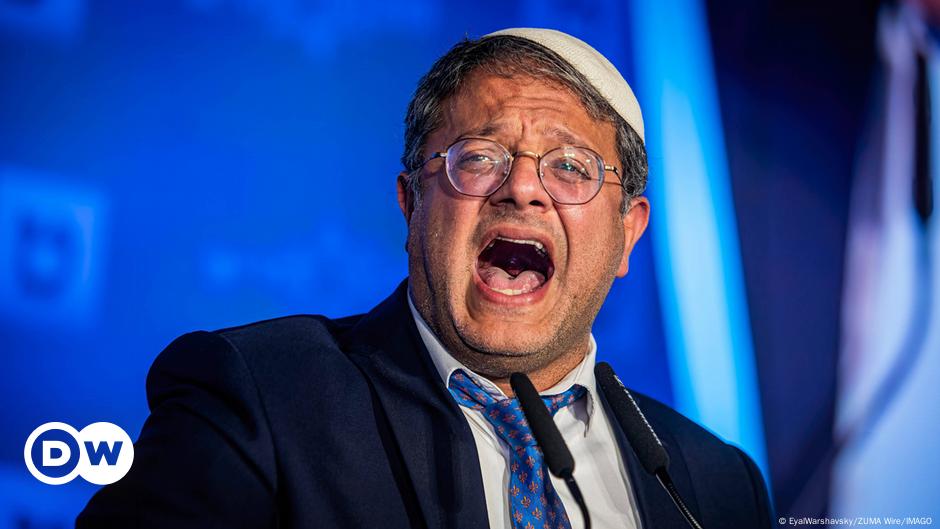
Recent remarks by Itamar Ben-Gvir, Israel’s national security minister, advocating for targeted killings in Gaza have ignited international condemnation. Ben-Gvir suggested the nightly “removal” of around 30 to 40 Palestinians, indicating his intention to include individuals not directly involved in militant activities. His comments represent a disturbing escalation in rhetoric that has drawn significant backlash from various global leaders and organizations.
International Outcry Against Extreme Measures
The German Chancellor’s office was swift to respond. A spokesperson labeled Ben-Gvir’s statements inhumane and a violation of international law. This sentiment resonates with many, as calls for adherence to humanitarian principles gain momentum in light of escalating violence. Germany’s government is closely following the developments in Israel and the occupied Palestinian territories, expressing significant concern over settlement expansions and actions that threaten the dignity of Palestinians. Officials argue that it is crucial for Israel, as the occupying power, to safeguard Palestinian rights and wellbeing.
Furthermore, German Vice Chancellor Lars Klingbeil emphasized that the country cannot remain silent about such alarming statements. He indicated that discussions are being held regarding potential sanctions at the European level. Klingbeil’s stance reflects a growing consensus among European leaders that Ben-Gvir’s rhetoric crosses a moral line, necessitating action to reaffirm a commitment to human rights and dignity.
Support for Sanctions Against Ben-Gvir
Multiple politicians and parties in Germany have rallied for sanctions against Ben-Gvir. Members of the EU have advocated for stricter measures, including entry bans, signaling a broader commitment to hold those who incite violence accountable. The sentiments expressed by Jürgen Hardt, a foreign policy spokesperson, highlight an urgent call for the EU to take concrete actions to address Ben-Gvir’s behavior, further illuminating the need for a unified response to uphold human rights standards.
The Green Party in Germany has also taken a strong stance, urging for entry bans and sanctions to deter further harmful statements and actions. Their leader, Franziska Brantner, criticized Ben-Gvir’s inflammatory rhetoric, calling for Germany to align with other nations that have enacted similar measures. Notably, several countries have already restricted Ben-Gvir’s entry due to his controversial statements, illustrating the international community’s growing discontent with his views.
Solidarity with Human Dignity
Responses to Ben-Gvir’s comments have extended beyond political figures. Josef Schuster, president of the Central Council of Jews in Germany, labeled the minister’s call for violence as “deeply shameful and irresponsible,” arguing that such remarks undermine Jewish values. This perspective echoes across various faith and cultural communities, emphasizing the importance of respecting human dignity irrespective of political affiliations or national boundaries.
Kirsten Fehrs, Chair of the Council of the Protestant Church in Germany, reinforced these ideals by pointing out that every human being holds inherent dignity. Her remarks underline a shared moral obligation among diverse faiths to uphold respect for life and the fundamental rights of all individuals. These responses collectively advocate for a peaceful resolution to conflicts, focusing on dialogue and understanding rather than violence and intimidation.
In conclusion, Ben-Gvir’s provocative statements have galvanized a unified international response aimed at upholding human rights and dignity in the context of the Israeli-Palestinian conflict. As discussions around sanctions and accountability continue to unfold, the ongoing dialogue underscores the need for empathy and respect in addressing one of the world’s most challenging geopolitical issues. The response from various nations and organizations signals a growing trend toward rejecting violent rhetoric, fostering hope for more humane approaches to conflict resolution.