
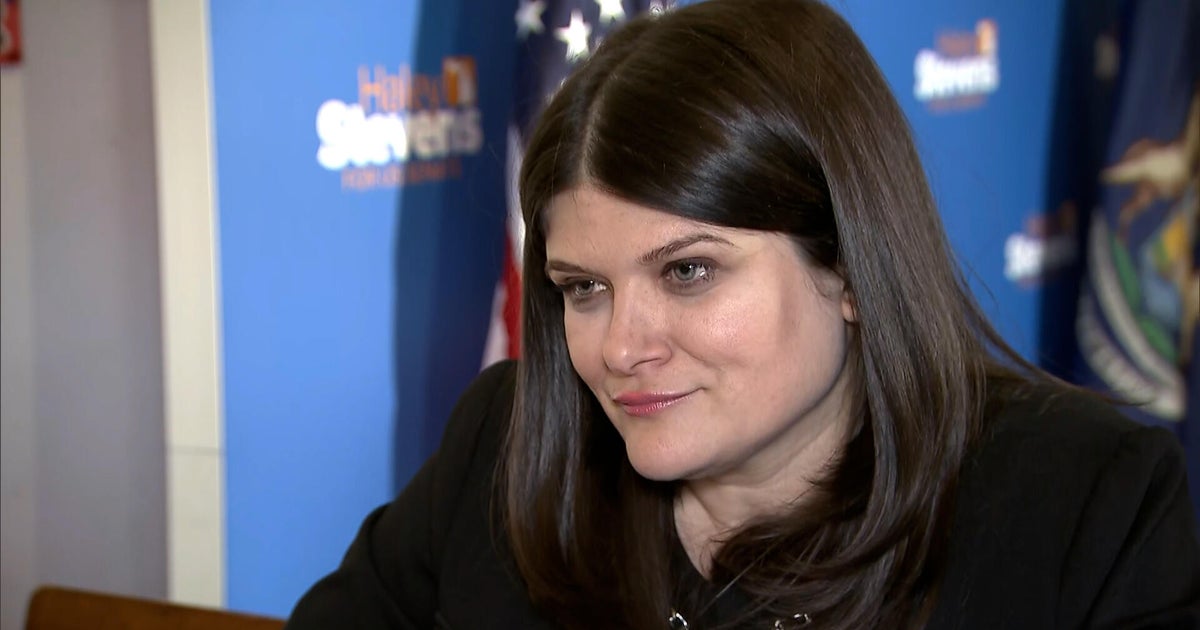
Protests outside a campaign event for Michigan Representative Haley Stevens highlighted growing concerns over the substantial financial backing her Senate campaign has received from the American Israel Public Affairs Committee (AIPAC) and related groups. On the eve of the Michigan primary, attendees expressed their apprehension regarding the tens of millions invested in her candidacy.
Debating Campaign Funding and Support
During an interview with CBS News senior correspondent Ed O’Keefe, Stevens attempted to downplay inquiries about AIPAC’s financial influence, arguing that such donations signify robust support from Democrats. She asserted, “Every single poll shows I’m the best one to go beat Mike Rogers,” who is currently unopposed in the Republican nomination. Additionally, she advocated for reforming the political funding system, stating, “Our system needs to evolve. I want to end dark money in politics.” O’Keefe pointed out the contradiction of her benefiting from the very donations she criticizes, particularly given the significant spending in the contentious Michigan Senate race—estimated to be around $80 million, with $60 million dedicated to her campaign.
Amid a discussion about AIPAC’s backing, O’Keefe asked Stevens why she continues to support military assistance to Israel, especially given the increasing discontent surrounding such positions. Stevens responded by emphasizing her commitment to a two-state solution and long-term peace, distancing herself from criticisms aimed at her by Israeli Prime Minister Benjamin Netanyahu, who has publicly attacked her stance.
Criticism from Opponents
In contrast, Stevens’s primary competitor, Abdul El-Sayed, has openly criticized U.S. military aid to Israel, labeling Israel’s actions in Gaza as “genocide.” He has also taken issue with Stevens’s acceptance of contributions from AIPAC, claiming that her funding sources undermine her calls for peace. Stevens countered these assertions by expressing her intention to uphold the dignity of both Israeli and Palestinian peoples, reiterating her commitment to peace in the region.
The tension between the candidates highlights differing approaches to critical foreign policy issues. Stevens sought to portray El-Sayed as hesitant and unwilling to accept Israel’s right to exist, asserting that he “equivocates” on important matters. El-Sayed’s stance may resonate with some segments of the electorate that prioritize issues of human rights and international fairness, showcasing a sharp divide in the current primary race.
Stevens’s Long-Term Commitment
Stevens’s narrative includes a commitment to lengthy, hard work on behalf of Michigan voters. She alluded to her plan for a sustained campaign effort, stating, “This is six years of hard, unglamorous work that I’m signing up for. I want to be Michigan’s workhorse.” In her view, El-Sayed’s ambitions appear directed toward a broader political future, as she referenced his presidential campaign website.
Despite facing challenges in the polls, with some indicating El-Sayed is leading by substantial margins, Stevens is determined to project confidence in her abilities. She acknowledged her position as the underdog and declared, “I think I’m the proven fighter who’s meeting the moment.” As the Michigan primaries loom, the outcome will undoubtedly shape not only the state’s political landscape but also broader discussions on funding in political campaigns and foreign policy positions.
As the situation unfolds, both candidates must navigate a highly charged atmosphere marked by differing ideologies and substantial financial resources, setting the stage for an intense primary battle.