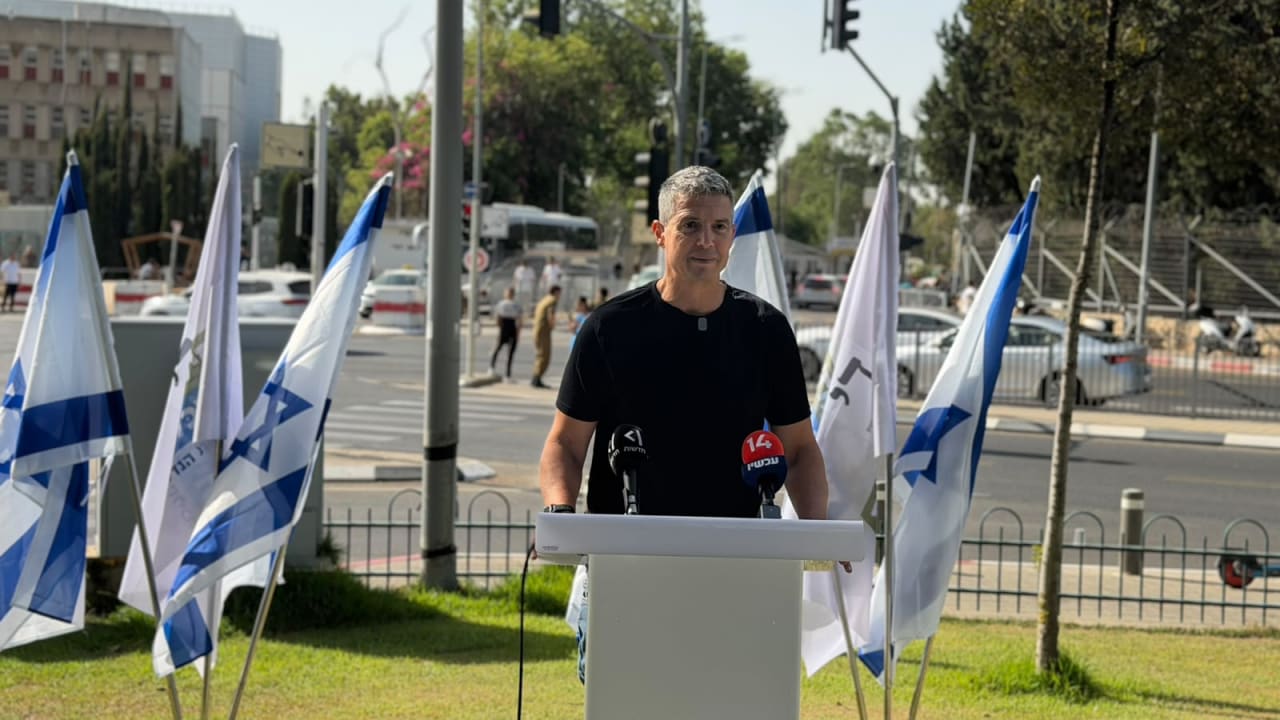
Leader of the Reservists-Economic Party, Yoaz Hendel, recently urged Ofer Winter, the chairman of the People of Israel party, to enter into a surplus vote-sharing agreement as the nation gears up for the upcoming elections. Hendel emphasized the importance of both parties publicly committing to only joining a Zionist government that excludes both haredi (ultra-Orthodox) and Arab parties.
Calls for a Unified Zionist Government
Hendel’s party is advocating for the establishment of a broad Zionist government following the elections, distancing itself from the blocs led by Prime Minister Benjamin Netanyahu and the opposition seeking his replacement. This strategic move aims to create a coalition centered solely on Zionist values, steering clear of any extremist influences.
Despite expressing a desire for leadership change after the Hamas attacks on October 7, 2023, Winter has publicly supported Netanyahu’s leadership. His party comprises individuals who had not been members of the Knesset prior to these elections, and many were not involved in the security lapses surrounding the October incident.
The Urgency of Collaboration
In a statement made outside the Tel Hashomer IDF recruitment office, Hendel called on Winter to reconsider his position. “You cannot triumph on the battlefield as long as you are affiliated with haredi parties. Our tasks on the front require a different approach,” he articulated. Hendel proposed that both parties sign a surplus vote agreement and affirm their commitment to entering a Zionist-only government.
Hendel’s proposition is particularly timely, given the approaching deadline for surplus vote-sharing agreements set for October 27. By joining forces, Hendel believes the two parties could effectively counteract any potential alliances that include non-Zionist factions.
Existing Political Landscape
Meanwhile, within Netanyahu’s coalition bloc, the Likud party recently signed a surplus vote-sharing agreement with the Religious Zionist Party (RZP), led by Finance Minister Bezalel Smotrich. In contrast, the opposition bloc has also solidified its position by signing agreements aimed at boosting its seat count in the Knesset.
A surplus vote-sharing agreement allows two parties to pool their excess votes after the initial seat allocation during elections. If their combined surplus is substantial enough, it might secure an additional seat for one of the parties, thereby enhancing their bloc’s overall strength.
Potential Challenges Ahead
However, these agreements hold value only if both parties clear the electoral threshold. Recent polling indicates that both the Reservists-Economic Party and the People of Israel party are teetering close to this critical benchmark. Additionally, the far-right Otzma Yehudit, part of Netanyahu’s coalition, has not yet finalized a surplus vote agreement, claiming that Likud has resisted forming such a pact.
Otzma Yehudit has publicly criticized Likud, suggesting that the latter is pursuing a unity government with opposition candidate Gadi Eisenkot, chairman of the Yashar party. The evolving political landscape in Israel is thus marked by strategic negotiations and shifting allegiances as parties prepare to solidify their positions ahead of the imminent elections.