
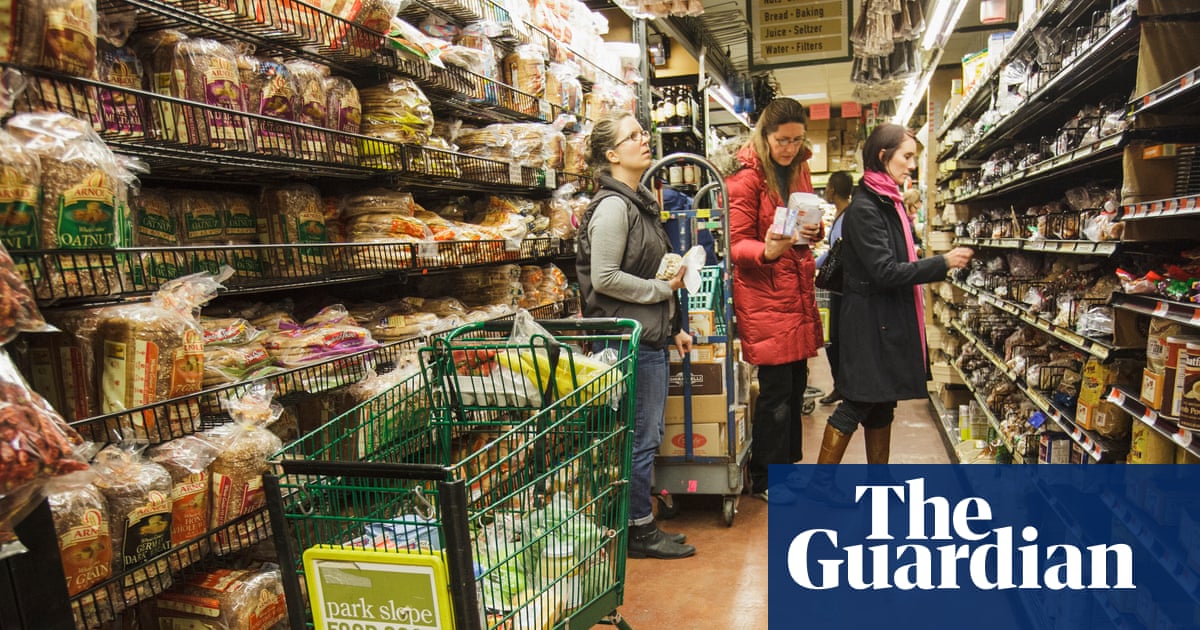
In a significant move, members of a well-known food cooperative in Brooklyn have opted to boycott approximately twelve products from Israel and Israeli settlements in occupied Palestine. This decision, which reflects ongoing debates over the Israeli-Palestinian conflict, poses challenges for a community-focused institution that has long served liberal New Yorkers.
Co-op Decisions and Member Engagement
The Park Slope Food Coop held a virtual meeting which saw participation from around 7,000 of its 17,000 members. During this three-hour session, a striking 67% voted in favor of the boycott. This decision followed months of intense campaigning, with local rabbi describing the exchanges as a “proxy war.” The targeted boycott includes various items such as tahini, peppers, and persimmons.
While this might seem like a localized issue, it mirrors broader societal divides exacerbated by current events, including the ongoing war in Gaza. The complexities of international conflict now reverberate through a primarily privileged community, highlighting how choices made at the co-op level can reflect larger global issues.
Advocacy and Historical Context
Leading the pro-boycott movement is a faction known as Park Slope Food Coop Members in Solidarity with Palestine. Supported by over two dozen advocacy groups, including several Jewish organizations, they argue that opting for socially conscious shopping is a longstanding tradition within the co-op. They draw parallels with past boycotts against systems of oppression, such as apartheid in South Africa and human rights violations in Chile under Augusto Pinochet.
Alyce Barr, a long-time member and one of the initiative’s sponsors, emphasized the co-op’s history of activism, stating, “We want to build on this tradition by boycotting Israeli products until Israel complies with international law.” This perspective presents the boycott not as a rejection of a particular community but rather as a stand for humanitarian standards.
Responses From the Community and Leaders
The debate surrounding the boycott has garnered attention from beyond the co-op walls. Influential figures like Dan Goldman and Brad Lander, Democrats involved in a congressional race influenced by the Israeli-Palestinian conflict, have publicly opposed the boycott although Lander clarified that he would not instruct members on how to vote. Voices within the community, including Palestinian rights advocate Mahmoud Khalil, argue that boycotting Israeli products is a minimal response to what many see as ongoing human rights abuses.
Additionally, tensions have arisen over two ballot initiatives. One focused on the boycott, while the other aimed to amend the requirement for a 75% supermajority for passing similar measures. Heated exchanges between factions led the co-op management to address the situation.
Climate of Tension and Calls for Civil Discourse
Reporters have noted incidents of hostility, where advocates for the boycott faced verbal assaults and physical hostility from anti-boycott members. Co-op leadership has denounced antisemitic and anti-Arab remarks that emerged during discussions, underscoring the importance of maintaining civil discourse amidst passionate disagreements. General manager Joe Szladek echoed this sentiment, advocating for open discussions that respect diverse viewpoints.
Given this climate, the co-op has increased security measures as a response to “threatening letters and hostile social media.” Szladek emphasized that these steps are not targeted at any one group but rather aim to ensure a safe space for all members to engage thoughtfully in ongoing discussions.
In summary, the Park Slope Food Coop’s recent boycott decision highlights deep divides over the Israeli-Palestinian conflict, reflecting broader societal issues. The complexities of this choice will likely continue to foster debate within the community while resonating within the larger global conversation about human rights and ethical consumption.