
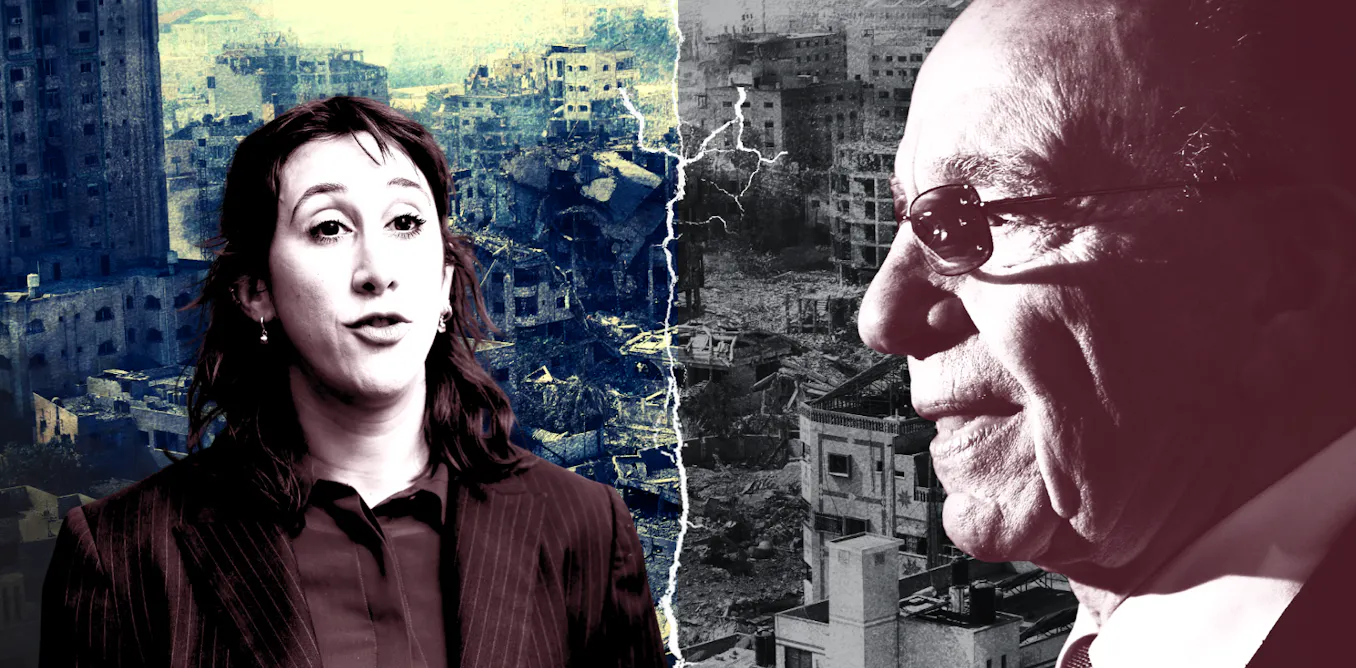
In discussions about the media’s portrayal of the Middle East, particularly regarding Israel and Palestine, News Corporation’s editorial stance reveals a clear bias. This bias is characterized primarily by unwavering support for Israel, shaping not only foreign reporting but also local narratives. Such steadfastness persists even amidst international criticism of Israel’s actions in Gaza, reflecting a commitment to a particular ideological narrative.
The Impact of Bias on Local Coverage
This allegiance influences the framing of local events, often resulting in selective criticism of individuals who challenge the pro-Israel stance. A striking example is Sarah Schwartz, a young Jewish lawyer who has vocally opposed Israel’s human rights violations. Schwartz’s activism has drawn substantial backlash from News Corporation outlets, which seem determined to uphold their narrative that dissenting voices from within the Jewish community are either misguided or antisemitic.
Schwartz’s experiences underscore how effectively News Corporation maneuvers to shape public discourse. Critically, while attacking her credibility, they labeled her as antisemitic without addressing the underlying issues she raises about Israel. This duality shows how the media institution operates under its “we’re always right” principle, creating a facade that undermines nuanced discussions surrounding complex geopolitical matters.
Controversy and Media Manipulation
The controversy intensified when Schwartz participated in an academic event where she criticized the stereotyping of Jewish people in political discourse. Her presentation, which included a satirical depiction titled “Dutton’s Jew,” was widely misconstrued, leading to sensationalist coverage by News outlets. The strategic framing of her words provided an opportunity for these publications to amplify their narrative that any criticism of Israel equates to antisemitism.
Consequently, Schwartz faced a social media smear campaign that misrepresented her views and perpetuated harmful stereotypes within her own community. The media’s portrayal not only distorted her intentions but also contributed to a hostile environment where she was vilified for her stance on human rights issues. Schwartz asserts that this onslaught of negative press aims to discredit dissenting voices while reinforcing a complacent acceptance of Israel’s actions.
Raising Concerns About Journalistic Integrity
The narrative constructed by News Corporation exemplifies a broader issue within media discourse—wherein nuanced discussions about Israel-Palestine are often overshadowed by simplistic and biased interpretations. Such reporting not only silences critical voices within the Jewish community but also perpetuates dangerous stereotypes that alienate Muslim communities.
This unwavering support for Israel, combined with skepticism towards any criticism, transforms media outlets from neutral observers into active participants in political narratives. This conflict-driven reporting ultimately serves to further polarize communities, shutting down the type of discussions essential for understanding and healing in a fraught geopolitical landscape.
In essence, Schwartz’s experience encapsulates the challenges faced by those who endeavor to elevate discussions about human rights, while the media continues to prioritize ideological allegiance over balanced journalism. The urgency now lies in demanding media accountability, ensuring that all viewpoints are represented fairly, especially in matters as sensitive as the Israeli-Palestinian conflict.