
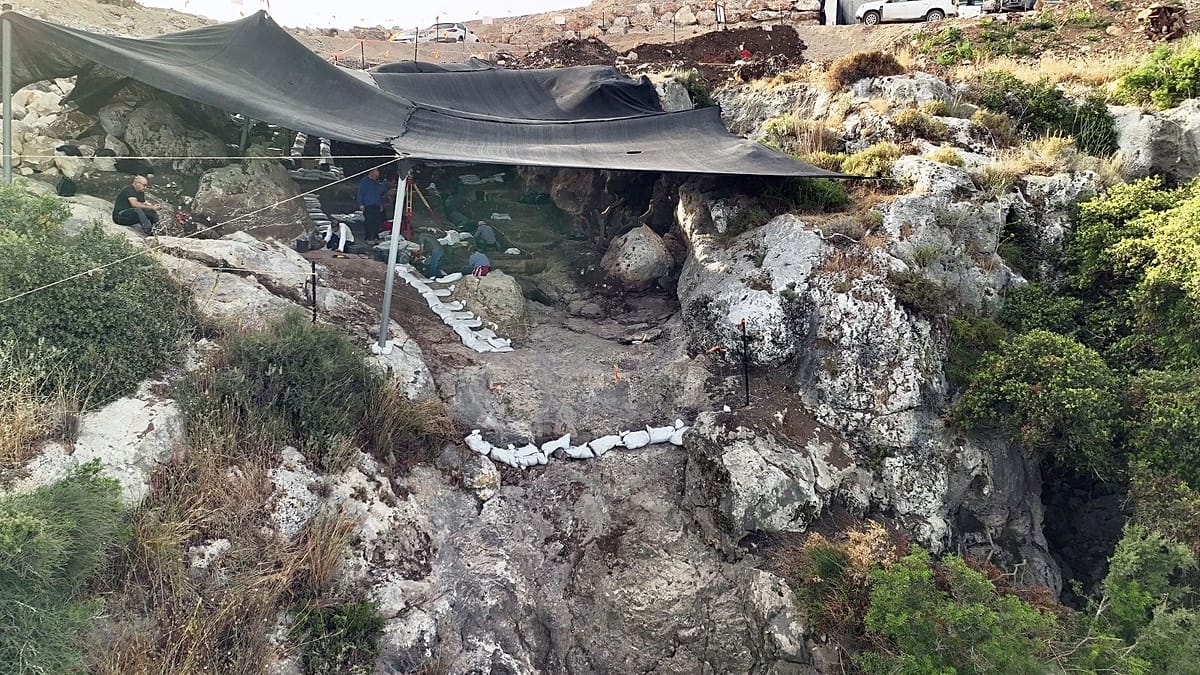
Archaeologists have stumbled upon a remarkable site that has remained largely untouched by both natural and human activities for hundreds of thousands of years. Located in a cave near Foreidis, close to the Zichron Yaakov junction in Israel, this excavation has been conducted by experts from the Israel Antiquities Authority and the University of Haifa. Findings at this site are dated between 400,000 and 250,000 years ago, offering an invaluable glimpse into a pivotal period in human history.
Significance of the Discovery
The excavation is overseen by archaeologists Kobi Vardi and Amit Gabay, in collaboration with Professor Ron Schimmelmitz. The team regards this discovery as one of the most crucial breakthroughs in recent years concerning human evolution—a timeframe for which historical evidence has been scarce. The site is linked to the Acheulo-Yabrudian culture, a technological framework characteristic of the Levant during the late Lower Paleolithic. Researchers have commended its outstanding state of preservation, describing it as a genuine “time capsule” that could yield insights that are often challenging to acquire elsewhere in the region.
The period represented by this site predates the emergence of both Neanderthals and anatomically modern humans. Experts believe it marks a crucial transition in lifestyles, social interactions, and environmental adaptations. Schimmelmitz notes that during this era, significant behavioral developments began to surface, including the formation of larger social units, long-term settlement in specific locations, and increasingly intricate social structures among communities.
Behavioral Advancements and Cultural Foundations
Key findings from the excavation suggest an intensive use of fire and extended habitation within caves—practices generally linked to enhanced cooperation among individuals and the sustained transmission of knowledge across generations. Researchers believe that these early behaviors laid some of the cultural and technological groundwork that would later define Neanderthals and Homo sapiens.
Among the notable artifacts are numerous flint tools that showcase sophisticated manufacturing techniques for their time. Archaeologists have unearthed various items, such as small hand axes, scrapers, and precisely crafted cutting blades. Additionally, the discovery of animal remains, including horses, deer, and wild asses, points to a resource-rich landscape conducive to hunter-gatherer lifestyles.
Future Directions for Research
Vardi has drawn parallels between the significance of this site and that of the famed Nahal Me’arot, a UNESCO World Heritage Site pivotal for understanding prehistory in the Levant. Moving forward, both the Israel Antiquities Authority and the University of Haifa plan to implement a comprehensive research program to delve deeper into the lifestyles of these early human groups, their resource exploitation strategies, and the evolution of their technologies.
Once the investigation is complete, the teams aim to prepare the site for public access. Their goal is to bring these groundbreaking findings closer to local communities as well as students and visitors eager to learn about human evolution. This initiative will not only foster a greater understanding of our past but also highlight the site’s importance in the broader context of human history.