
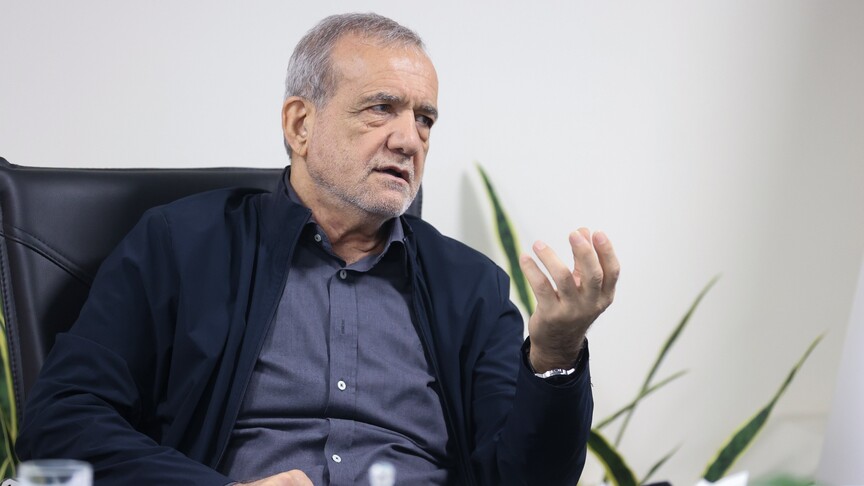
Iran’s President Defends Recent US Agreement Amid Criticism
On August 7, 2026, Iranian President Masoud Pezeshkian delivered a strong defense of the memorandum signed with the United States, emphasizing that domestic critics may inadvertently be echoing Israel’s perspective. This announcement comes at a time of heightened tensions in the region and serves to clarify the government’s position as it navigates complex international relations.
Defending the Memorandum
In his address, Pezeshkian asserted that the agreement, which aimed to halt hostilities and facilitate further negotiations on Iran’s nuclear program, is being mischaracterized by those who claim it has failed. According to his office, the memorandum includes critical provisions, such as the opening of the Strait of Hormuz, a strategic shipping route essential for global oil supply. The president expressed confidence in the rationale behind the agreement, stating that labeling it a failure aligns with Israel’s narrative, which he considers unfair to the Iranian government’s diplomatic efforts.
Pezeshkian stated, “We will firmly defend what we have written as a memorandum of understanding.” He urged critics to reassess their stance, arguing that their reactions could be misguiding public perception and ultimately benefiting adversaries like Israel. By framing the conversation in this way, he attempts to galvanize support for the agreement amid ongoing scrutiny.
Addressing Domestic Criticism
The president took a pointed jab at his domestic opponents, suggesting they overlook the substantial progress achieved through the recent agreement. He remarked that those criticizing the government’s diplomatic undertakings exhibit a lack of understanding of both the leadership and the complexities of international negotiations. “They either do not know the leader, or they lack logic and reason,” he stated, highlighting a disconnect between criticism and the tangible benefits resulting from engagement with the U.S.
He further criticized critics for their typically reactive approach, alleging that they only voice their opinions when issues arise, rather than participating constructively in the political discourse. This stance underscores a desire for more informed and proactive engagement from the public and political entities during such a critical period. The president’s remarks serve to highlight the importance of understanding both the successes and challenges inherent in diplomatic negotiations.
Response to Resignation Speculation
In the wake of mounting speculation regarding his potential resignation, Pezeshkian made it clear that any such decision would be communicated officially. By addressing rumors directly, he aims to quell uncertainty surrounding his leadership and signal his commitment to the responsibilities of his office.
The regional context is particularly fraught, having escalated following coordinated military actions by Israel and the U.S. against Iranian interests earlier this year. In response, Iran’s military actions demonstrated its willingness to counter perceived threats, contributing to the urgency of securing agreements like the recent memorandum.
Ultimately, the administration’s efforts in negotiating with the U.S. are aimed at stabilizing Iran’s geopolitical standing and ensuring the country’s interests are safeguarded amidst widespread regional volatility. As discussions around this agreement continue, it will be essential for all stakeholders to critically assess the emerging realities and implications for Iran’s future engagements on the international stage.