
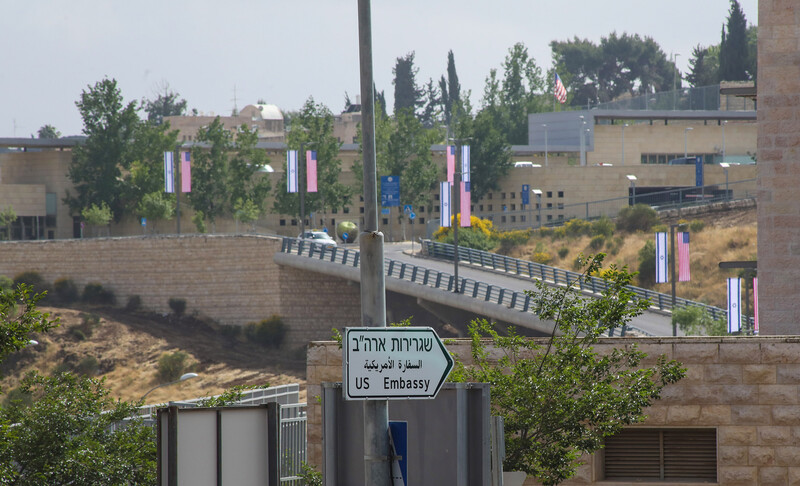
The recent agreement between Israel and the United States regarding land ownership in Jerusalem has raised significant concerns and implications for international law and geopolitical relations. The deal involves the transfer of a plot previously owned by Palestinians, allowing the U.S. to establish a permanent embassy site in the contested city.
Details of the Agreement
On July 1, 2026, Israeli Foreign Minister Gideon Saar and U.S. Ambassador to Israel Mike Huckabee formalized an agreement which enables the United States to acquire a piece of land in Jerusalem for merely $1. The transaction allows Washington to secure a permanent location for its embassy, which has been a subject of controversy since the relocation from Tel Aviv. This lease is established for a duration of 99 years, reflecting a long-term commitment to the site.
The backdrop of this agreement is significant. Under the Trump administration in December 2017, a landmark decision acknowledged Jerusalem as Israel’s capital, leading to the controversial embassy move, which was marked by its temporary opening in May 2018. This decision faced widespread international backlash as critics viewed it as an infringement upon established consensus regarding the status of Jerusalem.
Implications of the Land Allocation
The land in question has a complex history; according to Adalah, an Israeli rights organization, it was confiscated from Palestinian families under Israel’s Absentees’ Property Law of 1950. Historical records reveal that this land belonged to Palestinian families prior to the 1948 conflict, with evidence indicating it had been leased to British authorities during the mandate period.
Legal experts argue that the transfer of this property to build the U.S. Embassy violates international law, particularly Article 46 of the Hague Regulations, which forbids the appropriation of private property during military occupation. Adalah maintains that these actions not only invalidate the rights of the original Palestinian owners but also contravene international legal standards.
The International Reaction
The United Nations views East Jerusalem as occupied Palestinian territory, and any attempts to alter its legal status are seen as having no legitimate effect under international law. Despite the U.S.’s move to Jerusalem, a majority of countries maintain their embassies in Tel Aviv, reflecting the broader international consensus against recognizing Jerusalem as the capital of Israel.
As the geopolitical landscape shifts, the implications of this agreement are vast, affecting not only U.S.-Israeli relations but also the broader Arab-Israeli conflict. The rebuilding of diplomatic ties and the negotiation of peace are increasingly complicated by the assertion of territorial rights and the longstanding plight of Palestinians, which continues to be a critical issue in international discourse.
In summary, the agreement to establish the U.S. Embassy on historically disputed land has heightened tensions and raised critical questions regarding legal and ethical boundaries in the context of international relations. The ramifications of this transaction will likely echo through diplomatic discussions for years to come, underlining the contested nature of Jerusalem’s status.