
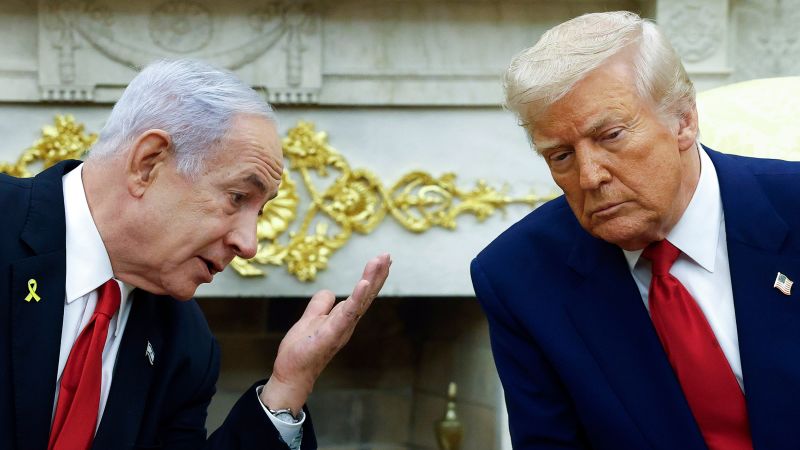
Israeli Prime Minister Benjamin Netanyahu has declared that Israel has dismissed the latest U.S.-backed initiative for peace in Gaza, insisting that full disarmament of Hamas is a prerequisite for any Israeli military withdrawal. This statement reflects a defining stance in Israel’s ongoing conflict and highlights the challenges faced in negotiating a lasting peace.
Netanyahu’s Rejection of the Peace Plan
Netanyahu’s comments came in response to recent diplomatic efforts spearheaded by former President Trump, who announced a significant 15-point peace plan aiming to stabilize the region. However, Netanyahu was unequivocal in his response, stating, “Israel rejects the 15-point document” in clear terms. He emphasized that the Israeli Defense Forces (IDF) would not withdraw until Hamas had been effectively disarmed and assured the safety of Israeli citizens and military personnel.
The Prime Minister elaborated on the dialogue with American officials, noting that while some U.S. proposals are acceptable, others are not. “We know how to stand up to those things,” he asserted, indicating a firm stance against external pressure. His comments raise questions about the potential for renewed discussions and what compromises might be possible given the current political climate.
Implications for Palestinian Statehood
In further declarations, Netanyahu made it clear that under his leadership, the establishment of a Palestinian state—whether in Gaza or the West Bank—would not occur. This position is particularly significant as Netanyahu’s right-wing coalition prepares for elections at the end of October, where they are currently trailing in polls. His remarks are likely a strategic effort to solidify support from right-wing constituents who oppose Palestinian statehood.
Netanyahu contextualized Israel’s military operations, referring to actions taken in Gaza and Lebanon as essential for national security. He stated, “We do what must be done for Israel’s security and we can and will stand our ground even against our best friends.” This reinforces a narrative of self-defense that has dominated Israeli politics for years.
Hamas’s Position and Future Negotiations
Hamas has responded to the U.S. peace plan by stating that any cooperation hinges on Israel ceasing its military actions in Gaza and pulling back troops in accordance with previous ceasefire agreements. A senior Hamas official reiterated their commitment to the framework outlined by Trump’s Peace Council, indicating a willingness to negotiate but with significant conditions.
Moreover, Bassem Naim, a member of Hamas’s politburo, expressed expectations that mediators, particularly American negotiators, would compel Netanyahu’s administration to honor the proposed roadmap rather than obstruct the process for internal political reasons. This adds another layer of complexity to the possibility of achieving peace, as factions within both Israeli and Palestinian leadership express divergent interests.
The Current Situation in Gaza
Israeli forces continue to occupy significant portions of Gaza, particularly in the eastern and southern regions, with senior ministers advocating for increased territorial control. The internal division within Israel’s government, particularly among far-right factions, suggests a push for a more aggressive military posture. Finance Minister Bezalel Smotrich echoed this sentiment, asserting that the IDF “cannot retreat one millimeter in the Gaza Strip.”
In summary, Netanyahu’s vehement rejection of the latest peace plan underscores entrenched divides that complicate any potential for resolution. While Israel prioritizes disarming Hamas, the Palestinian organization’s demands for a halt to military actions complicate negotiations. As both sides navigate these challenging waters, the prospect of lasting peace in the region remains uncertain.