
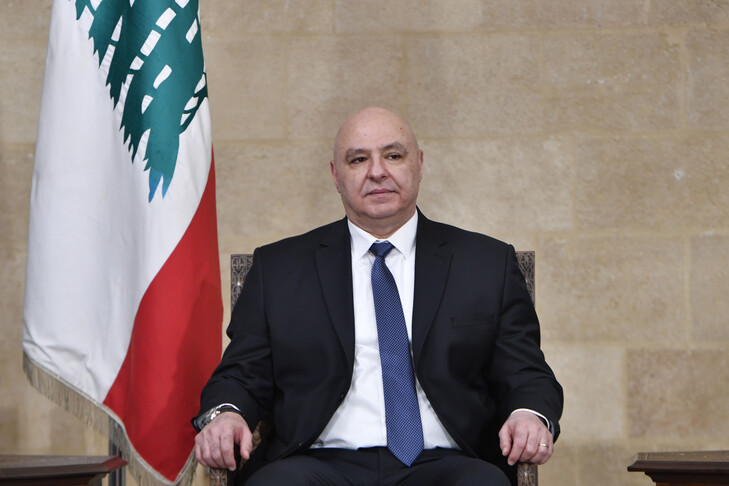
Tensions in southern Lebanon have escalated as the Israeli army has intensified its military operations, including airstrikes, artillery shelling, and ground assaults, particularly within the districts of Tyre, Nabatieh, Marjayoun, and Bint Jbeil. The Lebanese President, Joseph Aoun, highlighted these ongoing attacks in Paris, noting that they hinder the effective realization of the previously agreed-upon “framework formula.”
Intensified Attacks on Civilian Areas
Israeli forces launched significant airstrikes on locations such as Al-Mansouri in the Tyre district, targeting not only residential neighborhoods but also critical infrastructure. Reports from Lebanon’s National News Agency (NNA) indicated that the resulting tremors were felt in surrounding villages due to the magnitude of the assaults. Additionally, artillery fire affected nearby regions, with the Israeli army shelling both Al-Mansouri and Wadi al-Aziyeh, illustrating the broad scope of military operations in this area. Overnight, Israeli warplanes executed multiple airstrikes, heightening the fear and uncertainty among local residents as Israeli forces continued their bulldozing efforts.
Further escalation was observed in Nabatieh, where an Israeli drone dropped a stun grenade on the outskirts of Zawtar al-Gharbiyeh. Simultaneously, Israeli troops set fire to homes in Zawtar al-Sharqiyeh, creating an atmosphere of terror and instability. Intermittent artillery shelling was also reported in both the Ali al-Taher Heights and the Al-Dimashqiyeh area, further complicating the local situation and adding to the casualties already wrought by the ongoing conflict.
Impact of Military Operations
In Bint Jbeil, the situation remained dire as Israeli artillery targeted the town of Hadatha, and significant explosions were reported in Aita al-Shaab. Meanwhile, in Marjayoun, machine-gun fire was directed at Wadi al-Hujair, showcasing the aggressive stance maintained by Israeli military forces across multiple districts. Additionally, drones continued to survey low over Beirut and its suburbs, contributing to a pervasive sense of anxiety among the population.
These military actions come amidst Lebanese President Aoun’s strategic discussions in Paris aimed at rallying international support for the Lebanese army and internal security forces. Aoun reasserted the relevance of the tripartite “framework formula,” which was designed to bring an end to the hostilities and foster a new phase of security and stability for Lebanon. However, he urged that the continued Israeli attacks and incursions into Lebanese territory are hindering this process, making it clear that Lebanon has honored its commitments in the agreement.
The Call for International Support
Despite the framework agreement established on June 26, which proposed an incremental withdrawal of Israeli forces from Lebanese territory, actual conditions on the ground remain grim. The Israeli military continues to conduct operations that further exacerbate tensions while retaining control over parts of southern Lebanon—regions that have faced occupation for decades. President Aoun has articulated that the primary challenge lies in ensuring the withdrawal of Israeli forces from occupied areas and deploying the Lebanese army to bolster state authority.
The toll of the ongoing conflict has been devastating, with Lebanon’s Health Ministry reporting that the death toll attributable to Israeli attacks since March 2 has tragically risen to 4,386, accompanied by over 12,000 injuries. The overall count since October 8, 2023, now stands at over 8,900 fatalities, alongside more than 30,000 injuries. These statistics reflect the dire circumstances the Lebanese people face amid military aggression and underscore the urgent need for a resolution to restore peace and stability in the region.